PTA and parent volunteers
Choose plain oats that are easy to measure across batches and suitable for flapjacks or crumbles. Keep ingredient information with the finished bakes; Quaker UK describes its jumbo oats as suitable for baking.


Choose plain jumbo or traditional rolled oats when the recipe needs a recognisable oat texture, and select a labelled gluten-free product only where the school policy, recipe and separate handling arrangements require it. For larger bakes, compare pack weight, storage space and allergen information rather than treating a tin as essential packaging.
Choose plain oats that are easy to measure across batches and suitable for flapjacks or crumbles. Keep ingredient information with the finished bakes; Quaker UK describes its jumbo oats as suitable for baking.
Check the school allergy policy before accepting oats or describing a bake as allergy-friendly. Keep recipe allergen information available and separate serving areas and utensils where the school process requires it.
Compare the actual pack format and delivery conditions with the space available at home or school. Bagged multipacks and 1 kg retail packs can be easier to stage than opening more oats than the recipes require.
Start with the school’s allergen process, then match the oat texture and pack size to the recipes and storage space.
| Priority | What to check | Your needs |
|---|---|---|
| Allergen communication | Read the exact ingredient and allergen statement; check the school policy; retain pack information for each recipe. | I need customers and organisers to identify oats and any other allergens in every bake. A gluten-free claim still needs appropriate ingredient information and separate handling. |
| Baking texture | Check whether the recipe suits whole jumbo flakes, traditional rolled oats or smaller-cut oats; use the recipe’s stated oat type where possible. | For flapjacks, bars and crumble toppings, I may want oats that remain visible. A smoother recipe can suit smaller flakes that absorb liquid more quickly. |
| Batch quantity | Calculate the oat weight required for the planned trays; compare individual pack sizes and multipack configurations; allow for unopened-pack storage. | I want enough oats for the expected number of bakes without leaving opened packs that cannot be stored properly. |
| Plain ingredients | Choose single-ingredient oats for recipe control; check instant or flavoured products for milk, sugar and other added ingredients. | I want the recipe, rather than the porridge product, to determine the added ingredients and allergen record. |
Ordinary oat products may carry wheat or barley cross-contact statements. A suitability claim that does not match the pack and school process can create an avoidable allergy or intolerance risk.
Check the school policy and the exact pack statement. Use a separately labelled gluten-free product only where the recipe and handling plan support that route.
Instant or flavoured porridge can introduce ingredients such as milk and sugar before the recipe is assembled, making batch allergen records more complicated.
For most bake-sale recipes, begin with plain oats unless the recipe specifically calls for another product and its full ingredients are recorded.
A larger multipack can reduce the number of packs to handle, but it also needs enough dry storage space and may have delivery conditions.
Calculate the oat weight from the recipes, buy only what can be stored safely unopened, and check the seller’s current delivery terms before ordering.
Delivery arrangements can add a practical ordering consideration, particularly for heavier multipacks.
A suitable ingredient can still come into contact with other foods through shared surfaces, hands or serving utensils.
Keep relevant bakes and utensils separate, label each item, retain ingredient information and follow the school’s specified allergen process.
Relevant for traditional rolled and jumbo oats in UK retail pack sizes, including 500 g, 1 kg and 1.5 kg packs.
Relevant for bulk-oriented oat packs and for distinct texture routes including superfast, jumbo and gluten-free oats.
Relevant for plain wholegrain rolled oats and organic oats in the UK grocery market.
Joybuy product options for school bake-sale recipes, including textured oats, plain rolled oats and a labelled gluten-free route.
 No image available
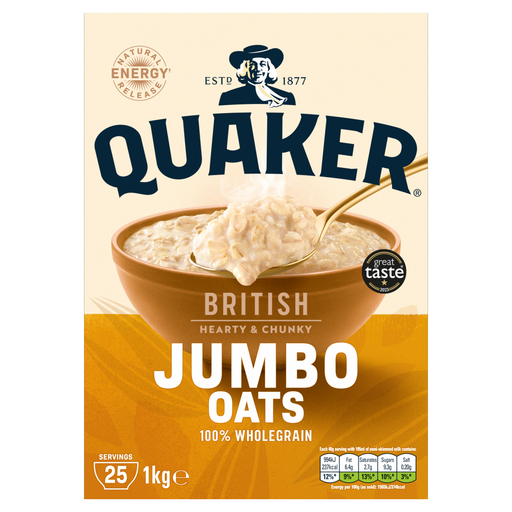
Consider for flapjacks, crumble toppings and oat bars where a pronounced oat texture is wanted.
1 kg pack; 100% wholegrain oat flakes; stated baking use. May contain wheat, so finished bakes should not be presented as gluten free.
Check the school’s requirements for donated-food labelling and serving before packing.
 No image available
A plain oat option to consider where the recipe calls for a heartier rolled-oat texture.
1 kg pack; 100% rolled oats; no artificial flavourings, colourings or preservatives stated. May contain wheat and barley.
Match the texture to the recipe and confirm the school’s allergen process before use.
 No image available
Consider only for a recipe that genuinely needs gluten-free oats and can be prepared and served separately.
1 kg pack; gluten-free and wheat-free 100% oat flakes; stated baking use. Oats still need to be identified in the ingredient record.
Separate utensils and serving arrangements may be needed to reduce cross-contact.
 No image available
A larger plain-oat option for multiple trays, with separately packed units that can be opened as needed.
2 x 1 kg packs; 100% organic wholegrain oat flakes. Contains oats and is not a gluten-free option.
Check the recipe for the required oat texture and follow the school’s allergen-labelling process.
 No image available
A manageable plain-oat pack for a smaller batch or to supplement other baking ingredients.
1 kg pack; 100% organic wholegrain oat flakes. Contains oats and is not a gluten-free option.
Confirm that the recipe suits the oat texture and retain the ingredient information for the sale.
Not by default. GOV.UK allergen guidance includes oats among cereals containing gluten for declaration purposes, and the reviewed ordinary Quaker products may contain wheat and barley. Use an explicitly labelled gluten-free product only where the school policy and preparation controls allow it, while still identifying oats in the ingredient information where applicable.
Provide clear ingredient and allergen information and follow the school’s own policy. Anaphylaxis UK recommends giving as much allergen information as possible for school bake sales; food businesses have separate allergen-information duties, so organisers should confirm how the event is being run. For schools in England, the Department for Education says schools must publish an allergy safety policy.
Keep them separate from other bakes, use different serving utensils and retain the ingredient record. Anaphylaxis UK also advises considering wrapping items before the sale and using separate helpers where feasible to reduce cross-contact.
No. Choose a sealed format that suits the recipe volume and available storage, then retain the original packaging or reliable ingredient record for allergen checks. Bagged multipacks and 1 kg packs can allow unopened oats to be kept back until they are needed.