Who these oats suit

Sunday-roast cooks making oat stuffing

For cooks deciding between pinhead oatmeal and rolled oats for savoury stuffing, skirlie-style dishes, crumbs or roast accompaniments. Mornflake and Hamlyns of Scotland identify pinhead oatmeal as the more suitable format when a traditional, substantial texture is wanted.

Wholegrain pantry-oat shoppers

For households wanting plain wholegrain oats for porridge, baking and occasional savoury cooking, with the flake size chosen for the texture needed in the finished dish.

Gluten-free oat buyers

For shoppers with coeliac disease or a medically necessary gluten-free diet who need to distinguish a gluten-free-labelled product from ordinary wholegrain oats. Coeliac UK advises that standard oats may be contaminated with wheat, barley or rye.

What to check before buying

Pinhead oatmeal

Choose it when: you are making traditional oatmeal stuffing, skirlie-style dishes or a savoury filling with a noticeable grain texture.

Trade-off: it takes longer to cook than porridge oats or stoneground oatmeal, so it is not the quickest route for a smooth result.

Jumbo rolled oats

Choose it when: you want visible wholegrain flakes and a firmer oat bite in a topping or recipe.

Trade-off: larger flakes absorb moisture more slowly, making them less suitable when a soft, quickly blended stuffing is the aim.

Gluten-free labelled oats

Choose it when: a gluten-free diet is required and the pack explicitly carries a gluten-free label.

Trade-off: descriptions such as “100% oats”, “pure” and “organic” do not establish gluten-free status, and individual oat tolerance can vary.

Priority What to check Your needs
Wholegrain oat base Look for “wholegrain oats” or “wholegrain oat flakes” in the product wording or ingredients. Check that the pack is a plain oat product rather than assuming all porridge or cereal products have the same ingredients. I want a straightforward oat base that I can use for porridge, baking and occasional savoury recipes.
Finished texture Choose pinhead oatmeal for chopped, substantial grains in stuffing. Choose jumbo oats for clear flakes and slower moisture absorption; use standard rolled oats where a less distinct texture is acceptable. For a coarse, traditional stuffing I need a noticeable oat texture; for other dishes, a softer mixture or visible flakes may be the better fit.
Gluten and allergens When gluten control matters, choose a product explicitly labelled gluten free and read the pack allergen statement. Check the exact pack at purchase, as product information can change. If I am cooking for someone who needs gluten-free oats, I cannot rely on wholegrain, organic or “pure oats” wording alone.

Common buying mistakes

  • Buying ordinary rolled oats for a traditional coarse stuffing

    Rolled, jumbo and pinhead oats differ in particle size, moisture absorption and finished texture. Mornflake identifies pinhead oatmeal for savoury products including stuffing mixes, while standard rolled oats can give a less coarse result.

    For traditional oatmeal stuffing or skirlie-style cooking, start with pinhead oatmeal. Use jumbo oats when a firmer, visible oat bite is the intended result.

  • Treating wholegrain or organic wording as proof of gluten-free suitability

    Coeliac UK notes that standard oats may be contaminated with wheat, barley or rye. “100% oats”, “pure oats” and “organic” do not confirm that a product is gluten free.

    Where gluten control is necessary, choose only oats explicitly labelled gluten free and check the allergen statement on the actual pack. Seek clinical advice if oat tolerance is uncertain.

  • Using a brand name as an allergen decision

    A single brand may sell ordinary, organic and separately labelled gluten-free oats. Quaker, for example, lists different allergen information for its traditional oats and its gluten-free traditional oats.

    Compare the exact product name, ingredients and allergen warning before buying rather than transferring suitability from another pack in the same range.

Relevant brand references

Mornflake

A UK oat miller with wholegrain rolled, jumbo and oatmeal formats that help distinguish texture-based choices.

  • Mornflake distinguishes rolled oats, jumbo oats and pinhead oatmeal by culinary use, including pinhead oatmeal for savoury stuffing mixes.
  • Its product guidance notes that individual products can carry wheat or barley allergy cautions, so check the exact pack.

Hamlyns of Scotland

A relevant option for traditional oatmeal stuffing because its range includes pinhead oatmeal and its recipe material covers savoury oatmeal stuffing.

  • According to Hamlyns, its pinhead oatmeal is whole grain cut into pieces for a substantial, nutty texture.
  • The brand states that pinhead oatmeal takes longer to cook than porridge oats or stoneground oatmeal.

Flahavan's

A choice for shoppers seeking plain wholegrain rolled oats, including organic options.

  • Flahavan's Irish Porridge Oats and Organic Oats list 100% wholegrain rolled oats.
  • The brand's creamy-texture description does not establish gluten-free suitability or a coarse stuffing texture.

Quaker

A mainstream option with traditional wholegrain rolled oats and a separately labelled gluten-free wholegrain range.

  • Quaker's gluten-free traditional oats are separately described as meeting the gluten-free standard.
  • Quaker traditional rolled oats may contain wheat and barley, while the gluten-free product carries a warning relevant to wheat allergy.

Jordans

An organic wholegrain rolled-oat option for shoppers who specifically want organic porridge oats.

  • Jordans Organic Porridge lists organically produced wholegrain rolled oats.
  • Its product page states that it may contain other gluten sources and nuts and is made at a location handling nuts.

Waitrose

A retailer own-label route with plain wholegrain rolled oats and separate Free From gluten-free oat listings.

  • Essential Porridge Oats list wholegrain oat flakes and are positioned for porridge and flapjacks.
  • The allergen statement for Essential Porridge Oats includes cereals containing gluten, so select by the exact pack rather than retailer name alone.

Joybuy product options

Joybuy product options for plain oats suited to everyday porridge, baking and adaptable savoury cooking, including a gluten-free-labelled option where gluten control is necessary.

Flahavan's Organic Porridge Oats 2kg bundle

Flahavan's Organic Porridge Oats 2kg (2 x 1kg)

A plain wholegrain oat base for porridge, baking and adaptable savoury recipes.

100% organic whole grain oat flakes; 2 x 1kg bundle.

It is not labelled gluten free, and the flake texture for traditional coarse stuffing should be checked against the recipe requirement.

Joybuy

Flahavan's Organic Porridge Oats 1kg

Flahavan's Organic Porridge Oats 1kg

A plain organic wholegrain oat option for porridge, baking and flexible pantry use.

100% organic whole grain oat flakes; 1kg pack.

It is not labelled gluten free, and its suitability for a substantial traditional oatmeal stuffing texture should be checked before buying.

Joybuy
Morrisons Free From Gluten Free Oats 1kg

Morrisons Free From Gluten Free Oats 1kg

A plain oat-flake option for the gluten-control route, as the listing states that it is gluten free and wheat free.

100% oat flakes; 1kg pack.

Wholegrain status and flake size are not stated in the listing. Oats remain an allergen, and gluten-free status does not establish suitability for an oat allergy or individual avenin sensitivity.

Joybuy
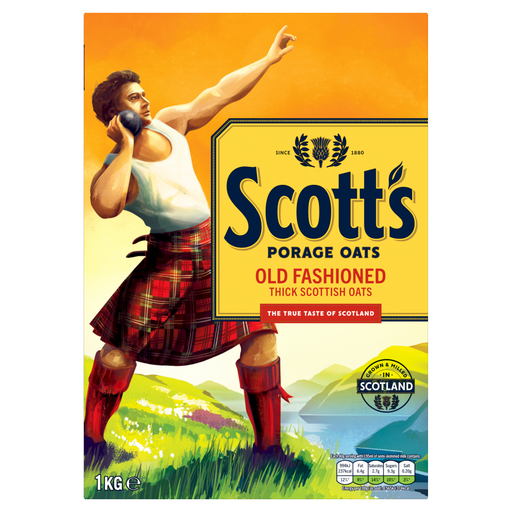
Scotts Porage Old Fashioned Porridge Oats 1kg

Scotts Porage Old Fashioned Porridge Oats 1kg

A plain thicker rolled-oat option for everyday porridge and flexible pantry cooking.

100% rolled oats; 1kg pack; stovetop and microwave instructions are provided.

Wholegrain status is not stated in the listing. It may contain wheat and barley, and its thicker rolled texture is not the same as pinhead oatmeal for traditional coarse stuffing.

Joybuy

Frequently asked questions

Are all porridge oats wholegrain?

No—do not assume this from the category name alone. Check the product wording or ingredients for “wholegrain oats” or “wholegrain oat flakes”; plain products from several brands list wholegrain oats, but the exact pack remains the relevant reference.

Which oat format suits traditional oatmeal stuffing with a Sunday roast?

Pinhead oatmeal is the most directly supported choice for a traditional, coarse-textured savoury stuffing. Mornflake identifies pinhead oatmeal for stuffing mixes and Hamlyns of Scotland uses Scottish oatmeal in a traditional stuffing recipe; expect a longer cook than standard porridge oats.

Can “100% oats”, “pure oats” or “organic oats” be treated as gluten free in the UK?

No. Coeliac UK states that these descriptions do not establish gluten-free status. For a gluten-free diet, choose an oat product explicitly labelled gluten free; the Food Standards Agency states that food labelled gluten free must contain no more than 20 mg/kg gluten as sold to the final consumer.

Can someone with coeliac disease eat gluten-free oats?

Coeliac UK says that most people with coeliac disease can tolerate gluten-free oats, but a small number remain sensitive to gluten-free oat products. Seek advice from the relevant healthcare professional if symptoms continue or oat tolerance is uncertain.

How should opened plain oats be stored?

Follow the pack instructions. Waitrose advises storing its porridge oats in a cool, dry place and, once opened, in an airtight container; check the actual product pack for its current storage guidance.