Shoppers seeking the most fibre per bowl
Compare fibre per 100 g as well as the maker’s dry serving size. Mornflake lists 25.6 g fibre per 100 g for Fibreful Oatbran Porridge, while the cited rolled-oat examples list lower amounts.


If maximum fibre per dry serving matters most, choose an oat-bran porridge with a clearly stated fibre value: Mornflake Fibreful Oatbran lists 25.6 g per 100 g, above the rolled-oat examples considered here. Plain rolled oats can still meet the UK high-fibre threshold and suit shoppers who want a simpler, more versatile pantry ingredient, while instant pots are chiefly a convenience choice.
Compare fibre per 100 g as well as the maker’s dry serving size. Mornflake lists 25.6 g fibre per 100 g for Fibreful Oatbran Porridge, while the cited rolled-oat examples list lower amounts.
Choose a simple wholegrain oat base when you want porridge, baking or savoury uses from one pack. Check the exact ingredient list, fibre value per 100 g and allergen wording before buying.
A portable porridge pot can be useful during a larger grocery shop, but check fibre and sugars together. Mornflake lists 6.5 g fibre and 20.4 g sugars per 100 g for Oats2Go Original.
Choose it when: You want the greatest stated fibre density from a dry porridge serving and are happy with oat bran rather than plain rolled oats.
Keep in mind: Fibreful Oatbran contains oat bran and chicory inulin, and Mornflake gives allergy-related manufacturing warnings for this product.
Choose them when: You want a flexible, minimally ingrediented oat base for porridge, baking or savoury recipes.
Keep in mind: The cited rolled-oat examples list less fibre per 100 g than Mornflake Fibreful Oatbran, and allergen wording differs by pack.
Choose one when: Preparation speed and portability matter more than buying a loose dry-oat pack.
Keep in mind: An instant pot can have a different ingredient and sugar profile from plain oats, so read the full label.
| Priority | What to check | Your needs |
|---|---|---|
| Comparable fibre | Compare fibre per 100 g on the exact pack. Check the maker’s dry serving figure separately. A UK high-fibre claim requires at least 6 g fibre per 100 g or 3 g per 100 kcal under Regulation (EC) No 1924/2006. | I want a genuinely high-fibre porridge, not just a broad wholegrain impression. |
| Ingredients | Read the ingredient list for oat bran, chicory inulin, seeds, milk powder or sugar. Plain products may list only oats. | A simple oat base may matter more to me than the highest fibre figure or a ready-to-eat format. |
| Allergen suitability | Check the current pack for gluten-free labelling and cross-contact statements. Review wheat, barley, nuts, milk and other relevant allergens on the exact product. | If I have a gluten-related dietary need or an allergy, I need a product that matches that requirement rather than relying on the category name. |
| Convenience | Compare preparation format with the nutrition panel. For Mornflake Oats2Go Original, Mornflake lists 6.5 g fibre and 20.4 g sugars per 100 g. | I may want a fast breakfast option, but still want to know what is in the pot. |
Fibre figures differ substantially between formats. The cited products range from 6.5 g fibre per 100 g for an instant pot to 25.6 g per 100 g for a fibre-enhanced oat-bran porridge.
Compare fibre per 100 g first, then use the stated serving figure to understand a typical bowl.
High-fibre products can include chicory inulin, seeds, milk powder or sugar. Mornflake lists chicory inulin in Fibreful Oatbran and lists sugar in Oats2Go Original.
Read both the nutrition panel and ingredient list; choose plain 100% oats when simple ingredients matter more than maximum fibre or speed.
A gluten-free claim has a defined condition, and packs can carry different cross-contact statements for wheat, barley, nuts or milk. The Food Standards Agency states that food labelled gluten-free must contain no more than 20 mg/kg gluten.
If gluten or allergy safety is required, buy only an exact product whose current pack and manufacturer or retailer information meet your dietary requirement.
Flahavan’s states that its High Fibre Pot is available only in Tesco Northern Ireland, so it may not be practical for shoppers elsewhere in Great Britain.
Confirm the retailer, delivery area and current listing before planning around a particular single-serve product.
Relevant for comparing oat bran, standard oats and convenient pots. Mornflake lists 25.6 g fibre per 100 g for Fibreful Oatbran Porridge.
Relevant for plain traditional rolled oats in several pack sizes.
Relevant for wholegrain rolled oats, oat products and seeded single-serve alternatives.
Relevant for organic jumbo rolled oats with a more textured oat format.
Relevant as a grocery retailer with plain, gluten-free and branded porridge-oat options in one category.
A cereal brand using wholegrain oats in muesli and granola, rather than a confirmed comparable porridge-oat option in this selection.
These Joybuy options include portioned quick oats, plain rolled oats, a gluten-free oat option, oat bran and a larger household pack for the high-fibre porridge decision.
 No image available
A portioned option for a quick breakfast during a larger grocery shop.
Six 38.5 g sachets; wholegrain rolled oats are the listed ingredient. The pack lists 9.0 g fibre per 100 g and 3.5 g per sachet, with 2½-minute microwave preparation.
If you need a gluten-free product, check the current pack. Sachets are less flexible than loose oats for baking or larger custom portions.
 No image available
A plain-oat option for porridge or baking where a gluten-free and wheat-free claim is required.
The listing states 100% gluten-free oat flakes, 8.6 g fibre per 100 g and a 40 g portion size, with 25 stated portions.
Oats are still declared as an allergen.
 No image available
A loose-oat choice for households that prefer to make their own portions with water or milk.
The listing gives 9.0 g dietary fibre per 100 g and 3.6 g per 40 g portion. It lists 100% oatmeal and 25 portions.
The product may contain wheat and barley; check the current pack if gluten-free suitability is needed.
 No image available
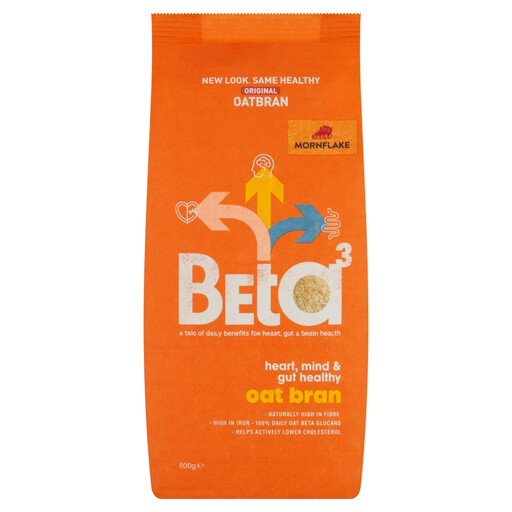
An oat-bran pantry option for shoppers prioritising a higher stated fibre figure per 100 g.
The listing states 100% oatbran, 19.4 g fibre per 100 g and 1.5 g sugars per 100 g.
It is stated to be unsuitable for wheat or barley allergy sufferers because of the manufacturing method. Check the current pack if fibre per 45 g portion matters to you.
 No image available
A larger plain-oat supply for regular household porridge use.
Two 1 kg packs contain 100% organic wholegrain oat flakes. The listing gives 8.3 g fibre per 100 g and 3.3 g per 40 g serving.
The listing declares oats as gluten. Consider storage space and how quickly a 2 kg multipack will be used.
Under Regulation (EC) No 1924/2006, a food may be described as high fibre only where it contains at least 6 g of fibre per 100 g or at least 3 g per 100 kcal. Compare the nutrition panel on the exact product because wholegrain oat products do not all list the same fibre amount.
You do not automatically need oat bran. Quaker lists 9.0 g fibre per 100 g for Traditional Rolled Oats and Jordans lists 8.1 g per 100 g for Organic Jumbo Porridge Oats, both above the stated high-fibre threshold. Oat bran is the more suitable route when you specifically want greater fibre density: Mornflake lists 25.6 g per 100 g for Fibreful Oatbran.
No. Check for a specific gluten-free label and the exact pack’s allergen statement. The Food Standards Agency states that food labelled gluten-free must contain no more than 20 mg/kg gluten, while oats must still be emphasised as an allergen. The reviewed Quaker and Jordans products also carry cross-contact wording for other gluten sources.
Not necessarily. Mornflake lists 6.5 g fibre per 100 g for Oats2Go Original and presents it as ready in minutes, but the product also contains dried skimmed milk and sugar and lists 20.4 g sugars per 100 g. Choose this format for convenience rather than assuming it is the same as plain oats.
No. Choose porridge oats for the breakfast, snack or pantry use you actually need, and compare fibre, ingredients, allergen information and preparation time separately from the evening meal occasion.