Start with a plain, individually portioned oat sachet when porridge texture is accepted but flavour preferences are uncertain, as it keeps toppings separate and makes repeat trials easier to manage. Choose a one-person pot when kettle-only preparation matters more than ingredient flexibility, and check milk content, allergens and whether the serving size feels realistic. A flavoured sachet is most useful when that flavour is already familiar.
Who this may suit
Parents trialling breakfast with a young fussy eater
For carers who need a low-pressure, small-portion option when a child rejects unfamiliar foods or changes their mind often. NHS guidance notes that accepting a food can take many attempts, so a plain, individually portioned format can make repeat exposure easier to approach.
Households managing texture and flavour sensitivity
For households where consistency, smell, flavour and separate toppings affect whether porridge is accepted. Royal United Hospitals Bath NHS Foundation Trust notes that difficulties with taste, smell and feel can be relevant to avoidant eating behaviours.
Carers needing a kettle-only serving
For routines at work, travel accommodation or school-related settings where a microwave is unavailable. A porridge pot can reduce equipment needs, but its ingredients, allergy information and heat warnings still need checking.
What to check before buying
Plain individual sachets
Choose this when: a familiar oat texture is more likely to work than a new sweet flavour, or when separate toppings are helpful.
Keep in mind: sachets need a bowl, liquid and heating, and plain oats are not automatically suitable for every allergy.
Single porridge pots
Choose this when: boiling water is available and a self-contained serving is more useful than adjusting the ingredients.
Keep in mind: the cited Sainsbury's pot contains skimmed cows' milk powder, has a 50g dry serving and must not be microwaved.
Flavoured oat sachets
Choose this when: the eater already accepts a comparable flavour and it makes breakfast more manageable.
Keep in mind: a fixed flavour gives less control than a plain base, so compare the current pack before choosing.
| Priority |
What to check |
Your needs |
| Taste and texture acceptance |
Choose between a plain base and a fixed flavour; check whether toppings can be added separately; confirm the preparation method. |
I want to avoid introducing a new flavour, topping and texture change all at once. |
| Portion size |
Compare dry serving weights; consider 27g sachets, 35g sachets and 50g pots separately; check whether the amount suits a first trial. |
A manageable serving matters more than expecting an uncertain eater to finish an adult-style portion. |
| Ingredients and allergens |
Read ingredients and allergen emphasis on the physical pack; check precautionary statements; confirm whether milk is already included. |
I need to identify declared ingredients and precautionary wording before serving someone with a diagnosed food allergy. |
| Nutrition comparison |
Compare nutrition information per 100g; also check per-serving values; allow for the effect of any required milk or additions. |
I want to compare similar formats on the same basis rather than relying on a flavour name or instant format alone. |
Common buying mistakes
-
Treating plain oats as suitable for every allergy
Ingredient lists and precautionary allergen statements can differ between otherwise similar plain-oat sachets. Choosing only by flavour or oat content can be unsafe for someone with a diagnosed allergy.
Read the current physical pack's ingredients, allergen emphasis and precautionary wording rather than relying on another flavour, pack size or older listing.
-
Starting with a large fixed serving
NHS guidance supports small portions and repeated, low-pressure exposure. A one-person pot may be convenient, but it can be less adjustable than a 27g sachet for an uncertain first trial.
For a first trial, consider a smaller plain sachet or serve only an appropriate amount of an accepted prepared portion where storage and food-safety instructions permit.
A rejected 50g pot can create avoidable food waste once it has been prepared.
-
Using a sweet flavour as the only acceptance strategy
A flavour accepted once may not address texture sensitivity or make it easier to offer a wider range of foods. Products can also differ by serving size and preparation method.
Use flavours already accepted by the eater when practical, while keeping a plain option available for separate toppings and comparing current nutrition panels on the same basis.
-
Overlooking preparation restrictions
Some sachets require a microwave and added liquid, while the cited porridge pot needs boiling water, must not be microwaved and can be hot. The wrong format can add stress to a difficult meal.
Confirm the equipment, liquid requirement, heating time, standing time and heat warnings before choosing a single-serve format.
Relevant brand references
Quaker / Oat So Simple
Quaker UK offers Original microwaveable rolled-oat sachets in several pack sizes, including 10-sachet packs. The Original product is positioned as a plain base for toppings.
- Quaker states that Original contains wholegrain rolled oats and has a two-minute microwave method.
- Its current label states that it may contain wheat, barley and soya, so check suitability where allergies matter.
Tesco
Tesco Easy Oats Original is a 10 × 27g own-label sachet option for shoppers seeking a plain, individually portioned oat product.
- Tesco describes the product as rolled wholegrain oats and nothing else, with microwave preparation.
- The retailer lists possible milk, peanut, nut and wheat cross-contact and advises shoppers to read the label as product information can change.
Sainsbury's
Sainsbury's offers Original 10 × 27g microwaveable sachets and an Original 50g porridge pot, giving a choice between a smaller plain sachet and a kettle-prepared pot.
- The sachets are described as rolled oat flakes with no added sugar, while the pot is prepared with boiling water.
- The pot includes skimmed cows' milk powder, and both formats have allergy restrictions that need checking.
M&S
M&S Traditional Porridge is a 10-pack portioned-sachet option for shoppers who prefer a water-or-milk microwave format rather than a pot.
- M&S says its 360g pack contains 10 portioned packs and takes three minutes in a microwave.
- Its product page says it is not suitable for coeliacs or for people with milk, nut, peanut or wheat allergies, despite being described as vegan.
Flahavan's
Flahavan's Organic Natural Porridge Oat Sachets provide eight 35g portions for shoppers looking for organic wholegrain oats and a plain base.
- The manufacturer lists 100% organic wholegrain rolled oats and says the sachets can be made with milk or water.
- The product may contain traces of milk, and Flahavan's describes each 35g sachet as an adult serving.
Joybuy product options
Joybuy product options for plain, flavoured and kettle-prepared instant-oat routines considered for fussy eater meals.
 No image available
Quaker Oat So Simple Big Bowl Original, 6 Pack 231g
A plain sachet option for microwave routines where familiar toppings can be added separately.
Six 38.5g sachets; prepare with water or milk in a microwave-safe bowl.
The stated sachet is larger than a standard 27g sachet, so assess the portion for a cautious first trial and check the current pack if allergy suitability matters.
Joybuy
 No image available
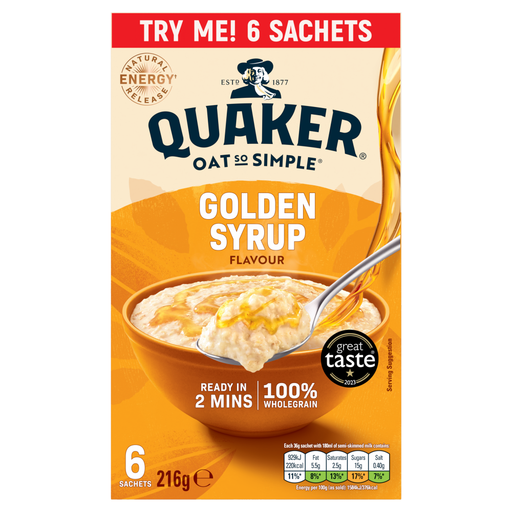
Quaker Oat So Simple Golden Syrup Sachets, 6 Pack 216g
A flavoured option to consider only where golden syrup is already a familiar accepted flavour.
Six 36g sachets; prepare with 180ml water or milk in a bowl and microwave for two minutes.
Contains sugar and natural flavourings, and the listing states that it contains oats and may contain barley, soya and wheat.
Joybuy
 No image available
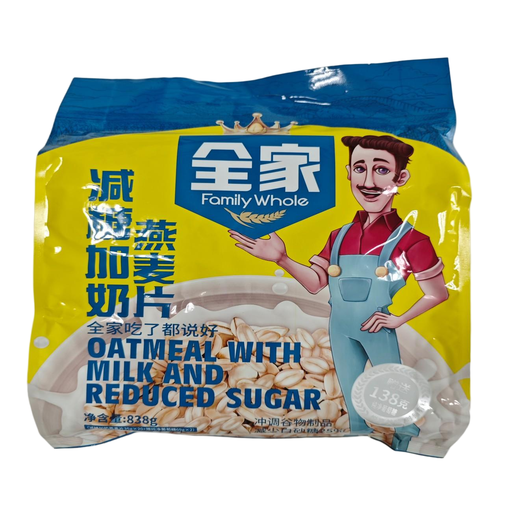
Family Whole Reduced Sugar Oatmeal with Milk, 838g
A kettle-prepared oat-flake option for one-at-a-time hot breakfast routines.
The pack contains 20 small oat-flake bags and is prepared with about 175ml boiling water.
The listed formula contains wheat, soybeans, milk and black sesame, plus ingredients including maltodextrin, malt syrup, palm oil and flavourings; the dry weight of each oat-flake bag is not stated.
Joybuy
Frequently asked questions
Is a single porridge pot always the best option for a fussy eater?
No. A pot can be useful when boiling water is available and one contained serving is needed, but it is less flexible than a plain sachet. The cited Sainsbury's pot contains skimmed cows' milk powder, has a 50g dry serving, must not be microwaved and should be handled carefully when hot.
How can I introduce instant oats when my child refuses unfamiliar foods?
Offer a small amount without pressure and return to it on another occasion if it is refused. NHS guidance says children may need lots of attempts before accepting some foods and recommends keeping meals calm.
Can I assume a plain oat sachet is suitable for allergies?
No. The cited plain products have different precautionary or suitability statements: Quaker lists possible wheat, barley and soya; Tesco lists possible milk, peanut, nut and wheat; and Sainsbury's states that its sachets are not suitable for customers with several allergies because of manufacturing methods. Check the physical pack every time if an allergy is relevant.
Should I compare sugars per sachet or per 100g?
Use both measures. Per 100g helps compare products with different serving sizes, while per-serving values show what the actual prepared portion provides. NHS guidance notes that nutrition labels provide information per 100g and sometimes per portion.


