Care-home breakfast teams needing repeatable portions
For catering or care teams using individually portioned oats to reduce dry-ingredient measuring while retaining control over the milk, water and toppings used for each resident.


Plain individual sachets are usually the more practical choice when staff need a consistent dry portion but must adapt the finished porridge to each resident’s plan. Choose a ready-to-add-water pot only when boiling-water handling is appropriate; check the exact product’s ingredients, allergen statement, preparation method and any prescribed texture requirement before serving.
For catering or care teams using individually portioned oats to reduce dry-ingredient measuring while retaining control over the milk, water and toppings used for each resident.
For teams that need to distinguish plain oats from products containing milk, sugar or precautionary allergen statements, then record the selected product against resident-specific dietary information.
For teams that cannot assume a convenient oat pot or sachet is suitable where an IDDSI texture-modified diet is prescribed. The British Dietetic Association’s Care Home Digest and the IDDSI framework both treat texture-modified provision as a separate care consideration.
Choose this when: You need a repeatable dry portion and can prepare porridge in microwaveable bowls or on the hob using the liquid appropriate for the resident.
Key consideration: A sachet standardises the oats, not the finished meal, so texture, additions and allergen checks still need to follow the care plan.
Choose this when: Individual self-contained preparation matters and staff can safely add, stir and serve boiling water.
Key consideration: Pots are not interchangeable with plain sachets: recipe, allergen declaration, heating method and hot-item handling can differ by product.
Choose this when: A resident has dysphagia or a prescribed texture-modified diet.
Key consideration: An ordinary sachet or pot does not establish an IDDSI level; use the resident’s prescribed level and the applicable IDDSI testing methods for the prepared food.
| Priority | What to check | Your needs |
|---|---|---|
| Portion consistency | Check the sachet weight, number of portions and preparation directions. Quaker and Mornflake Original sachets are stated as 27 g portions, while Flahavan’s Organic sachets are 35 g portions. | I want a defined dry-oat portion while keeping control of the liquid, toppings and final serving size for each resident. |
| Ingredients and allergens | Read the current ingredients and precautionary allergen statement for the exact SKU. Plain oats can still have milk ingredients or may-contain warnings. | The breakfast needs to fit the resident’s documented allergy and dietary requirements, rather than relying on terms such as plain or organic. |
| Preparation workflow | Confirm the heating method, liquid volume, serving vessel and hot-item precautions. Quaker’s Original Pot requires boiling water, is not microwave-safe and may be hot to hold, according to Quaker UK. | Our breakfast service needs a format that works with the available equipment and can be served safely at the required time. |
| Texture-modified diets | Check the resident’s prescribed IDDSI level and apply the relevant testing method to the prepared food. Do not use the retail format as evidence of texture compatibility. | Where swallowing, chewing or feeding difficulties are recorded, the finished porridge must follow the individual care plan. |
Quaker UK specifies boiling-water preparation for its Original Pot, which is not suitable for microwaving and may be hot to hold. Its Original Sachets have hob and microwave directions, so the two formats create different service workflows.
Check the preparation method, water or milk requirement, serving vessel and hot-item handling before standardising a product across the home.
Ingredient simplicity does not remove precautionary allergen statements. Quaker’s Original Pot includes skimmed milk powder, Mornflake’s plain sachet carries manufacturing-related allergy cautions, and Flahavan’s sachets may contain traces of milk.
Add the exact SKU and current pack allergen statement to the home’s menu and resident-allergy checking process, and reassess if the recipe or packaging changes.
A sachet specifies an oat quantity, not a complete resident-specific breakfast. The British Dietetic Association’s Care Home Digest covers nutritional care, special diets and menu planning for older adults in care homes.
Use the single serve as a procurement and preparation unit, then select or adjust the finished meal according to the resident’s documented nutrition and diet plan.
An included serving vessel changes the stock format and operational workflow, which can matter for recurring breakfast provision.
Assess bowls, labour, hot-water access and waste handling alongside the format before making a local purchasing decision.
Relevant for plain Original single-serve sachets and ready-to-add-water pots in the UK.
Relevant for Original Superfast Oats in individual 27 g sachets and Oats2Go Original pots.
Relevant for Organic Porridge Oat Sachets in 35 g single portions made with plain organic wholegrain rolled oats.
Relevant as a UK retailer listing single-serve sachets and pots from brands including Quaker and Flahavan’s.
These Joybuy options include individual porridge sachets and a ready-to-add-water pot for care-home breakfast planning. Check each product against the resident’s diet plan, allergen record, preparation equipment and any prescribed texture requirement.
 Image unavailable
Six larger individual sachets can provide a repeatable dry portion while staff choose water or milk and suitable additions.
Stated as 100% wholegrain rolled oats in 38.5 g sachets, with a 2½-minute microwave workflow. Check the current pack allergen statement and the resident’s care plan before menu approval.
For a resident with a prescribed IDDSI texture level, confirm the prepared porridge using the applicable care-plan process before serving.
 Image unavailable
Eight 43 g sachets provide measured portions for homes using microwave or hob preparation.
The flavoured mix can be prepared with water or milk and has stated microwave and hob methods. It contains sugar and soya protein, with milk, peanut and nut may-contain statements that require resident-specific review.
This is a sweetened flavoured oat-and-protein mix rather than a plain-oat sachet; confirm texture suitability where an IDDSI prescription applies.
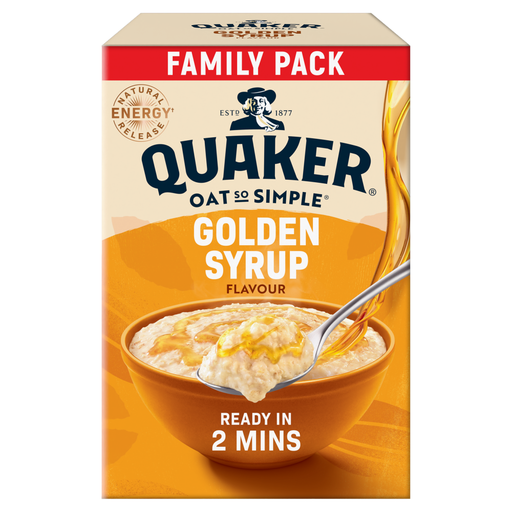 Image unavailable
This 20-sachet box suits a breakfast service that needs repeatable 36 g dry portions.
Each sachet is prepared in a microwaveable bowl with about 180 ml milk using a stated two-minute microwave method. The product contains added sugar and declares oats, with possible barley, wheat and soya.
Confirm the flavour, ingredients, allergens and prepared texture against each intended resident’s documented requirements.
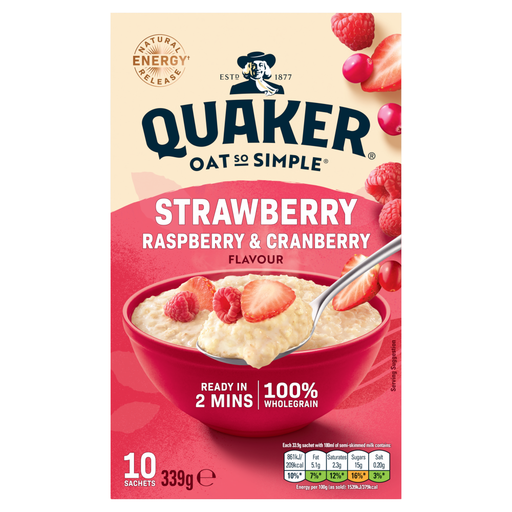 Image unavailable
Ten 33.9 g sachets give a defined dry mix for a microwave-based breakfast routine.
The listed method uses the empty sachet to measure milk before a two-minute microwave preparation. The mix contains sugar and flavourings and may contain barley, soya and wheat.
Use only where the flavour, ingredients, allergens and microwave-only workflow fit the resident’s plan and the home’s equipment.
 Image unavailable
This individual pot is a ready-to-add-hot-water option for a controlled staff-led serving workflow.
The listing states a 57 g serving and a two-minute wait after adding hot water. It contains skimmed milk powder, sugar and gluten-containing cereals.
Confirm the current pack directions for water volume, microwave use and hot-item handling before standardising service, and check texture suitability where prescribed.
No. They standardise the dry oats, but still need the specified liquid and a safe preparation method. Quaker UK instructs users of its Original Sachets to add 180 ml milk and prepare them on the hob or in a microwaveable bowl; Flahavan’s states that its sachets can be used with milk, water or a mixture.
Do not assume so. Quaker UK states that its Oat So Simple Original Pot requires boiling water, is not suitable for microwaving and may be hot to hold. Follow the exact pack directions for the purchased product and the home’s hot-food handling process.
No. Check the exact product’s ingredients and precautionary statement whenever the product or pack changes. Mornflake Original Sachets contain oat flakes but carry manufacturing-related allergy cautions, while Flahavan’s Organic Sachets may contain traces of milk.
No. Where a resident has a prescribed texture-modified diet, use the prescribed IDDSI level and applicable testing methods for the prepared food rather than treating the retail format as proof of compatibility. The British Dietetic Association’s care-home guidance and the IDDSI framework both support this care-plan-led approach.