Buying priorities
Choose the oat format first, then check that the ingredients and pack information suit the recipe and household requirements.
| Priority |
What to check |
Your needs |
| Repeat-use value |
Compare equivalent plain rolled-oat packs; check pack weight; avoid treating a smaller pack as directly comparable with a larger one. |
I bake often and want a straightforward cupboard ingredient rather than extra flavourings or single-serve portions. |
| Texture and moisture |
Check whether the recipe names standard porridge oats or jumbo oats; allow for jumbo flakes to absorb moisture more slowly; use the recipe's oat size where possible. |
I want either a softer oat base or more visible flakes and a firmer bite in the finished loaf. |
| Recipe compatibility |
Read the ingredient list; choose plain wholegrain oats for a neutral recipe base; reserve muesli and granola for recipes that specifically allow their added ingredients. |
I want to control the salt, sweetness, seeds and other additions myself. |
| Allergen checks |
Read the allergen declaration and any may-contain statement; look for an explicit gluten-free claim when required; check the physical pack before baking for others. |
I need oats that fit a particular allergy, coeliac disease or gluten-intolerance requirement without assuming that standard oats are suitable. |
Joybuy product options
Joybuy product options for plain oat bread baking, including gluten-free, organic and jumbo-oat routes.
 No image available
Morrisons Free From Gluten Free Oats 1kg
A specialist option when a gluten-free oat product is required for bread baking.
The listing identifies 100% gluten-free oat flakes in a 1kg pack and describes them as suitable for baking. Oats remain an allergen, so check the current pack's allergen statement before buying.
Joybuy
 No image available
Flahavan's Organic Porridge Oats 2kg (2 x 1kg)
A larger organic option for households that bake regularly and prefer a plain oat ingredient.
The listing states 2 x 1kg packs of 100% organic wholegrain oat flakes. It is not presented as a gluten-free product.
Joybuy
 No image available
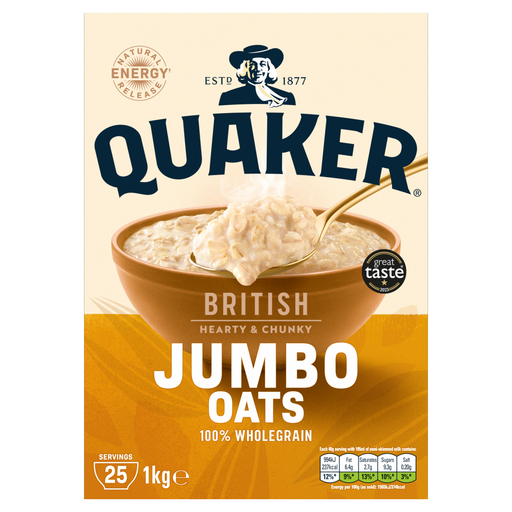
Quaker Jumbo Rolled Oats 1kg
A jumbo-oat option for recipes where visible flakes and a more defined texture are wanted.
The listing states 100% wholegrain oat flakes in a 1kg pack and mentions baking use. It may contain traces of wheat, and jumbo oats can handle moisture differently from standard porridge oats.
Joybuy
 No image available
Flahavan's Organic Porridge Oats 1kg
A standard-size organic route for neutral oat-bread recipes.
The listing states 100% organic wholegrain oat flakes in a 1kg pack. It is not a confirmed gluten-free choice.
Joybuy
 No image available
Scotts Porage Oats Old Fashioned Porridge Oats 1kg
A 1kg rolled-oat option for standard oat-bread recipes and regular cupboard use.
The listing identifies 100% rolled oats and gives cool, dry, airtight-container storage guidance. It may contain gluten from wheat and barley, so check suitability where allergies or gluten-free requirements apply.
Joybuy
Frequently asked questions
Are porridge oats suitable for making bread?
Yes, when you use a recipe designed for oats. Flahavan's porridge-bread recipe uses oats with yoghurt, egg and bread soda, so oats are not a direct substitute for wheat flour in every conventional yeast-bread recipe.
Should I choose standard rolled oats or jumbo oats for oat bread?
Choose standard rolled oats when the recipe specifies porridge oats or you want a straightforward plain-oat base. Choose jumbo oats when you want distinct flakes and a firmer texture; Mornflake says jumbo oats are used in bread and absorb moisture more slowly than smaller flakes.
Can I use muesli or granola instead of plain porridge oats?
Not as a direct substitute for a standard oat-bread recipe. Muesli and granola can contain fruit, nuts, seeds and toasted cereal components that change flavour, allergens and moisture handling, so use them only when a recipe specifically calls for them or you adapt the recipe deliberately.
Do I need gluten-free oats for bread baking?
Choose gluten-free oats only when a gluten-free product is required. UK food guidance states that food labelled gluten-free must contain no more than 20 mg/kg gluten, but gluten-free oats still contain oats and are not oat-allergen-free.
How should a large pack of oats be stored after opening?
Follow the pack instructions. The checked Waitrose packs advise storing oats in a cool, dry place and, once opened, in an airtight container, which is useful when a pack is used across several baking sessions.


