
24/7 Customer Support

Free returns

Same-day & Next-day Delivery

Quality Guaranteed

Unlock Your Welcome Offers: FREE Delivery | Up to 80% OFF | Free 30-day JoyPlus trial
Download the APP
A portable 12V car fridge freezer can make camping, caravanning, fishing trips and long journeys considerably easier. Unlike a basic cool box, a compressor model can cool independently of ice and, depending on its temperature range, freeze food for longer trips.
However, not every electric cool box is designed for the same job. A compact unit for sandwiches and drinks may not be suitable for frozen food, while a large camping fridge freezer could take up valuable space in a small car or campervan. Before buying, check the cooling system, power requirements and battery protection rather than relying on headline capacity alone.
Many small portable car refrigerators use semiconductor cooling. These can often cool drinks and may also offer a warming mode, but their performance depends more heavily on surrounding temperature. They are generally designed for chilled lunches, snacks and beverages rather than deep freezing.
A 12V compressor cooler works more like a household refrigerator. It is the more suitable design when you need a genuine fridge-freezer function, temperatures below 0°C or more consistent cooling during warm weather. Always check whether the product can freeze, rather than assuming that every 12V car cooler can do so.
An advertised litre figure does not show how easily the interior can be packed. A tall, narrow compartment may suit bottles, while a wider box may be more convenient for food containers. If you are buying for a campervan, boat or motorhome, measure the available space, including room to open the lid and access the controls.
Also allow ventilation space around the compressor. For example, the EUHOMY 18L model specifies approximately 10 cm of clearance around its compressor ventilation area. Blocking this space can reduce cooling efficiency and put unnecessary strain on the appliance.
A 12V camping fridge may continue drawing power after the engine is switched off if the vehicle socket remains live. Without suitable battery protection, extended use could leave a starter battery with insufficient charge.
Check whether the fridge has adjustable protection levels and confirm how your vehicle’s accessory socket operates. A separate leisure battery or approved portable power station may be more appropriate for overnight use. Do not connect a DC appliance directly to a household socket; use the supplied or compatible AC adapter.
For freezing, look for a stated temperature range that extends below 0°C. The EUHOMY 18L and 49.4L compressor models are specified from -20°C to +20°C, while the Alpicool C9PT is also listed with cooling down to -20°C.
A model offering only cooling to approximately 4°C may be suitable for drinks and packed lunches but should not be treated as a car freezer box. Cooling speed can also vary with ambient temperature, the starting temperature of the contents and how often the lid is opened.
Choose capacity according to your typical trip:
Weight matters if you regularly move the unit between a vehicle and a tent or boat. Handles, straps and a stable base are useful practical features, but the fridge should still be secured during transport.
A versatile 12V and 24V fridge can work in cars, campervans, lorries, buses and boats, provided the relevant accessory outlet can supply the required power. AC compatibility is useful at home, in a garage or at a campsite with mains electricity.
Look for three-stage battery protection, commonly represented by low, medium and high settings. These settings help manage the cut-off point, but they do not replace sensible battery management. Keep ventilation openings clear, follow the supplied instructions and check the appliance’s cable and plug before use.
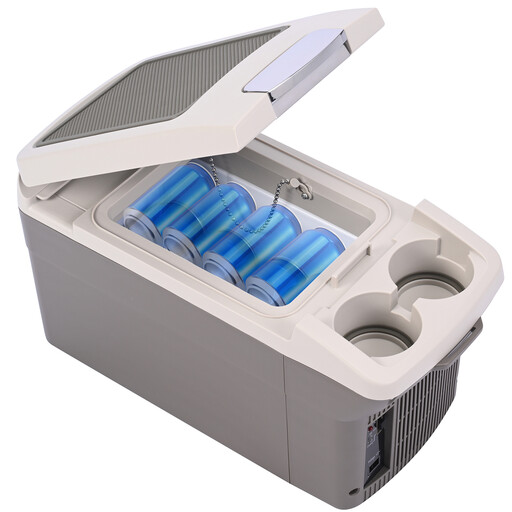
Why This Fits Their Persona: A compact option for commuters, solo travellers and occasional campers who mainly need chilled drinks, snacks or a packed lunch in the car.
Its cooling and warming functions are clearly distinct from deep-freezing use, helping buyers choose it for everyday travel rather than expecting compressor performance.
12V operation, seat-belt slot, cup holders, shoulder strap and approximately 40 dB fan operation.
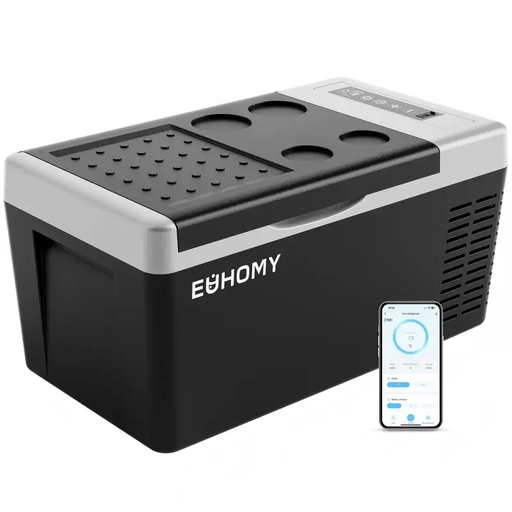
Why This Fits Their Persona: A practical fit for couples, campervan owners and road-trippers wanting fridge and freezer flexibility without moving to a large motorhome fridge.
The -20°C to +20°C range identifies it as a compressor fridge freezer, while adjustable three-stage battery protection addresses overnight power concerns.
18L capacity, 12/24V DC and 100–240V AC support, app control, magnetic seal and stated 42 dB operation.
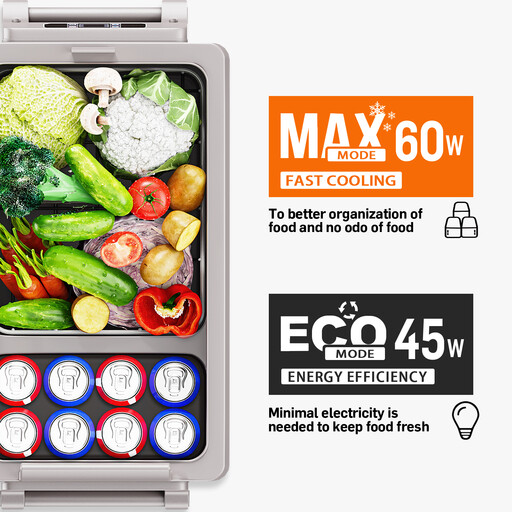
Why This Fits Their Persona: Its larger storage area suits families, extended caravan trips, lorry drivers, boat owners and fishing journeys requiring more food and drink storage.
Its two storage zones help separate different foods, while 12/24V compatibility and battery protection make it more adaptable across vehicles.
49.4L capacity, two zones, -20°C to +20°C setting range, AC/DC adapters and stated 40 dB operation.
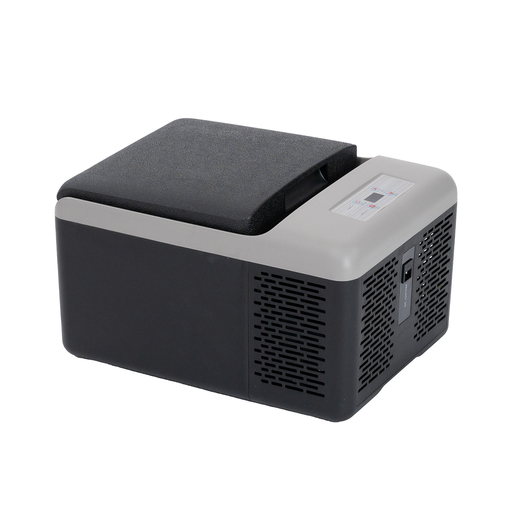
Why This Fits Their Persona: A compact compressor option for car, lorry, boat and motorhome users who need freezing capability in a small footprint.
The product specification identifies compressor cooling, a -20°C setting and three battery protection levels rather than relying on a generic “cooler” description.
9L capacity, temperature memory, anti-shock design and operation at stated tilts of up to 45 degrees.
We have compiled a complete, real-time list of products that fully satisfy these strict selection criteria and UK safety regulations.
It can be worthwhile if you regularly camp, travel long distances or need frozen storage away from mains electricity. A compressor model offers more control than an ice-filled cooler, but it usually costs more and needs a suitable power supply.
Yes, if the vehicle socket remains powered and the battery system can support it. Use the appliance’s battery protection settings, maintain ventilation and consider a leisure battery or power station. A starter battery should not be allowed to discharge excessively.
Running cost depends on wattage, ambient temperature, selected temperature, insulation, ventilation and how often the lid is opened. A unit listed at around 40–45W will not necessarily draw that amount continuously because the compressor cycles on and off. Comparing the stated energy class and power information gives a more useful guide than wattage alone.