
24/7 Customer Support

Free returns

Same-day & Next-day Delivery

Quality Guaranteed
Download the APP
Categories
As UK summers become increasingly warm and unpredictable, maintaining a comfortable temperature at home is more important than ever. A stuffy home office can hinder productivity, and a warm bedroom can make a good night's sleep feel impossible. For the many UK homes without central air conditioning, a portable air conditioner offers a flexible and effective solution.
Navigating the market can be confusing, with a wide array of features and technical specifications to consider. This guide is designed to help you understand the key factors, from cooling power to noise levels, so you can find a unit that fits your space and your needs.
Before looking at specific models, it helps to understand a few key features. Focusing on these will ensure you select a unit that performs well and meets your expectations.
The cooling capacity of an air conditioner is measured in British Thermal Units (BTU). A higher BTU rating means the unit can cool a larger area. For a standard UK bedroom or home office (around 15-25 square metres), a 9,000 BTU unit is often sufficient. For larger living rooms or open-plan spaces (up to 35 square metres), a 12000 BTU portable air conditioner will be more effective at circulating cool air. Consider factors like ceiling height and how much direct sunlight the room gets, as these can also influence the power you need.
Noise and running costs are two major considerations for any home appliance. For an air conditioner for bedroom use, a quiet portable air conditioner is essential. Noise levels are measured in decibels (dB(A)); a unit that operates below 55 dB(A) is generally comfortable for daytime use, while models with special silent or sleep modes that go below 40 dB(A) are ideal for light sleepers.
An energy efficient portable ac unit will also keep your electricity bills in check. Look for the UK/EU energy label, where ratings like A+ or A++ indicate lower energy consumption. Features such as inverter motors and eco-friendly refrigerants (like R290) can further reduce a unit's environmental impact and running costs.
Modern life is about convenience, and air conditioners are no exception. A smart wifi air conditioner allows you to control the temperature from your phone via an app, whether you are on the sofa or on your way home. Voice assistant compatibility with Alexa or Google Assistant adds another layer of hands-free control.
Furthermore, some models offer more than just cooling. A portable ac unit with heat functionality uses a heat pump to provide efficient warmth during colder months, making it a valuable appliance all year round. Units with dehumidifying and fan-only modes add even more versatility.
Here are our recommendations based on a combination of performance, features and user-centric design.
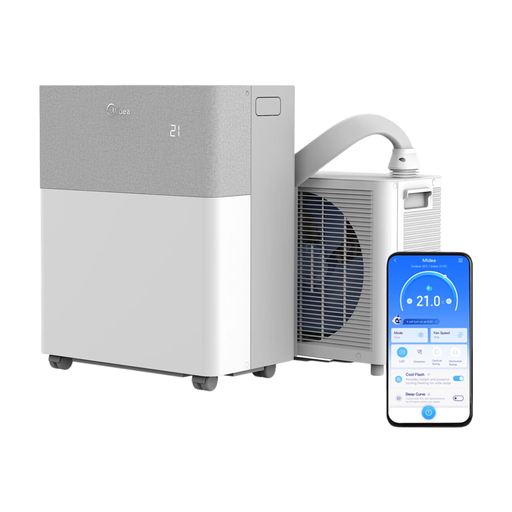
Why It Stands Out: This unit combines the high performance of a fixed split system with the flexibility of a portable design. Its standout feature is the exceptionally quiet operation, running at just 39 dB(A) in silent mode. This, combined with its high A++ energy efficiency rating for cooling, makes it a leading choice for cost-conscious and noise-sensitive households.
Pros:
Who is it for? Those seeking a premium, high-performance solution that delivers powerful cooling and heating without the noise disruption of a typical mobile air conditioner. It is particularly well-suited for primary living spaces, bedrooms or home offices where quiet is paramount.
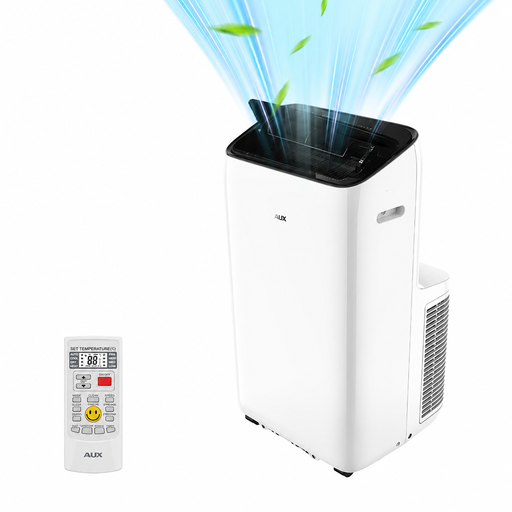
Why It Stands Out: This model is a powerful and practical workhorse for tackling heat in larger rooms. With a 12000 BTU output, it quickly brings down the temperature in living rooms or open-plan areas. It balances this power with modern conveniences, including app control and a self-evaporation system that minimises the need to empty a water tank.
Pros:
Who is it for? Users who need to cool a spacious room effectively and value the convenience of smart home integration. It is a great all-rounder for homeowners and renters looking for serious cooling power without permanent installation.
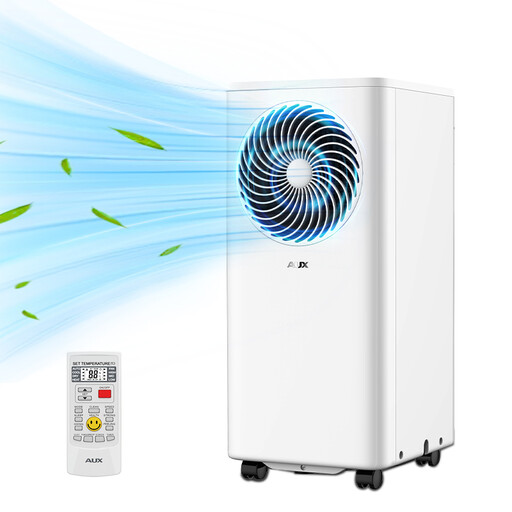
Why It Stands Out: This unit is designed for flexibility and ease of use. Its more compact size and lower weight (23.5kg) make it exceptionally easy to move from a home office during the day to a bedroom at night. Despite its smaller frame, it still packs 9,000 BTUs of cooling power and includes the same smart Wi-Fi capabilities as its larger sibling.
Pros:
Who is it for? Those living in flats or smaller homes who need a versatile cooling solution that can be easily moved where it is needed most. It is an excellent choice for personal spaces like bedrooms and offices.
Every home has unique cooling requirements, and the right choice depends on your specific space and priorities. If these models are not quite what you are looking for, or if you wish to explore a wider variety of solutions, we invite you to browse our full collection.
Explore our complete range of Heating and Cooling Air Conditioners
Do all portable air conditioners need to be vented out of a window? Yes, all refrigerant-based portable air conditioners generate hot air as part of the cooling process, which must be exhausted outside. They come with a flexible hose and a window sealing kit to make this a straightforward process. Proper venting is crucial for the unit to cool a room effectively.
How much does it cost to run a portable air conditioner in the UK? The running cost is determined by the unit's power consumption (measured in kilowatts), its energy efficiency rating, your electricity tariff and usage patterns. Choosing an energy efficient portable ac with a high rating (A+ or A++) will result in lower electricity bills. Some manufacturers provide estimated seasonal running costs, which can serve as a helpful reference.
Can I use a portable air conditioner in my bedroom? Certainly. A portable air conditioner for bedroom use is a very common application. For the most comfortable experience, select a quiet portable air conditioner with a low decibel rating on its lowest setting and a dedicated 'Sleep Mode', which typically reduces fan speed and noise for an undisturbed night.