
24/7 Customer Support

Free returns

Same-day & Next-day Delivery

Quality Guaranteed

Unlock Your Welcome Offers: FREE Delivery | Up to 80% OFF | Free 30-day JoyPlus trial
Download the APP
As UK summers become progressively warmer, maintaining a comfortable temperature at home is no longer a luxury but a necessity. For the many homes and flats without central air conditioning, the heat can make working from home, relaxing or sleeping a real challenge. A portable air conditioner offers a flexible and effective way to cool specific rooms without the need for complex installation.
However, with so many options on the market, choosing the right one can feel overwhelming. This guide is designed to help you understand the key features to look for, from cooling power to smart capabilities. We'll walk you through what matters most, so you can find a unit that fits your space, budget and lifestyle.
Before diving into specific models, it’s helpful to understand the core features that determine a unit's performance and suitability for your home.
The cooling power of an air conditioner is measured in British Thermal Units (BTU). The higher the BTU rating, the larger the space it can effectively cool.
With energy prices being a key concern, choosing an energy efficient air conditioner is crucial. In the UK and EU, appliances are given an energy rating from G (least efficient) to A+++ (most efficient). Opting for a model with an A-rating or higher can lead to noticeable savings on your electricity bill over the summer months. Features like a 24-hour timer and smart scheduling also help you run the unit only when needed.
A noisy appliance can easily disrupt a quiet evening or a good night's sleep. If you plan to use the unit in a sensitive area, look for a quiet portable air conditioner. Noise levels are measured in decibels (dB); models that operate under 55dB are generally considered quiet, and some have special 'Sleep' or 'Silent' modes for near-inaudible operation.
Furthermore, a modern smart air conditioner with WiFi connectivity offers a new level of convenience. A wifi air conditioner allows you to control settings remotely via a smartphone app or even with voice commands, so you can start cooling your room before you get home. Many units are also a combined air conditioner and dehumidifier, helping to remove excess moisture from the air for added comfort.
Here are a few standout models that cater to different needs and room sizes, selected for their blend of performance, features and user convenience.
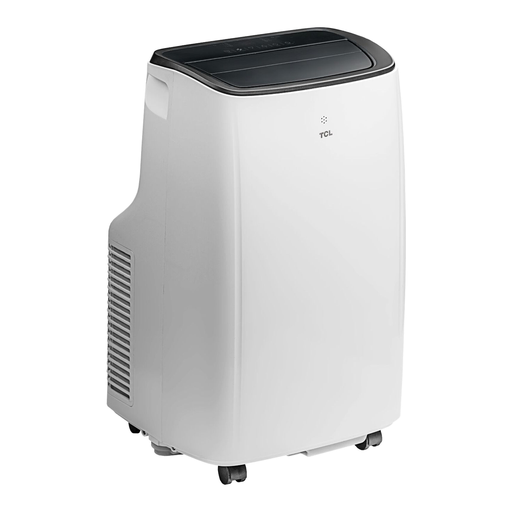
Why It Stands Out: This TCL model strikes an excellent balance between cooling power and modern functionality. Its 9000BTU capacity is substantial enough for most living rooms and master bedrooms, while its A-Class energy rating ensures performance doesn't come with excessive running costs. The integration of WiFi control via the TCL Home App makes it a truly convenient smart home device.
Pros:
Who is it for: Anyone needing a reliable and powerful cooling solution for a medium-sized room, who also values the convenience of smart home integration.

Why It Stands Out: Offering the same smart features as its larger counterpart, this 7000BTU model is perfectly scaled for smaller spaces. It provides effective cooling for a home office or air conditioner for bedroom use without being oversized. It retains the A-Class efficiency and WiFi control, making it a smart choice for personal spaces.
Pros:
Who is it for: Individuals looking to cool a bedroom, study or other small-to-medium room who don't want to compromise on modern conveniences like app control.
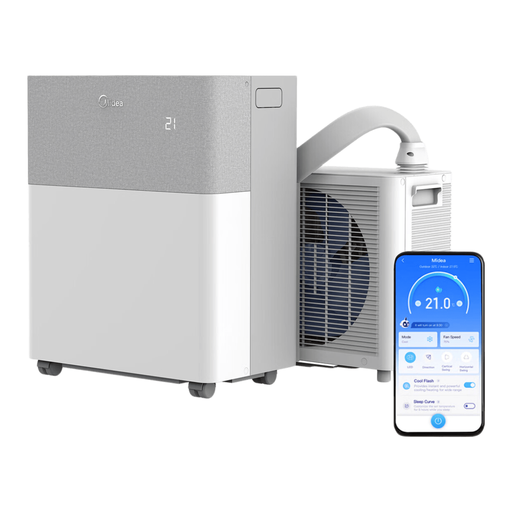
Why It Stands Out: The Midea Portasplit redefines what a portable unit can be. Its innovative split-system design places the noisy compressor in an outdoor unit, connected by a flexible hose. This allows the indoor unit to operate at an exceptionally low 39 dB(A) in silent mode. With a powerful 12000BTU capacity, A++ energy rating for cooling, and a heat pump for winter, it offers year-round climate control.
Pros:
Who is it for: Users for whom quietness is the top priority. It's also an excellent choice for those needing to cool or heat a larger space efficiently and want a single appliance for all seasons.
These recommendations cover a range of common needs, but every home is different. If you're looking for a different size, feature set or simply want to see what else is available, you can explore our full range of Cooling Air Conditioner Unit Fan.
1. Do all portable air conditioners need to be vented out of a window? Yes, all refrigerant-based portable air conditioners generate hot air as part of the cooling process, which must be vented outside. They come with an exhaust hose and a window kit to make this simple. This is essential for the unit to effectively lower the room's temperature. Models that don't require a hose are evaporative air coolers, which function differently and are generally less powerful, especially in humid UK weather.
2. How much does it cost to run a portable air conditioner in the UK? The cost depends on the unit's power consumption, its energy efficiency rating, your electricity tariff and usage patterns. An energy efficient air conditioner with an A-rating or higher will be more economical. To manage costs, use features like timers to run the unit during specific hours or a smart thermostat to maintain a set temperature without running constantly.
3. Can I use a portable air conditioner in a bedroom overnight? Certainly. A portable air con is an excellent solution for a hot, stuffy bedroom. For the best experience, choose a quiet portable air conditioner with a low decibel (dB) rating and a 'Sleep Mode'. This function typically reduces the fan speed and adjusts the temperature gradually throughout the night, ensuring a comfortable and peaceful sleep environment.