
24/7 Customer Support

Free returns

Same-day & Next-day Delivery

Quality Guaranteed

Unlock Your Welcome Offers: FREE Delivery | Up to 80% OFF | Free 30-day JoyPlus trial
Download the APP
A portable air pump can be useful for topping up car tyres, preparing a bicycle for a ride or inflating camping equipment. However, choosing the wrong model can leave you with a flat battery, an unsuitable valve connection or a pump that overheats before the job is finished.
The product description alone does not tell the whole story. Before buying, look beyond a high PSI figure and check how the pump is powered, what it is designed to inflate and whether the supplied accessories match your equipment.
A headline figure such as 150 PSI describes the maximum stated pressure range, not necessarily how quickly the pump inflates a car tyre. Airflow, motor output, hose design and the size of the item being inflated all affect performance.
A compact digital tyre pressure pump may be suitable for topping up a car or motorcycle tyre, but it is not automatically suitable for large van, caravan or off-road vehicle tyres. Always check the stated vehicle compatibility and intended use.
A cordless tyre inflator is convenient because it does not need to be connected to a 12V socket. However, battery capacity, charging time and operating duration matter. A small rechargeable bike pump may be practical for occasional top-ups, while repeated inflation of several car tyres can place greater demand on its battery.
Check whether the product includes USB charging, a battery indicator, automatic shut-off and an LED light. These features can be useful, but they do not replace checking the pump’s operating limits.
A pump may support car, bicycle and sports-ball inflation only when the correct adaptor is included. Bicycle users should check compatibility with Schrader and Presta valves. For inflatables, compare the included nozzles with the valve on your air bed, pool toy or paddle board.
Corded models also vary in cable length. A short lead may not comfortably reach all four wheels, particularly on larger cars. Some electric air compressors need cooling breaks between uses, so read the instructions rather than running the unit continuously.
Choose the power system according to where you expect to use the pump:
For a car tyre compressor, verify whether the engine should be running during use to reduce the risk of draining the vehicle battery. Park safely, engage the parking brake and keep the pump and cable away from moving parts.
The pressure range should match the item you intend to inflate. Car and motorcycle tyres require pressure according to the vehicle manufacturer’s guidance, normally shown in the handbook, door frame or fuel flap—not the maximum figure printed on the pump.
Airflow, often shown in L/min, can help indicate how quickly a pump moves air, but it should be considered alongside pressure capability. Automatic shut-off is useful because it stops inflation at a preset value, although you should still check the finished pressure with a suitable gauge where appropriate.
A lightweight portable tyre inflator is easier to store in a glove compartment, pannier or rucksack. Yet very small models may have shorter hoses, smaller batteries or more limited cooling capacity.
Look for:
Electrical products should include appropriate safety information and markings where required. Follow the supplied instructions and do not use a pump in wet conditions unless it is specifically designed for that environment.
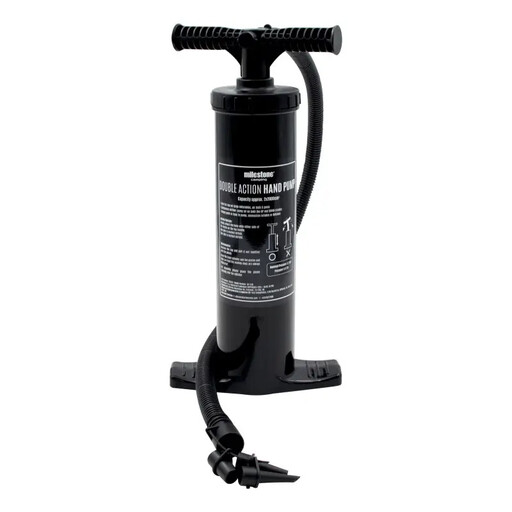
Why This Fits Their Persona: A practical choice for campers, households and occasional users who need an inflatable air pump without batteries or a 12V connection.
Its manual design avoids battery-life concerns, while the three nozzles reduce the risk of buying a pump with an unsuitable connection.
Double-action airflow operates on both strokes; the foot plate and large handle support stable use.

Why This Fits Their Persona: Designed for motorists and cyclists wanting a compact cordless tyre inflator with preset pressure controls and a built-in light.
The stated 4000mAh battery, auto-off function and multiple pressure units make its operating limits clearer than a basic unmetered pump.
150 PSI stated maximum; supports car, motorcycle, bicycle, ball and custom modes, with USB-C input/output.
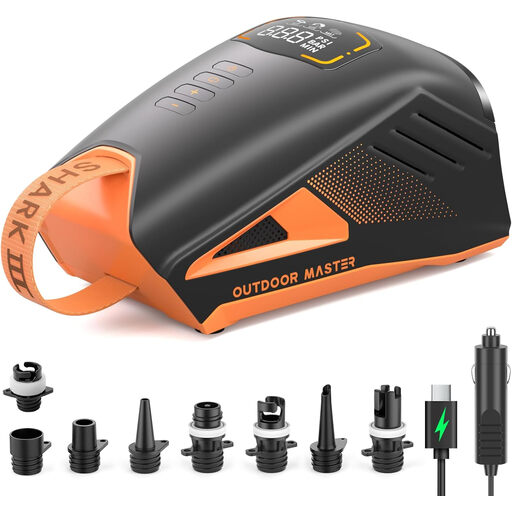
Why This Fits Their Persona: A dedicated option for paddle-board owners and outdoor users who regularly inflate larger equipment.
Its stated 20 PSI limit, digital pressure control and included nozzles are more relevant to SUP use than a car-focused compressor.
74Wh battery; supports inflation and deflation, with Type-C and vehicle DC charging options.
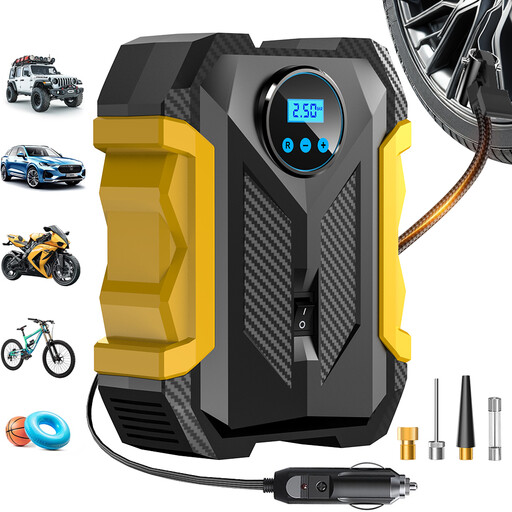
Why This Fits Their Persona: A straightforward car tyre compressor for drivers who prefer vehicle-powered operation and a longer 3m cord.
The 12V connection avoids relying on an internal battery, while the digital display makes the selected pressure easier to monitor.
150 PSI stated maximum; includes LED lighting and a 3m power cord for reaching vehicle tyres.
We have compiled a complete, real-time list of products that fully satisfy these strict selection criteria and UK safety regulations.
A portable pump is intended for inflation and pressure adjustment. It should not be treated as a substitute for repairing a damaged tyre or resolving a persistent pressure loss.
For many drivers, a compact 12V car air pump or rechargeable inflator can be useful for correcting gradual pressure loss or handling a low tyre during a journey. It does not replace a spare wheel, sealant system or roadside assistance, and it should not be used to ignore visible tyre damage.
Runtime depends on tyre size, starting pressure, target pressure, temperature and the number of tyres inflated. Product descriptions may provide an estimated number of inflation cycles, but real-world performance varies. Charge the unit before longer trips and consider a 12V model if you regularly need repeated inflation.
Some pumps include several modes or nozzles, but suitability varies. A motorcycle tyre inflator or car compressor may handle small bicycle tyres with the correct adaptor, while a dedicated SUP air pump is designed for the higher air volume and pressure requirements of paddle boards. Check the pressure range, airflow and valve fittings before purchasing.