
24/7 Customer Support

Free returns

Same-day & Next-day Delivery

Quality Guaranteed

Unlock Your Welcome Offers: FREE Delivery | Up to 80% OFF | Free 30-day JoyPlus trial
Download the APP
A portable air pump can be useful for handling a low car tyre, topping up a bicycle, preparing sports equipment or inflating camping accessories. However, compact pumps vary significantly in pressure, airflow, power supply and intended use. Choosing by size or a high PSI number alone can lead to a disappointing purchase.
Before comparing models, watch for these common buying pitfalls:
Car tyres commonly require considerably more pressure than household inflatables. Check whether the product is specifically described for use with car tyres, bicycle tyres or motorcycle tyres, rather than relying on the maximum PSI figure.
A useful car tyre inflator should ideally offer:
For bicycles and motorcycles, confirm that the included fittings support the relevant valve type. A bicycle pump function may also require a different nozzle from a car tyre connector.
Airflow is usually shown in litres per minute, while wired models may also state motor wattage. Higher airflow can help with larger items, but it does not automatically mean faster tyre inflation.
For example, the Porbi Q19 lists a 26 L/min flow rate, an advertised maximum pressure of 150 PSI and an approximate inflation time of 7.5 minutes for an empty tyre. It also states that top-ups may take around 30 seconds, although actual results depend on tyre size, starting pressure and temperature.
A wired car tyre inflator with a 100W motor may suit drivers who prefer continuous vehicle power. Conversely, a cordless air compressor is easier to carry between wheels or use away from the car.
For a rechargeable air pump, inspect the battery capacity, charging time and claimed operating duration. A compact body is valuable for glovebox or pannier storage, but a very small battery may not provide enough reserve for several inflations.
USB-C charging is convenient because it can work with a suitable power adapter, power bank or vehicle USB port. Still, check the required input, such as 5V/2A, rather than assuming every USB-C charger will provide the same performance.
Also consider:
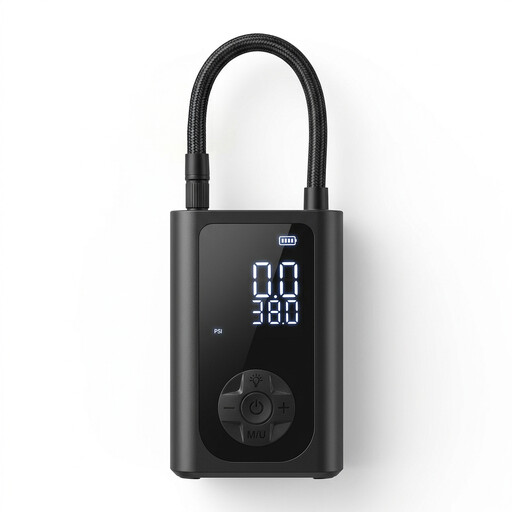
Why This Fits Their Persona: A practical option for UK drivers who want one cordless pump for occasional car, motorcycle, bicycle and ball inflation without carrying a larger compressor.
It lists five modes, a Type-C charging port, pressure detection and a stated 26 L/min flow rate, making its intended uses clearer than a low-pressure inflatable-only pump.
4000mAh battery, 150 PSI maximum pressure, LED light with steady and SOS modes and a stated 25-minute full-charge runtime.
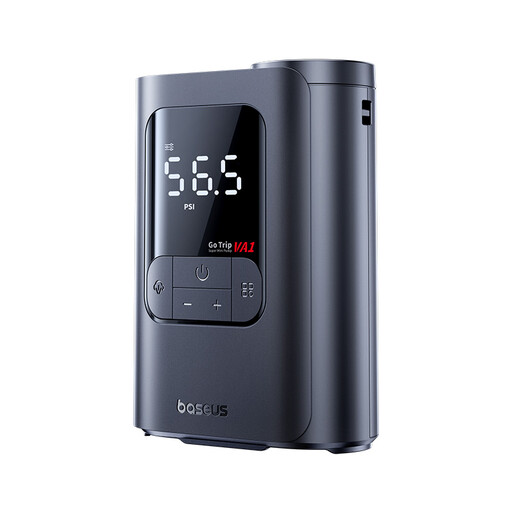
Why This Fits Their Persona: Suitable for motorists, cyclists and motorcyclists who value a compact wireless design with multiple inflation modes and USB-C charging.
Its listed specifications identify the battery arrangement, USB-C input, pressure accuracy and included hose and nozzles, so buyers can compare practical details rather than appearance alone.
82W maximum motor power, USB-C input, five inflation modes, approximately 459g weight and listed ±0.05 BAR pressure accuracy.
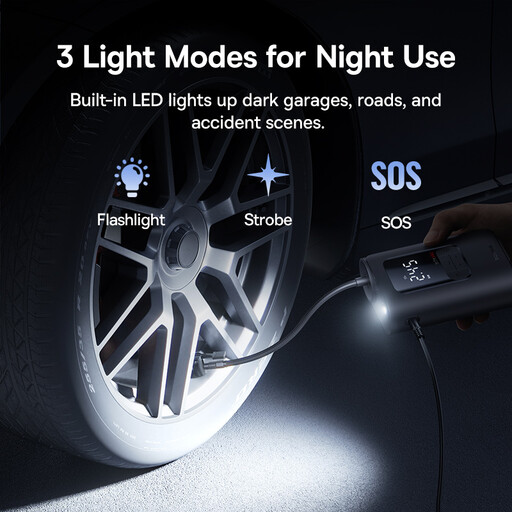
Why This Fits Their Persona: A sensible match for drivers who prefer a wired pump for roadside use and want to avoid depending on a rechargeable battery.
The wired design avoids the limited runtime of a cordless pump; check that your vehicle provides the required 9–15V power connection before purchase.
100W motor power, 9–15V input and a 22-cylinder design, with an air hose, three air nozzles and DC power cable included.
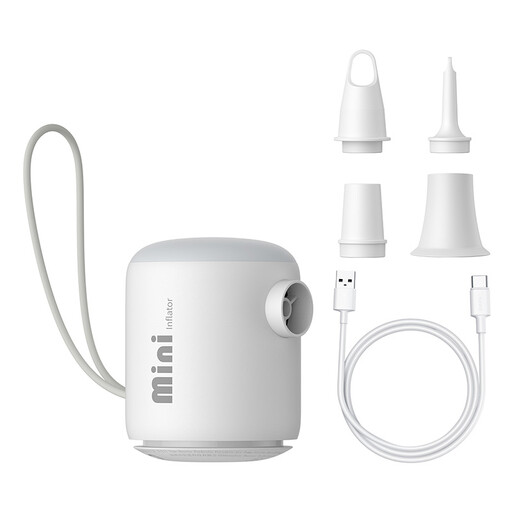
Why This Fits Their Persona: Designed for inflatable toys, yoga balls, small air mattresses and swimming rings, making it useful for homes, holidays and camping equipment.
The product information clearly states that it is not suitable for car, motorcycle or bicycle tyres, preventing a common compatibility mistake.
Approximately 130g, 230L/min listed inflation speed and 5V/1A USB power requirement for compatible low-pressure inflatables.
We have compiled a complete, real-time list of products that fully satisfy these strict selection criteria and UK safety regulations.
Some are, but not all. A proper portable tyre inflator should list car tyre compatibility, a suitable pressure range and a realistic inflation time. Low-pressure USB models intended for inflatable toys or air mattresses should not be used for vehicle tyres.
Runtime varies by battery capacity, tyre size, starting pressure and motor load. For instance, the Porbi Q19 lists a 25-minute full-charge runtime and states that it can typically inflate two empty 195-size car tyres. Treat this as a product specification rather than a guaranteed result for every vehicle.
Both use electricity, but their practical costs differ. A cordless model uses mains electricity or USB charging and offers flexible placement. A wired model draws power from the vehicle, usually through a 12V-style connection and avoids battery replacement or charging delays. For occasional top-ups, either format may be economical; the more suitable choice depends on where and how often you inflate.