
24/7 Customer Support

Free returns

Same-day & Next-day Delivery

Quality Guaranteed

Unlock Your Welcome Offers: FREE Delivery | Up to 80% OFF | Free 30-day JoyPlus trial
Download the APP
A portable blender can make a morning smoothie, protein shake or quick fruit purée far more convenient. However, compact appliances are not interchangeable. A cordless model designed for one serving may struggle with family portions, while a powerful jug blender may be unsuitable for a train commute or small student kitchen.
The main purchasing mistakes usually come from three marketing traps:
For a commuter, gym user or student, a mini blender with a 475–600ml vessel can be easier to store and carry. A personal blender that blends directly into a travel bottle can also reduce washing-up.
For family breakfasts, batch preparation or everyday cooking, consider a jug blender with at least 1.2 litres of capacity. Models such as the Bear Table Blender offer a 1.2L container, while the Ninja Detect Blender Pro includes a jug and two single-serve cups. Always check the manual for maximum fill levels, especially when preparing hot food.
Motor power is useful for comparison but it should not be viewed in isolation. A 120W cordless blender is intended for portable, single-serve use, whereas a 500W or 1,200W mains-powered appliance is more suitable for larger quantities and repeated kitchen preparation.
Look for a stainless steel blade assembly, appropriate speed or pulse controls and clear guidance on frozen ingredients. An ice-crushing blender may handle ice or frozen fruit, but users should still cut large pieces down, add sufficient liquid and avoid overloading the vessel. A protein shake blender should also have enough space for liquid and powder to circulate without creating dry pockets.
A USB-C blender can be convenient because it may recharge from a compatible laptop, power bank or mains adaptor. Check the stated charging time and number of blending cycles per charge rather than relying on general battery descriptions.
Cleaning is equally important. Dishwasher-safe cups, lids and removable blade assemblies can make regular use more realistic. The motor base should generally be wiped rather than submerged.
For UK households, check that the product includes suitable operating instructions, voltage information and relevant conformity markings, such as UKCA where applicable. For mains models, confirm compatibility with the UK’s 220–240V supply. Never blend carbonated drinks or excessively hot liquids in a sealed portable cup, and keep sharp blades away from children.

Why This Fits Their Persona: A practical choice for first-time users who want a compact smoothie maker for home, work or the gym without carrying a separate drinking bottle.
The two 0.6L Tritan bottles make the usable serving size clear, while removable blades support regular cleaning rather than occasional use.
300W motor, one-button control, pulse function and two 0.6L to-go bottles.
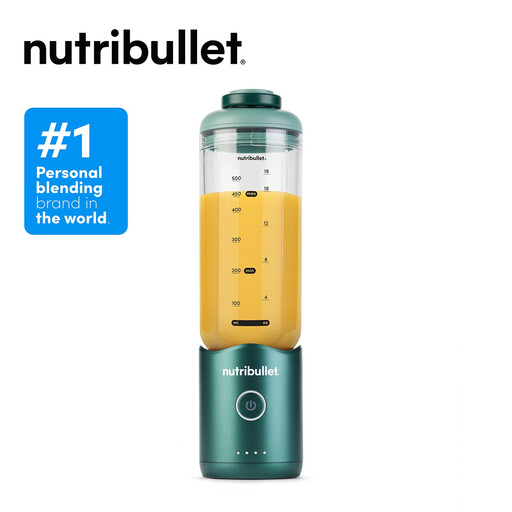
Why This Fits Their Persona: Suitable for users who value a detachable drinking vessel and a more informed approach to battery management when travelling around the UK.
The 500ml capacity is specified, and the three-tier LED indicator helps reduce uncertainty about remaining battery power.
Detachable 500ml cup, leakproof sip lid with carry loop and dishwasher-safe blade block.
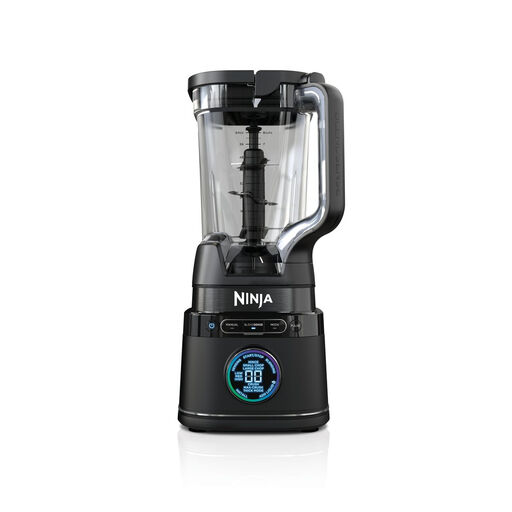
Why This Fits Their Persona: Designed for households needing both a conventional jug blender and individual cups for smoothies, frozen drinks, sauces and larger food preparation.
The package lists a 1200W motor, jug, two single-serve cups and specific manual and automatic modes, making its multi-purpose format clear.
10 speeds, BlendSense programmes and top-rack dishwasher-safe jugs, cups and blades.
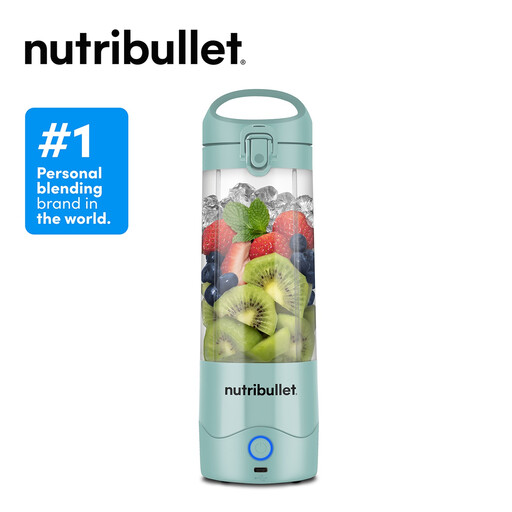
Why This Fits Their Persona: Its cordless format suits gym bags, office kitchens, commuting and travel where a wall socket may not be available.
It specifies a 475ml cup, USB-C charging and 15+ blending cycles per charge rather than relying only on a general portability claim.
Rechargeable battery, USB-C cable, leak-proof to-go lid and dishwasher-safe cup, lid and blade assembly.
We have compiled a complete, real-time list of products that fully satisfy these strict selection criteria and UK safety regulations.
Some models are described as suitable for ice or frozen fruit, but performance depends on ingredient size, liquid level, battery charge and motor design. Follow the supplied instructions, avoid large solid pieces and do not exceed the maximum fill line. If frequent ice crushing is your priority, a mains-powered model with a specified ice-crush function may be more suitable.
Battery life varies by model and blending conditions. One listed portable model specifies 15+ cycles per charge, while another states approximately 10–12 blends. Cold, thick mixtures and repeated heavy use can reduce practical runtime. USB-C charging is useful for topping up, but check whether a charging adaptor is included before purchase.
Portable cups are generally intended for cold or room-temperature drinks unless the manufacturer explicitly states otherwise. Do not place excessively hot liquid into a sealed vessel, as steam can create pressure. For hot soup, choose a suitable jug blender or hand blender and follow its temperature instructions. A hand blender can be particularly useful for blending soup directly in an appropriate saucepan, while a larger jug model may suit batch preparation.