
24/7 Customer Support

Free returns

Same-day & Next-day Delivery

Quality Guaranteed

Unlock Your Welcome Offers: FREE Delivery | Up to 80% OFF | Free 30-day JoyPlus trial
Download the APP
Finding the right portable Bluetooth speaker can feel like navigating a maze of technical specifications and marketing claims. Whether you're planning a picnic in the park, a garden get-together or simply want to upgrade your audio experience at home, the sheer number of options is overwhelming. This guide is designed to cut through the clutter, offering clear, practical advice to help you choose a wireless speaker that genuinely fits your lifestyle.
As the Joybuy Product Recommendation Officer, my role is to filter the market and present you with straightforward information, so you can make a choice with confidence.
Before diving into our recommendations, let's cover a few key features to consider. Understanding these will help you identify what matters most for your needs.
A portable speaker should be ready for life on the move. For outdoor use, look for an IP (Ingress Protection) rating. A common and highly effective rating is IP67, which means the device is completely dust-tight and can be submerged in up to one metre of water for 30 minutes. This makes for a reliable waterproof outdoor speaker for the beach or poolside. For those who travel frequently, a small travel speaker that is both lightweight and compact is essential for packing light.
There's nothing worse than the music cutting out mid-party. A long battery life speaker is a must for all-day listening. Look for models offering at least 10-12 hours of playtime on a single charge. Also, consider connectivity features. Most modern speakers use Bluetooth 5.3 for a stable, efficient connection. If you want a more expansive soundstage, look for models that support stereo pairing speakers, allowing you to link two identical units for a true left/right channel audio experience.
Audio performance is, of course, paramount. For casual listening, a compact speaker with a single full-range driver can be perfectly adequate. However, for those who prioritise audio fidelity, a Hi-Res audio wireless speaker is the way to go. These models are certified to reproduce music with greater detail and clarity, closer to the original studio recording. Pay attention to the driver configuration—speakers with separate tweeters (for high frequencies) and woofers (for low frequencies) generally offer a more balanced and dynamic sound.
Based on a combination of features, performance and user-centric design, here are our recommendations for 2026.

Why It Stands Out: The Sony SRS-XB100 is an excellent all-rounder that balances portability with impressive audio performance. Its standout feature is the Sound Diffusion Processor, which disperses sound in all directions for a more immersive listening experience, ensuring everyone at the gathering hears the music clearly.
Pros:
Who is it for? This speaker is perfect for outdoor enthusiasts, travellers and anyone needing a durable, reliable wireless speaker with a battery that lasts all day and night.

Why It Stands Out: The JBL Go 4 is the definition of a small travel speaker. It packs the signature JBL Pro Sound into an incredibly compact frame that can easily be clipped to a bag or slipped into a pocket. The redesigned integrated loop makes it even easier to carry on the go.
Pros:
Who is it for? Ideal for students, hikers or anyone who values maximum portability. If you need a speaker you can take absolutely anywhere without a second thought, the Go 4 is a leading contender.
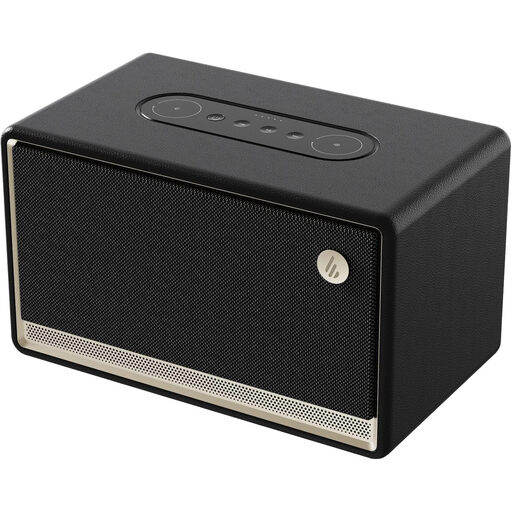
Why It Stands Out: For those who refuse to compromise on sound quality, the Edifier ES300 is a portable powerhouse. It is a certified Hi-Res Audio Wireless speaker, delivering exceptional clarity and detail. Its advanced driver setup, including a 4-inch mid-low driver and dual silk dome tweeters, produces a rich, room-filling sound that rivals many stationary systems.
Pros:
Who is it for? This speaker is for the audio enthusiast who wants premium sound for their home, office or desktop but still values the flexibility of a battery-powered, portable design.
While these three models cover a wide range of needs, they are just a starting point. Every listener has unique preferences for sound, design and features. If you haven't found your perfect match here, we invite you to browse our broader collection.
Explore our full range of Sound speaker products to discover more options tailored to your specific requirements.
1. What does an IP67 rating on a speaker actually mean? An IP rating measures a device's resistance to solids and liquids. The first digit (6) indicates its protection against solids, with '6' being the highest level, meaning it is completely dust-tight. The second digit (7) indicates its protection against liquids. A '7' means the speaker can be submerged in up to 1 metre of fresh water for up to 30 minutes without damage. This makes it ideal for use near pools, at the beach or in the rain.
2. Can I connect two different brands of Bluetooth speakers together? Generally, no. The stereo pairing speakers feature, which allows two speakers to play in a left/right stereo configuration, is typically proprietary. This means you usually need two identical speakers from the same brand and model to use this function. Some brands offer multi-speaker connectivity (like JBL's Auracast) that may work across different models within their own ecosystem, but cross-brand pairing is not a standard feature.
3. Is a Hi-Res audio wireless speaker worth the extra cost? This depends on your listening habits and source material. If you primarily listen to high-quality audio files (like FLAC or WAV) or subscribe to a high-fidelity streaming service (such as Tidal or Amazon Music HD), a Hi-Res audio wireless speaker can make a noticeable difference. It reproduces a wider range of frequencies, resulting in more detail, nuance and clarity in the music. For casual listening or standard streaming quality, the difference may be less apparent.