
24/7 Customer Support

Free returns

Same-day & Next-day Delivery

Quality Guaranteed

Unlock Your Welcome Offers: FREE Delivery | Up to 80% OFF | Free 30-day JoyPlus trial
Download the APP
A portable speaker can transform a garden gathering, beach day or kitchen playlist. However, choosing between a mini Bluetooth speaker, a loud Bluetooth speaker and a waterproof Bluetooth speaker is not simply a matter of picking the model with the biggest wattage or longest advertised playtime.
Marketing language can hide practical limitations. Before buying, UK shoppers should check the protection rating, realistic battery features, carrying design and connection options. The right portable Bluetooth speaker should suit where you will use it, how often you will carry it and the devices you already own.
An IP rating describes protection against solids and water under defined test conditions. The first digit relates to dust protection, while the second relates to water resistance.
For example, IP67 generally indicates dust protection and temporary immersion in water up to the manufacturer’s stated limits. IP68 may allow deeper or longer immersion, but the exact conditions still depend on the product specification. An IPX7 rating indicates water protection but does not necessarily confirm dust protection.
Always close charging ports before exposure to water, avoid charging when the speaker is wet and follow the supplied instructions. Water resistance can also reduce over time through wear, impact or damaged seals.
A speaker’s stated playtime is usually measured under particular conditions. Volume level, bass intensity, Bluetooth connection, lighting effects, temperature and power-bank use can all affect battery performance.
A Bluetooth speaker with long battery life may be suitable for a full day outdoors, but look for the standard playtime as well as any optional battery-saving mode. Features such as lighting and extra bass can increase power consumption.
Higher wattage can be useful for a garden party or open outdoor space, but it does not automatically mean more balanced sound. Driver configuration, enclosure design and placement also influence how music is heard.
A compact speaker may be more practical for a commute or bedroom, while a larger outdoor Bluetooth speaker may deliver greater volume and fuller bass but take up more space in a rucksack or car.
For everyday outdoor use, an IP67 or IP68 dustproof Bluetooth speaker offers protection against both dust and water, subject to its stated limits. An IPX7 model can be suitable around splashes and temporary immersion, but it has no dust-resistance rating in the “X” position.
Do not assume that “waterproof” means suitable for seawater, high-pressure spray or prolonged submersion. Rinse off salt or sand where the manufacturer permits it, dry the exterior and keep charging ports clean.
Consider how long you normally spend away from a socket. A speaker offering 9–12 hours may suit commuting, home use and a day trip. Longer stated playtime can be useful for camping or garden events.
A speaker with power bank functionality can charge a compatible phone, but this uses the speaker’s own battery. Check whether a USB-C cable is included, whether a power adaptor is supplied and whether the power-bank output is suitable for your device.
A strap, loop or carabiner can make a meaningful difference when attaching a speaker to a backpack or bicycle bag. Pocket-sized models are convenient, but their smaller drivers may not fill a large outdoor area.
If you want wider sound, look for Bluetooth speaker with stereo pairing or a multi-speaker system. Pairing is usually limited to compatible models or a particular brand ecosystem, so check compatibility before buying a second unit.
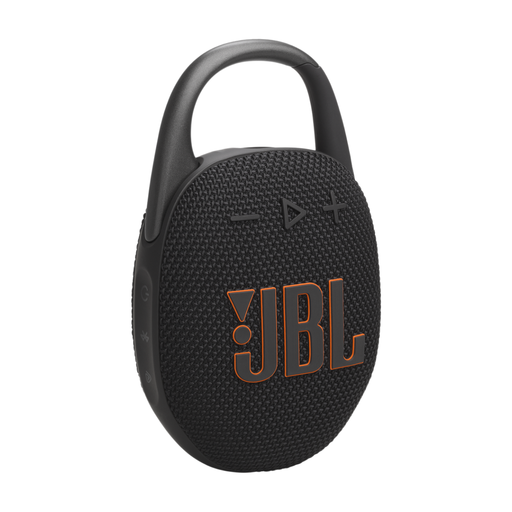
Why This Fits Their Persona: Its compact shape and integrated carabiner suit commuters, students and casual listeners who want a simple portable wireless speaker for bags, desks and short trips.
The specification states IP67 protection, rather than relying only on a general outdoor label. Its stated playtime is up to 12 hours, or up to 15 hours with Playtime Boost.
Integrated carabiner, Bluetooth 5.3, USB-C charging and support for compatible multi-speaker pairing.
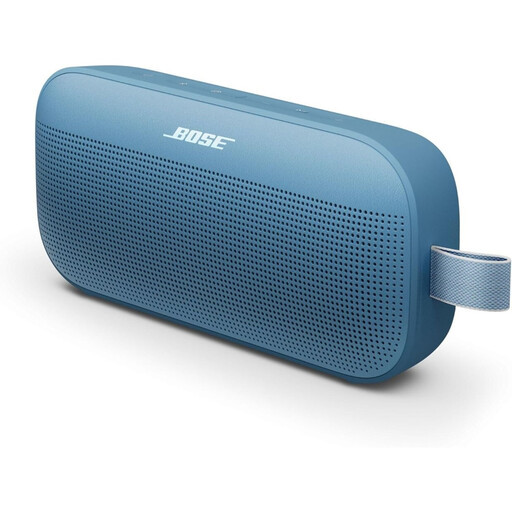
Why This Fits Their Persona: A suitable choice for listeners who move between the flat, garden and weekend walks and want adjustable sound through an accompanying app.
The IP67 rating clearly covers dust and water protection, while PositionIQ is specified to adjust audio according to the speaker’s orientation.
Up to 12 hours of stated playtime, Bluetooth 5.3, a utility loop and Stereo or Party Mode with compatible speakers.
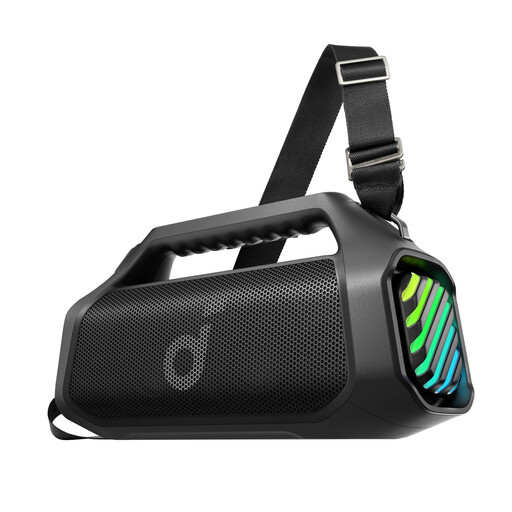
Why This Fits Their Persona: Designed for larger garden gatherings, camping trips and listeners who need substantial output, lighting and charging flexibility.
The listing specifies IP68 dust and water protection, a 20-hour stated playtime and a 10W built-in power bank, making the core claims easier to compare.
140W maximum stated output, 2+2 channel configuration, RGB lighting, USB-C fast charging and PartyCast 2.0 support.
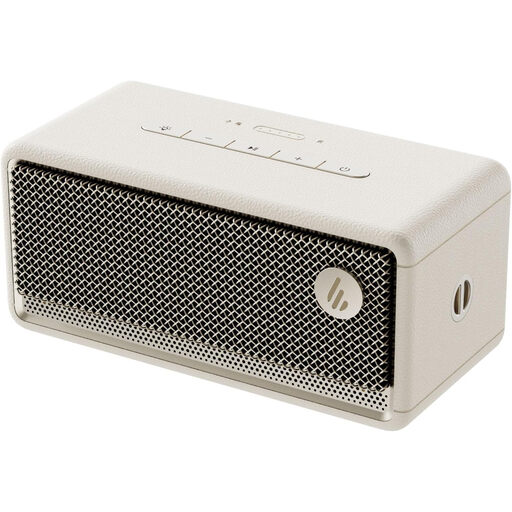
Why This Fits Their Persona: Its multiple inputs and lighting options work for home listening, small parties, beach trips and users who want more than Bluetooth alone.
The listing identifies IP66 protection and a 9-hour stated playtime, allowing shoppers to assess it without assuming that every “waterproof” claim has the same meaning.
34W RMS output, Bluetooth 5.4, USB-C and 3.5 mm AUX inputs, ambient lighting and stereo pairing.
We have compiled a complete, real-time list of products that fully satisfy these strict selection criteria and UK safety regulations.
Models with a suitable IP rating can generally handle the conditions stated by the manufacturer. Keep ports closed, avoid charging in damp conditions and remember that rain resistance does not necessarily cover saltwater, mud or high-pressure water.
There is no fixed lifespan. Battery capacity gradually declines with charge cycles, while seals, buttons and casing can be affected by drops, heat, sand and moisture. Storing the speaker in a dry, moderate-temperature location and charging it with a suitable cable can help reduce avoidable wear.
They normally use less electricity than mains-powered audio systems because they run from a rechargeable battery. Running cost depends on charging frequency, battery size and your electricity tariff. Features such as high volume, RGB lighting and power-bank charging can require more frequent recharging.