
24/7 Customer Support

Free returns

Same-day & Next-day Delivery

Quality Guaranteed

Unlock Your Welcome Offers: FREE Delivery | Up to 80% OFF | Free 30-day JoyPlus trial
Download the APP
A portable speaker can look like a simple purchase, but the wrong model may quickly become inconvenient. A compact unit might lack the volume needed outdoors, while a large party speaker may be too heavy to move regularly. Marketing terms such as “powerful bass”, “all-day battery” and “waterproof” also need closer examination.
This guide explains the practical specifications that matter when choosing portable Bluetooth speakers in the UK, including water resistance, battery life, sound output, connectivity and portability.
An IP rating describes protection against dust and water under specified test conditions. It does not mean a speaker is suitable for every wet environment.
For example, an IP67 waterproof Bluetooth speaker is designed to resist dust and temporary immersion, but its ports must be closed properly. Charging while wet can damage the device and create a safety risk. A water-resistant mini Bluetooth speaker may cope with splashes by the pool, but that does not automatically make it suitable for prolonged submersion, high-pressure water or use inside a shower.
Battery claims normally use phrases such as “up to”, meaning actual performance can vary with volume, content, temperature and extra functions. Lighting, bass-heavy tracks and powerbank use can reduce runtime.
Check the standard playback figure where it is provided, rather than relying only on an extended mode. A Bluetooth speaker with long battery life is useful for camping, travel and garden gatherings, but it should still be recharged in a dry, ventilated place using a compatible charger.
A higher output figure does not automatically mean clearer sound. Speaker configuration, enclosure design, drivers and sound processing also affect performance. Similarly, a large cabinet may produce more room-filling sound but be awkward to carry upstairs or place in a small UK flat.
Consider where the speaker will be used most often. A wireless portable speaker for kitchen listening has different requirements from a high-power Bluetooth speaker for a garden party.
Look for a clearly stated IP rating, not just “outdoor-ready” wording. IP67 models such as the Bose SoundLink Flex (2nd Gen) are rated for dust protection and temporary immersion. The JBL Flip 7 and JBL Boombox 4 are listed with IP68 protection, although users should still follow the manufacturer’s depth, duration and port-sealing guidance.
For beach use, dust protection is particularly relevant because sand can enter exposed openings. Rinse or clean the exterior according to the product instructions, and never connect a charger until the speaker and ports are dry.
Check:
The Bose SoundLink Flex (2nd Gen) lists up to 12 hours of battery life and typically takes four hours to charge. The JBL Flip 7 lists up to 14 hours, or up to 16 hours with Playtime Boost. The JBL Boombox 4 specification lists up to 28 hours and includes a USB-C charging function and powerbank capability.
Weight and dimensions are more useful than the word “portable”. The Bose SoundLink Flex weighs approximately 0.59 kg and includes a utility loop for attaching it to a bag. The MIFA A1 weighs approximately 175 g, making it easier to carry for short trips or everyday use.
For larger gatherings, a party speaker may be more suitable. The LG XBOOM RNC9 weighs approximately 22.5 kg and stands over one metre tall, so it is portable in the broad sense but not designed for frequent hand-carrying. It offers a two-way, four-speaker system with dual 8-inch woofers, microphone and guitar inputs, karaoke controls and RGB lighting.
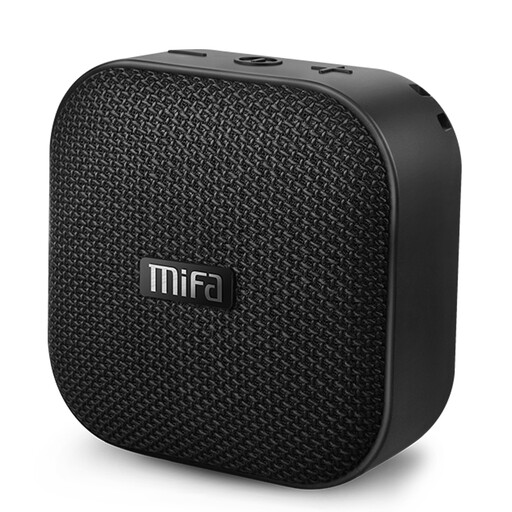
Why This Fits Their Persona: Its compact 175 g design suits first-time buyers, commuters and UK residents who want simple music playback at home, in a bag or outdoors.
The stated dimensions and weight make its portability clear, while its splash-resistant design is more practical than an unclear “outdoor” claim.
Bluetooth streaming, hands-free calling, AUX input and Micro-SD support up to 32GB.
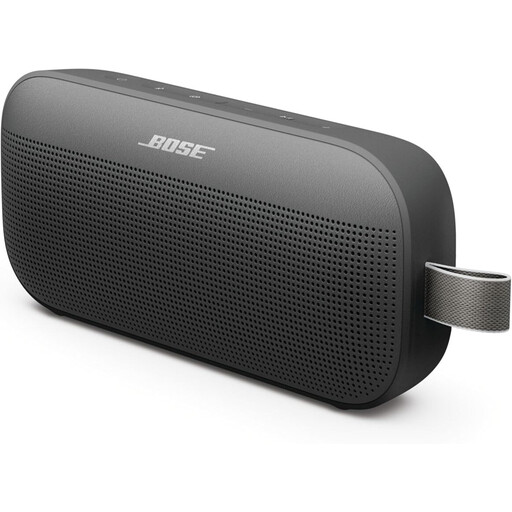
Why This Fits Their Persona: A compact option for listeners who want adjustable sound, durable construction and flexible positioning for home, travel or beach use.
Its IP67 rating, sealed-port guidance and stated 12-hour battery figure provide clearer expectations than broad waterproof or all-day wording.
Bluetooth 5.3, PositionIQ orientation sensing, adjustable EQ through the Bose app and Bose Stereo or Party Mode.
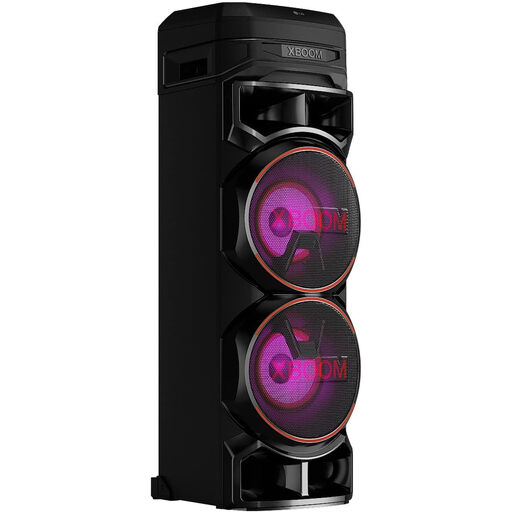
Why This Fits Their Persona: Designed for hosts who prioritise room-filling sound, karaoke, DJ controls and lighting for larger indoor or garden events.
Its 22.5 kg weight and listed dimensions make the moving requirements visible, helping buyers avoid mistaking a large party system for an everyday travel speaker.
Dual 8-inch woofers, RGB lighting, microphone and guitar inputs, karaoke functions and Wireless Party Link.
Yes, provided the model’s protection rating, battery and construction match the conditions. An outdoor Bluetooth speaker with IP67 or IP68 protection is more suitable for gardens, beaches and poolside areas than a model with no stated rating. Even protected speakers should not be charged when wet.
Lifespan depends on battery care, charging habits, heat exposure, physical impacts and water ingress. Avoid storing a speaker fully depleted for long periods, use compatible charging equipment and follow the manufacturer’s water-resistance instructions. Battery capacity may gradually reduce with repeated charge cycles.
They generally use modest amounts of electricity compared with larger home audio systems, but consumption varies by battery size, volume and charging frequency. A mini Bluetooth speaker typically needs less energy to recharge than a large party speaker. Features such as RGB lighting and powerbank charging can increase battery drain.