
24/7 Customer Support

Free returns

Same-day & Next-day Delivery

Quality Guaranteed

Unlock Your Welcome Offers: FREE Delivery | Up to 80% OFF | Free 30-day JoyPlus trial
Download the APP
A portable speaker can make a kitchen, garden, campsite or beach trip more enjoyable, but the wrong model may bring weak battery performance, unclear sound or inadequate protection from water. Marketing often focuses on bass modes, maximum volume and colourful lighting, while leaving out details that matter during everyday use.
Before choosing among portable Bluetooth speakers, look beyond the headline feature. Check the protection rating, realistic playtime, charging requirements, dimensions and connection options. The following guide explains the practical points that matter for UK buyers, followed by product recommendations matched to different listening habits.
An IP rating is more useful than vague wording such as “waterproof design”. The first digit concerns protection from solids such as dust, while the second relates to water exposure. For example, IP67 indicates dust protection and temporary submersion under specified test conditions. IP68 also indicates dust protection, but the exact depth and duration should still be checked in the product instructions.
Ports must be sealed before exposure to water, and a speaker should never be charged while wet. Water resistance can also deteriorate through wear, impact or damage to the casing. A waterproof Bluetooth speaker is therefore not automatically suitable for prolonged submersion.
“Up to” battery figures are measured under particular conditions. Louder volume, bass enhancement, lighting, cold weather and multi-speaker connections can reduce actual playback time. If you need a long battery life speaker for a full day outdoors, compare the standard playtime with any battery-saving mode and check the charging interface.
Also check whether a charging cable or power adaptor is included. Some models use USB-C but do not include the cable, while others include a cable but not a mains adaptor.
A compact Bluetooth speaker is convenient, but physical size limits driver area and acoustic output. A small model can work well for personal listening, a desk or a quiet picnic. Larger drivers, separate tweeters and passive radiators generally provide more scope for bass and volume, although the result also depends on tuning and placement.
“Deep bass” descriptions should be considered alongside the speaker’s dimensions, driver configuration and output information. A Bluetooth speaker with deep bass may sound fuller than a very small single-driver model, but it may also weigh more and take up more space.
For camping, garden gatherings and beach trips, look for a clearly stated IP rating. IP67 and IP68 models in this selection also specify dust protection, which is useful around sand and loose dirt. Do not assume that drop resistance means the speaker is indestructible: repeated falls can affect seals, buttons and the battery.
Compare:
A 62 g magnetic speaker is easy to carry, while a larger outdoor Bluetooth speaker may offer stronger output and longer playback at the cost of extra weight.
Bluetooth 5.3 or 5.4 can provide a current wireless connection, but range is affected by walls, furniture and interference. Multi-speaker pairing is useful for parties or wider coverage, but compatibility may be limited to certain models or ecosystems.
For a desk or living room, wired inputs can also be valuable. The Edifier D32 includes Bluetooth, AirPlay 2, USB-C and AUX connections, while the Edifier M60 provides Bluetooth, USB-C and AUX inputs. These are active speakers rather than pocket-sized travel models, but they can suit buyers who want a more permanent listening setup. Browse the wider active speakers range if home audio is your priority.
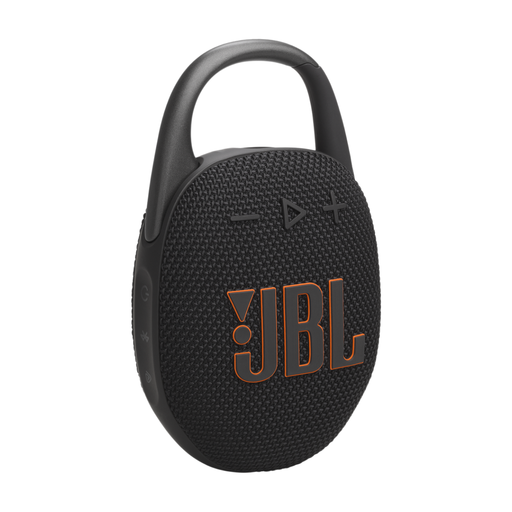
Why This Fits Their Persona: A compact option for commuting, walks, day trips and casual listening without carrying a larger speaker.
Its IP67 rating states both dust and water protection, while the advertised playtime is up to 12 hours, or up to 15 hours with Playtime Boost.
Integrated carabiner, Bluetooth 5.3, multi-point connection and Auracast pairing support.
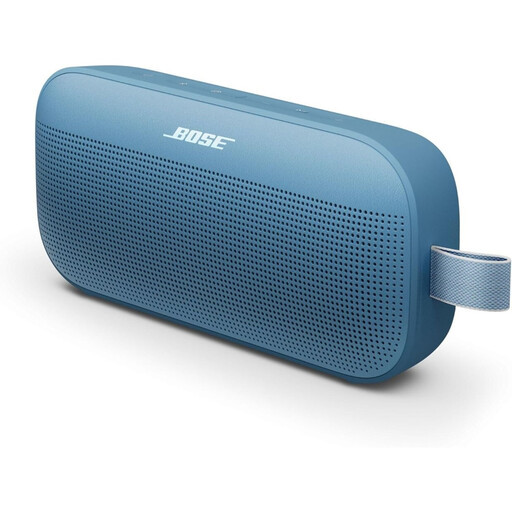
Why This Fits Their Persona: Suitable for listeners who want a packable Bose portable speaker for home, travel, walks and relaxed outdoor use.
The IP67 rating, dust protection, floating design and silicone-wrapped construction give clearer information than general adventure-focused wording.
Bluetooth 5.3, adjustable EQ through the Bose app, PositionIQ orientation sensing and up to 12 hours of playtime.
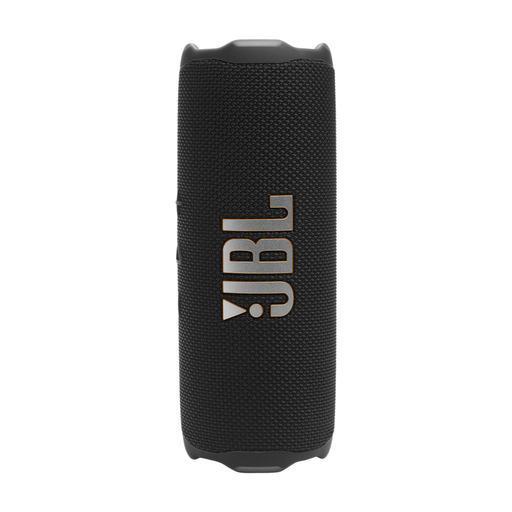
Why This Fits Their Persona: A practical match for garden gatherings, beach days, camping and listeners who want more output than a mini speaker.
Its published IP68 rating specifies dust protection and water-submersion limits, while the product information lists a 14-hour standard playtime and up to 16 hours with Playtime Boost.
Bluetooth 5.4, 25 W woofer output, 10 W tweeter output, Auracast pairing and a supplied carabiner.
We have compiled a complete, real-time list of products that fully satisfy these strict selection criteria and UK safety regulations.
Switch on the speaker and activate pairing mode. Open Bluetooth settings on your phone, select the speaker name and wait for the connection confirmation. Keep the phone within the stated range and remove old paired devices if connection problems occur. App-supported speakers may require a separate application for EQ, firmware updates or multi-speaker pairing.
Battery capacity gradually declines with charging cycles and heat exposure. Keeping the speaker dry while charging, using a suitable USB-C cable and avoiding prolonged extreme temperatures can help preserve normal operation. Physical damage, blocked ports and worn seals may reduce outdoor reliability before the audio components stop working.
Their electricity use is generally modest because they charge through USB. Running cost depends on charging frequency, battery size and your electricity tariff. A speaker used at high volume every day will need charging more often than one used occasionally at moderate volume. Check the supplied charging information and avoid leaving damaged batteries or cables in use.