
24/7 Customer Support

Free returns

Same-day & Next-day Delivery

Quality Guaranteed

Unlock Your Welcome Offers: FREE Delivery | Up to 80% OFF | Free 30-day JoyPlus trial
Download the APP
A portable Bluetooth speaker can transform a garden gathering, beach trip or kitchen playlist, but the wrong model may become an expensive compromise. Marketing often focuses on maximum wattage, extended playtime or colourful lighting while overlooking practical details such as weight, water protection and whether the stated battery performance depends on a low listening volume.
Before buying, focus on how and where you will use the speaker. A compact model for everyday listening has different requirements from a Bluetooth party speaker designed to fill a large garden.
A headline figure such as “140W” or “800W” does not describe the complete listening experience. Output can vary between battery and mains operation, and high volume may reduce playtime considerably. Driver configuration, cabinet design and passive radiators also influence bass and clarity.
Treat wattage as one comparison point rather than a guarantee of sound quality. For outdoor use, look for clear information about woofers, tweeters, stereo channels and whether the speaker can maintain performance away from a wall or indoor room.
Water-resistance ratings have specific limits. An IP67-rated waterproof Bluetooth speaker is protected against dust and temporary immersion under specified test conditions. An IP68 rating may indicate a higher level of protection, but the exact depth and duration should still be checked in the product documentation.
By contrast, IPX4 or splashproof models are intended for splashes rather than submersion. They may suit a patio or poolside party, but they should not be left in heavy rain or dropped into water. Always close charging-port covers before outdoor use, and never charge a wet speaker.
“Up to 20 or 24 hours” is a maximum figure under stated conditions. Louder listening, bass-heavy tracks, lighting effects and multi-speaker connections can all reduce actual playtime. Also check whether a battery is included. Some larger party speakers use removable battery packs sold separately.
A long battery life speaker is useful for camping or day trips, but charging time and power-bank functionality may be just as important.
Match the speaker to the space. A small outdoor Bluetooth speaker may be convenient for personal listening, while a large high-power Bluetooth speaker is more appropriate for a garden gathering. Larger cabinets generally allow more substantial drivers, but they also add weight and take up storage space.
For example, the JBL Xtreme 4 uses two woofers, two tweeters and dual bass radiators. Its listed dimensions are approximately 29.7 × 14.9 × 14.1cm, making it more substantial than a backpack speaker but still manageable with its shoulder strap.
For larger events, the JBL PartyBox 520 has two 7.5-inch woofers, two 1-inch tweeters and a listed output of 400W. Its wheels and handle support transport, although its size makes it less suitable for casual day trips.
For beaches, campsites and poolside use, prioritise a clearly stated rating over vague terms such as “weather-ready”. A dustproof wireless speaker can be particularly useful around sand and loose dirt, but ports still need to remain sealed.
The JBL Boombox 4 is listed with an IP68 rating, while the Soundcore Boom 2 Pro is also specified as IP68 dustproof and waterproof. The JBL Xtreme 4 and Bose SoundLink Plus use IP67 protection. These ratings do not make a product indestructible: avoid deliberate drops, prolonged exposure beyond the stated limits and charging while wet.
Bluetooth 5.3 or 5.4 can provide modern wireless connectivity, but range is affected by walls, people and other radio equipment. Multi-point pairing is useful when two people want to take turns playing music. Multi-speaker systems can expand coverage, but check compatibility within the same manufacturer’s ecosystem.
A speaker with power bank functionality can charge a phone through USB, which is practical when there is no socket nearby. Consider whether this feature reduces the speaker’s remaining playback time. Wired inputs such as 3.5mm AUX may also matter if you want to connect a television, laptop or older audio source.
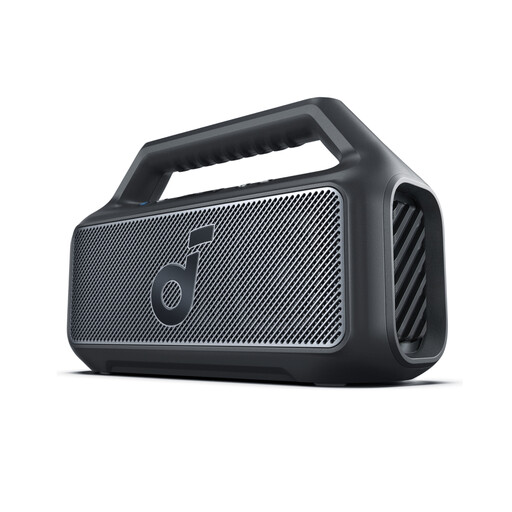
Why This Fits Their Persona: Its lightweight design, built-in handle and 18-hour stated playtime suit casual listening, picnics and smaller garden gatherings without the bulk of a large party speaker.
The IPX7 rating is more specific than a general splashproof claim, and the built-in power bank adds practical value for outdoor use.
30W stereo sound, BassUp technology, 18-hour stated playtime and floatable IPX7 construction.
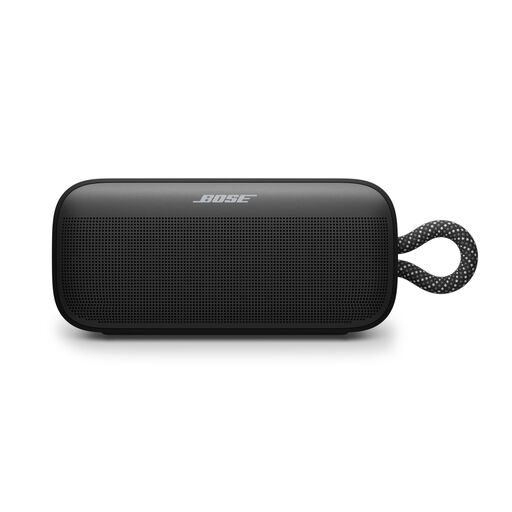
Why This Fits Their Persona: This model balances a 1.49kg body with an IP67 rating, making it suitable for UK homes, weekend travel and outdoor listening where portability still matters.
Its stated 20-hour battery figure is paired with a USB-C charging output and a clearly specified IP67 dust and water rating.
Adjustable EQ through the Bose app, IP67 protection, USB-C phone charging and Stereo or Party Mode with a second compatible speaker.
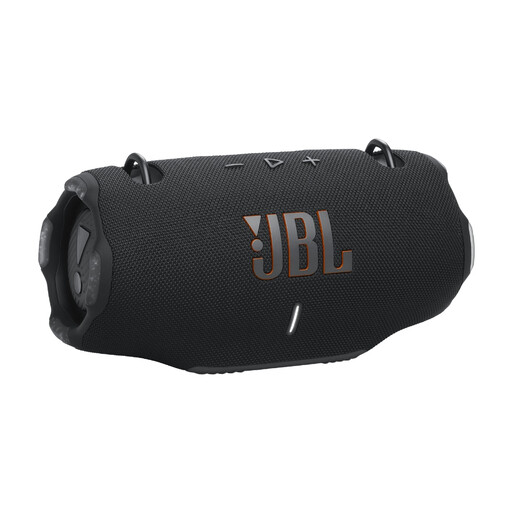
Why This Fits Their Persona: The shoulder strap and robust construction make this JBL portable speaker practical for garden events, beach days and group listening away from a mains socket.
The specification separates battery-mode output from AC-mode output and states IP67 protection, helping avoid misleading comparisons.
Up to 24 hours of stated playtime, built-in power bank, Bluetooth 5.3, Auracast compatibility and IP67 protection.
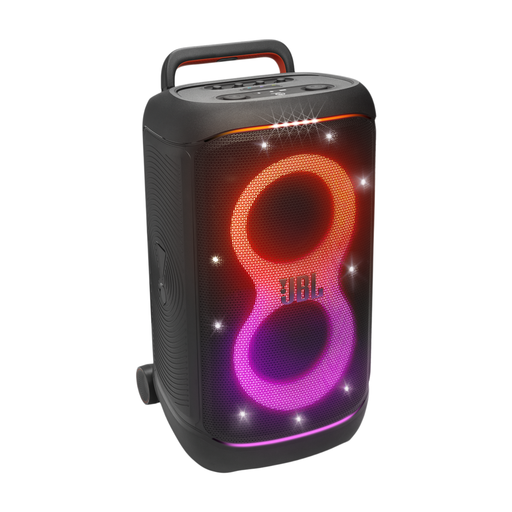
Why This Fits Their Persona: Hosts planning larger indoor or outdoor events may value its 400W output, wheels, handle and integrated light show more than compact size.
Its IPX4 splashproof rating is clearly different from waterproof protection, so buyers can plan covered, dry placement rather than risk submersion.
400W listed output, music-synchronised lighting, USB-C charge-out, wheels and support for a replaceable battery sold separately.
We have compiled a complete, real-time list of products that fully satisfy these strict selection criteria and UK safety regulations.
Pair the speaker indoors before leaving if possible, then place it on a stable, dry surface with charging-port covers closed. Keep the phone within the stated Bluetooth range and avoid placing the speaker directly in sand, standing water or extreme heat.
Lifespan depends on battery care, storage conditions and physical handling. Avoid charging when wet, do not leave the speaker in direct heat for long periods, and use the manufacturer’s recommended charger. Battery capacity gradually declines with repeated charging cycles.
Running costs are generally modest because they use rechargeable batteries, but charging frequency depends on volume, lighting and usage time. Models with RGB lights, powerful bass and high output may need charging more often than a smaller speaker. A USB power bank feature can also draw energy from the speaker when charging another device.