
24/7 Customer Support

Free returns

Same-day & Next-day Delivery

Quality Guaranteed

Unlock Your Welcome Offers: FREE Delivery | Up to 80% OFF | Free 30-day JoyPlus trial
Download the APP
Choosing portable camping equipment is rarely as simple as comparing capacity or reading a headline feature. A product may look suitable online but prove awkward in a small campervan, too power-hungry for overnight use or uncomfortable on damp British ground.
The most useful approach is to match each item to your trip style, vehicle setup and available storage. The following guide covers common buying traps, specifications worth checking and a selection of products for different outdoor users.
A small semiconductor cooler can be useful for keeping drinks and packed lunches cooler than the surrounding air. However, it does not work in the same way as a compressor coolbox. Compressor models can be set to a specific temperature and may operate as a refrigerator or camping freezer, while semiconductor units generally offer cooling or warming, with performance affected by ambient temperature.
For multi-day camping, boating, fishing or campervan travel, check the cooling method before comparing prices. A 12V car refrigerator with a compressor is usually the more suitable format when you need controlled cooling or freezing without relying on ice.
A large litre rating does not necessarily mean every part of the interior will be convenient to load. Dual-zone designs can separate food and drinks, but they may also have different compartment dimensions. Before buying, consider the height of bottles, the size of food containers and whether the lid can open fully in your vehicle.
A compact 6L or 9L model may fit beside a passenger seat, whereas a 49.4L portable camping fridge may be more appropriate for a family, group or longer road trip.
A portable refrigerator can draw power for many hours, particularly when the vehicle engine is off. Look for battery protection settings and check whether the supplied cable suits your 12V or 24V outlet. For regular campsite or home use, an AC adapter adds flexibility.
Ventilation is also important. Compressor units need clear airflow around the cooling area. Never cover the vents and secure the appliance so it cannot slide during sharp turns or on uneven tracks.
For frozen food, bait or ice-free storage, look for a compressor unit with a stated temperature range reaching below 0°C. The EUHOMY models listed below offer settings from -20°C to +20°C. A semiconductor cooler, such as the ICEROVER PN-06, is designed for more basic cooling and warming rather than deep freezing.
Treat advertised cooling speeds as condition-dependent. Starting with pre-chilled food, leaving space for air circulation and avoiding frequent lid opening can improve practical performance.
Check whether the appliance supports 12V DC, 24V DC and 240V AC. This matters if you move between a car, campervan, boat, campsite hook-up and home storage.
Three-stage battery protection is a useful feature for vehicle use. It allows users to select low, medium or high protection according to the battery and running conditions. It is not a replacement for monitoring the battery, particularly when the engine is switched off for extended periods.
For an insulated camping sleeping mat, compare packed size, open dimensions, weight and R-value rather than looking only at thickness. R-value indicates resistance to heat transfer through the mat; a higher figure generally provides more insulation, although warmth also depends on the sleeping bag, clothing and ground conditions.
The Mobi Garden egg-crate mat has an R-value of 2.6, a 2.6cm thickness and a weight of approximately 750g. The lighter NT model weighs approximately 500g and is 1.7cm thick, making it easier to carry for trekking. Foam mats should be placed on ground cleared of sharp objects and dried fully before storage.
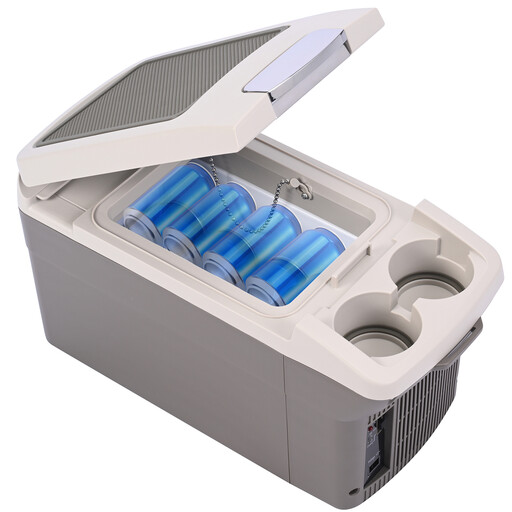
Why This Fits Their Persona: Its compact format suits occasional campers, festival-goers and road-trippers who need drinks, snacks or lunch storage without carrying a larger fridge.
The product description identifies its semiconductor cooling system and approximate cooling and warming temperatures, helping buyers avoid mistaking it for a deep-freezing compressor model.
Operates from 12V DC, includes a seatbelt slot and offers cooling and warming functions with approximately 9L stated internal capacity.
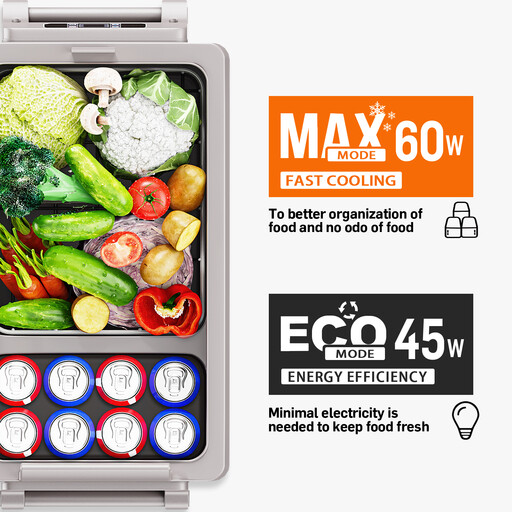
Why This Fits Their Persona: A substantial option for campervan owners, motorhome users, boat owners and families carrying fresh food for several days.
Its dual storage areas help separate different foods, while 12/24V DC and 240V AC compatibility reduces the need for separate power equipment.
49.4L capacity, temperature adjustment from -20°C to +20°C, three battery-protection levels and Bluetooth control.
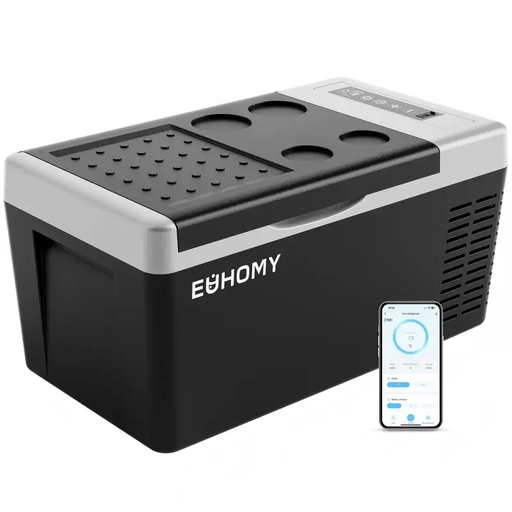
Why This Fits Their Persona: Its mid-range capacity suits anglers, couples, hikers with vehicle access and travellers who need freezer capability without the footprint of a large dual-zone unit.
The stated compressor system and -20°C to +20°C range make its intended refrigerator/freezer function clear, while ventilation guidance addresses installation planning.
18L capacity, 12/24V DC and 100–240V AC operation, app control and three-stage battery protection.
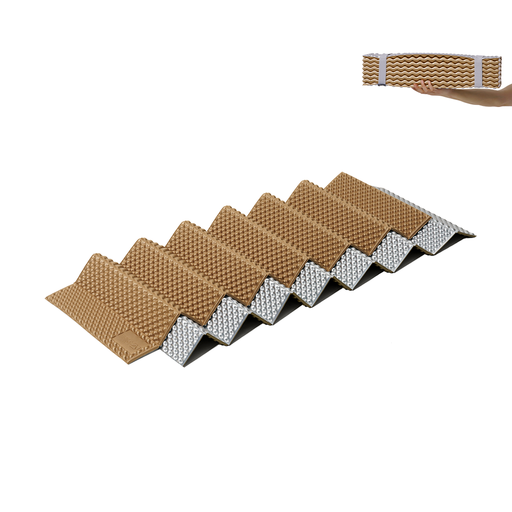
Why This Fits Their Persona: The approximately 500g weight and compact packed dimensions are suited to trekking, backpacking and campsites where luggage space is limited.
The listed dimensions, weight and XPE foam construction provide measurable information instead of relying only on claims about comfort or portability.
Water-repellent polyester surface, moulded egg-crate insulation and the ability to link multiple mats for group camping.
We have compiled a complete, real-time list of products that fully satisfy these strict selection criteria and UK safety regulations.
It can be useful for trips where ice is inconvenient or food needs controlled cooling. A compressor model offers refrigerator and freezer settings, while a smaller semiconductor cooler may be sufficient for short journeys and drinks. Your decision should account for available power, ventilation and storage space.
Any appliance running while the engine is off can reduce battery charge. Battery-protection settings can help limit excessive discharge, but they do not remove the need to monitor the battery. For longer stays, use a suitable leisure battery, campsite supply or another correctly rated power source.
Lifespan depends on ground conditions, storage and cleaning. Remove stones and sharp objects before use, avoid fire and prolonged direct sunlight and store the mat dry without keeping it tightly compressed for long periods. Following the care instructions can help preserve the foam and surface materials.