
24/7 全天候客户支持

免费退货

当日/次日达

品质保障

开启新人专享福利: 全场免邮 | 低至 2 折 | 免费试用 30 天 JoyPlus 会员
下载 Joybuy
A portable camping stove can make a wet weekend in the Lake District, a solo wild-camping trip or an emergency outdoor meal considerably easier. However, comparing models by wattage alone can lead to an unsuitable purchase. A stove that looks compact online may require a separate fuel adapter, lack stability for larger cookware or perform poorly in exposed conditions.
The most useful approach is to match the stove to your cooking habits, fuel availability and pack weight before comparing additional features.
A higher wattage figure does not automatically mean faster cooking in real conditions. Wind, cookware shape, fuel pressure and heat transfer all affect boiling time. An exposed burner may lose heat on a breezy campsite, while an integrated heat-exchange pot can direct more heat into the water.
Look for the complete specification, including stated boil time, intended pot size and wind-resistance features, rather than relying on the wattage figure alone.
A camping gas stove may use threaded isobutane canisters, butane cartridges, propane bottles or a combination of fuels with an adapter. These connections are not interchangeable by default. Check the exact fuel type and thread standard before ordering, and confirm whether the canister or adapter is included.
For UK trips, it is also sensible to check whether the required fuel is readily available near your route. A stove is less practical if its compatible canister is difficult to source locally.
An ultralight camping stove can reduce pack weight, but very small burners may offer less support for wide pans. A 26g titanium model is suitable for boiling water in a compact pot, but it may not be the right choice for simmering a meal for several people.
Consider the complete cooking load: stove, fuel, pot, supports, ignition method and any stabilising base. A slightly heavier portable cooking system may be easier to use regularly.
For backpacking, compare the stove’s packed dimensions rather than only its unfolded size. The BRS 3000T weighs 26g, while the BRS 11-Series weighs 240g and the BRS TS19 weighs 0.425kg. These differences become noticeable on longer hikes.
Solo campers should also check pot capacity. A 600ml pot is suitable for drinks, dehydrated meals and small portions, while a 1L pot provides more flexibility for boiling water or preparing food with additional ingredients.
Power is normally shown in watts. The products featured here range from 1900W to 3240W, but wattage should be assessed alongside fuel efficiency, wind protection and pot design.
The BRS TS19 is listed as boiling 1L of water in approximately three minutes, while the BRS 3000T is listed at approximately two minutes and 58 seconds under stated conditions. These figures are useful for comparison, but outdoor temperature, altitude, wind and fuel level can change actual results.
A compact burner should sit securely on a flat, non-flammable surface. Check the size and design of the pot supports, the stated load capacity and whether a canister stand is supplied.
A windproof camping stove can be useful on exposed hills, beaches and open campsites, but wind protection does not remove the need for safe positioning. Use gas stoves only outdoors or in properly designated, well-ventilated areas, keep them away from flammable materials and check connections for leaks before lighting.
Also note the ignition method. Some models use piezo ignition, while the BRS TS19 requires an external ignition source. Carry suitable lighting equipment when using a stove without an integrated igniter.
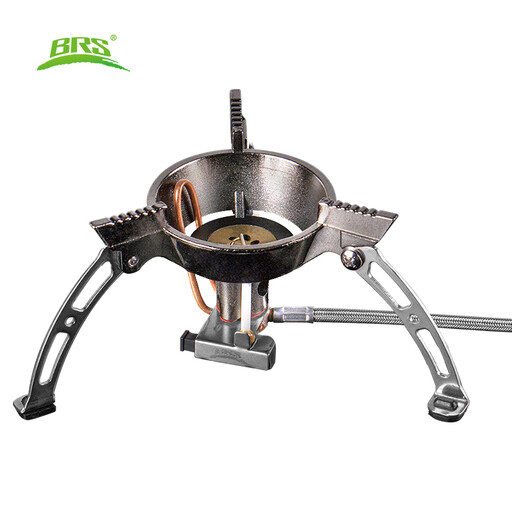
Why This Fits Their Persona: A practical starting point for UK campers who want a portable gas stove with adjustable output, a carry bag and several stated fuel connection options.
Its stated compatibility includes butane canisters, EN 417 threaded fuel mixtures and 1lb propane tanks with the appropriate adapter. The gas canister is not included, so fuel must be budgeted separately.
240g weight, foldable supports, adjustable output up to 3240W, carry bag and piezo ignition switch.
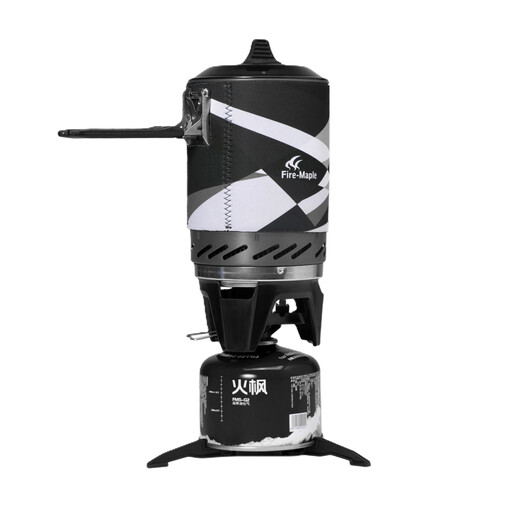
Why This Fits Their Persona: Designed for solo hikers and trekkers who prefer an integrated cooking system with a pot, stove and supports that nest together.
The heat-exchange pot and wind-oriented design address heat loss concerns, while the nestable format makes the packed size easier to manage. The standard threaded isobutane canister is not included.
1L hard-anodised aluminium pot, heat-resistant sleeve, foldable handle and integrated storage design.
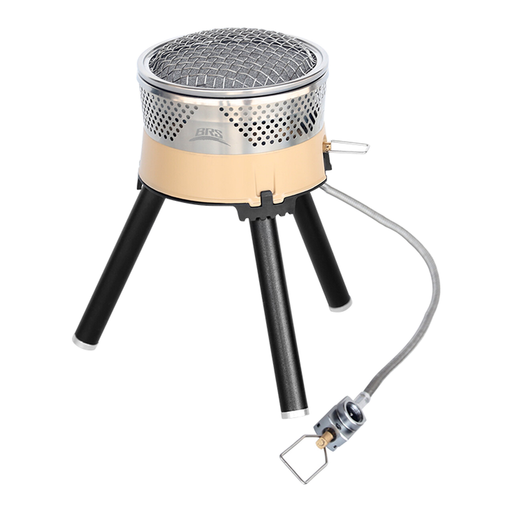
Why This Fits Their Persona: A compact option for campers, anglers and emergency-preparedness buyers who value dual-fuel flexibility and a small packed footprint.
The specification clearly states butane and propane compatibility and a 0.425kg weight. It requires an external ignition source, so buyers should carry a suitable lighter or matches.
1900W output, stated three-minute 1L boil time, ϕ105 x 85mm storage size and stainless steel/aluminium alloy construction.
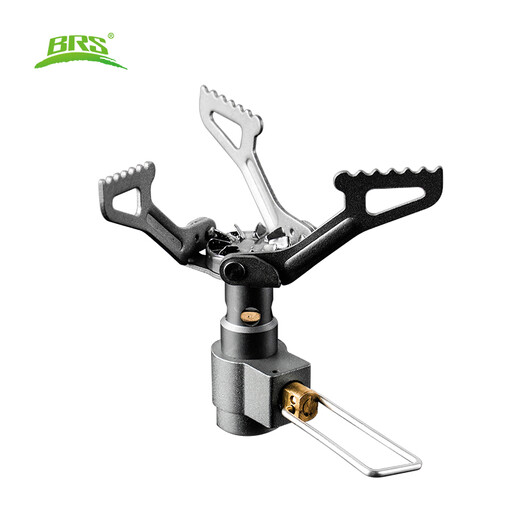
Why This Fits Their Persona: Suited to solo hikers and long-distance trekkers who mainly boil water and want to minimise stove weight in their hiking cooking gear.
The 26g weight is clearly stated, so it can be compared with the total pack load. Its compact supports suit smaller pots; users cooking in wide pans should prioritise support and stability instead.
Titanium construction, 1940W output, foldable pot supports and listed 1L boil time of approximately two minutes and 58 seconds.
We have compiled a complete, real-time list of products that fully satisfy these strict selection criteria and UK safety regulations.
Before each trip, inspect the burner, pot supports, seals and canister connection. Attach the fuel according to the product instructions, check for damage or leaks, and place the stove on a stable, non-flammable surface. Never use a gas stove inside a tent, vehicle or enclosed shelter, and allow the burner to cool fully before packing it away.
Fuel cost depends on output, cooking time, weather and whether the stove is used for quick boiling or longer simmering. A heat-exchange system may reduce wasted heat in windy conditions, while a simple burner can be more economical to carry for occasional use. Store fuel separately and follow the canister manufacturer’s guidance for transport and disposal.
No. Gas camping stoves require proper ventilation and should be used outdoors in a clear, stable area. Burning fuel can create fire and combustion hazards in enclosed spaces.
There is no universal lifespan. Regularly check the burner, valve, pot supports, ignition and O-rings for wear. Keeping the stove dry, cleaning it after use and storing it safely can help maintain its condition, but damaged fuel connections should not be used.
It can be, provided the pot size and support design match the meal. Very light models are often more appropriate for boiling water and compact cookware. For frying pans, larger pots or frequent cooking, choose a stove with wider supports, stable footing and adjustable flame control.