
24/7 Customer Support

Free returns

Same-day & Next-day Delivery

Quality Guaranteed

Unlock Your Welcome Offers: FREE Delivery | Up to 80% OFF | Free 30-day JoyPlus trial
Download the APP
There’s nothing quite like the freedom of the open road, but warm drinks and questionable sandwiches can quickly dampen the spirit of adventure. Whether you're planning a family camping trip, a weekend in the campervan or simply a long drive, keeping your food and beverages fresh is essential. A portable car fridge offers a reliable solution, moving far beyond the capabilities of a traditional ice-filled cool box.
Navigating the options, from a simple 12v cooler box to a powerful portable freezer for car, can be confusing. This guide is designed to help you understand the key features to look for, so you can choose a model that perfectly suits your travel needs.
Before diving into specific models, let's cover a few key considerations. Focusing on these points will help you narrow down the choices and find the right fit for your adventures.
The most significant difference between models is the cooling technology they use.
Consider what you’ll be storing and for how long. A mini car fridge with a capacity of around 6-10 litres is perfect for a solo traveller or for keeping lunch and a few cans cool. For family holidays or longer trips in a campervan, you might look for a larger campervan fridge with a capacity of 30-50 litres or more, which can hold several days' worth of supplies. Always check the external dimensions to ensure it will fit comfortably in your vehicle.
Most portable fridges run on your car's 12V DC outlet (the cigarette lighter socket). A crucial feature to look for is a multi-stage battery protection system. This function automatically shuts the fridge off if it detects your vehicle's battery voltage has dropped to a certain level, ensuring you always have enough power to start the engine. Many models also come with an AC adapter, allowing you to pre-cool the unit at home using a standard wall socket.
Here are a few standout options that cater to different travel styles and needs.

Why It Stands Out: This model strikes an excellent balance between a small footprint and serious cooling power. Its compressor technology provides a wide temperature range from -20°C to +20°C, functioning as either a fridge or a freezer. According to EUHOMY, its advanced compressor can cool from 10°C to 0°C in just 15 minutes. The inclusion of Bluetooth and APP control adds a layer of modern convenience, allowing you to monitor and adjust temperatures from your phone.
Pros:
Who is it for? This is a great option for solo travellers, couples or anyone needing reliable freezing and cooling performance for weekend trips without sacrificing too much boot space. It's an excellent fit for campervan conversions and 4x4s.
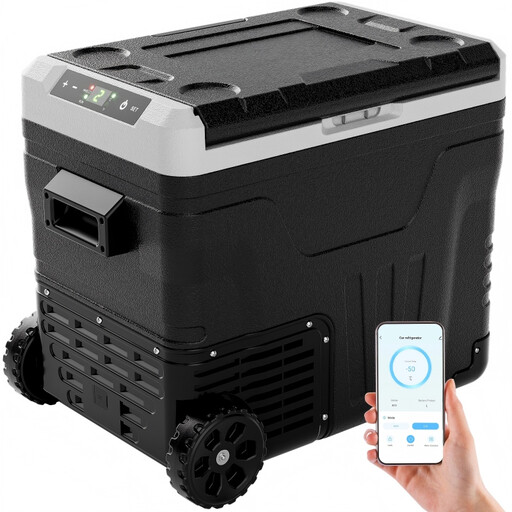
Why It Stands Out: When capacity is a priority, this 50-litre unit delivers. It’s built for extended trips and larger groups, with features designed for heavy-duty use. The interior is split into two compartments with a removable divider, helping to organise food and prevent odours from mixing. Despite its size, the sturdy wheels and dual handles make it manageable to move from the car to the campsite.
Pros:
Who is it for? Families heading on a week-long camping holiday, caravan owners or fishing enthusiasts who need to keep their catch fresh. This is a serious camping fridge for those who don't want to compromise on storage space.
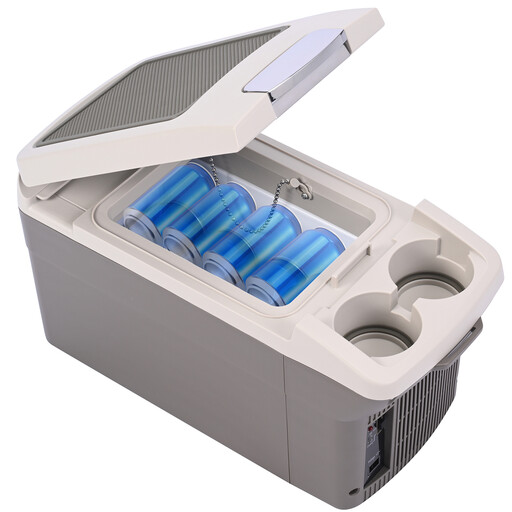
Why It Stands Out: This thermoelectric cooler is all about convenience for daily use and short trips. Its compact 6-litre design is small enough to sit on a passenger seat and even has a seatbelt slot to keep it secure. Its standout feature is its dual function: it can cool drinks down to around 4°C or switch to warming mode to keep a takeaway hot at up to 60°C.
Pros:
Who is it for? Commuters who want a chilled drink for the drive home, parents needing to keep a baby's bottle warm or anyone looking for a simple mini car fridge for a day out.
The models highlighted here represent some of the most popular styles, but the right choice always depends on your specific needs. If you're looking for different sizes, features or price points, you can explore a wider selection of travel companions.
Discover more choices in our full range of electronic travel accessories.
The terms are often used interchangeably, but there's a technical difference. An "electric cool box" typically uses thermoelectric technology, which cools the interior relative to the outside air. A "portable fridge" usually contains a compressor, allowing it to function like a home refrigerator and reach specific, much colder temperatures, including freezing.
Power consumption varies by model and technology. A thermoelectric cooler might draw around 40-60W continuously while running. A compressor fridge is often more efficient, drawing a similar amount of power but only running intermittently to maintain the set temperature, especially in an energy-saving or 'ECO' mode. Always check the product specifications.
Yes, provided you have a reliable power source. When your car is running, the alternator will power the fridge. When the engine is off, it will draw from the car battery. To avoid a flat battery, it is highly recommended to choose a model with built-in low-voltage battery protection, which will automatically shut the unit off before the battery is drained too low.