
24/7 全天候客户支持

免费退货

当日/次日达

品质保障

开启新人专享福利: 全场免邮 | 低至 2 折 | 免费试用 30 天 JoyPlus 会员
下载 Joybuy
By Joybuy Product Recommendation Officer
A portable car fridge can make long journeys, camping trips and van work considerably easier. However, not every appliance sold as a 12V car fridge provides the same type of cooling. Some are compressor refrigerators capable of freezing food, while others are thermoelectric coolers that only reduce the internal temperature below the surrounding air.
Choosing the wrong design can mean warm drinks, drained batteries, excessive noise or a unit that does not fit safely in your vehicle. This guide explains the practical specifications to check before buying, then matches several options to different UK lifestyles.
A product described as an electric cool box may use thermoelectric technology. These models are often compact and can include a warming function, but their cooling performance is usually expressed as a temperature reduction below ambient conditions. On a warm summer day, the contents may remain considerably above normal refrigerator temperature.
A compressor cooler box, by contrast, is designed to regulate a chosen internal temperature and may operate as a portable freezer. Check whether the specification provides an actual temperature range, such as -20°C to +20°C, rather than only stating “cools below ambient”.
A large portable freezer may hold more food, but it can occupy valuable boot, campervan or boat space. Capacity also does not indicate the shape of the storage area, so measure the available location and compare it with the product dimensions.
For passenger-seat use, a compact 4L or 9L portable mini fridge may be easier to secure. For caravanning, fishing or longer trips, an 18L or larger car refrigerator could be more practical.
A 12V camping freezer can draw power for many hours, particularly when the vehicle is parked. A cigarette-lighter socket may only operate with the ignition on, depending on the vehicle. If continuous cooling is required, check whether the outlet remains powered and whether the fridge includes battery protection.
Look for 12V/24V DC compatibility, an appropriate cable and adjustable low-voltage protection. Some models also support 100–240V or 240V AC, allowing use at home or on a campsite with a suitable mains supply.
Choose a compressor model if you need reliable refrigeration, frozen food storage or a temperature below ambient conditions. Compressor units can be suitable for campers, anglers, boat owners, lorry drivers and van users who need cooling over extended periods.
Thermoelectric models are generally useful for lunch, drinks and short journeys. Some work as a car cooler and warmer, keeping food warm as well as reducing drink temperature. Their performance depends more heavily on the surrounding air temperature, so they should not automatically be treated as portable freezers.
Use the following as a practical guide:
A dual-zone design can help separate chilled and frozen items, while a removable basket or divided compartment can make food easier to organise. Always secure a larger camping cool box with suitable straps and leave ventilation space around the compressor.
Noise ratings around 40–42dB may be more comfortable for sleeping areas, offices or overnight vehicle use, although the perceived sound can vary with surroundings. Compressor ventilation must remain unobstructed. One supplied model specifies approximately 100mm of clearance around the ventilation area; follow the individual manual rather than placing the unit tightly against luggage or upholstery.
Energy labels can assist comparisons between products, but actual consumption depends on ambient temperature, temperature setting, insulation and how often the lid is opened. A stated average draw of 45W is a specification rather than a guarantee of identical running costs in every situation.
Before use, inspect the plug, cable and adapters. Follow the manufacturer’s installation instructions, keep ventilation openings clear and check that the product carries the relevant UK marking and documentation for its intended use.
The following product matches focus on different requirements rather than a single universal choice.
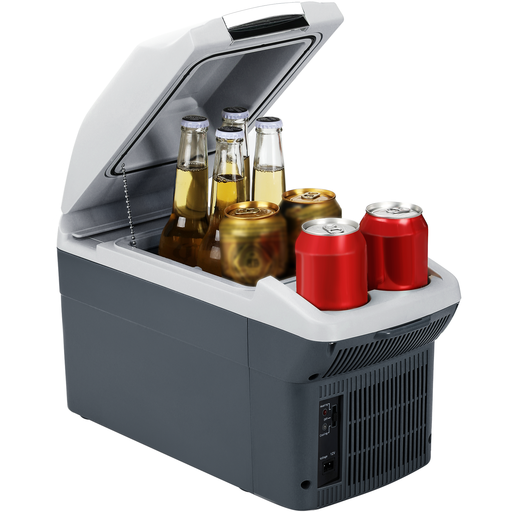
Why This Fits Their Persona: Its compact format suits commuters, day-trippers and drivers who want simple cooling or warming without carrying a large compressor unit.
The listing identifies it as a cooler and warmer rather than a freezer, helping set realistic expectations about its intended use.
9L storage, dual cup holders, carrying strap and approximately 40dB operation. It uses 12V DC and can support optional 220–240V AC use.
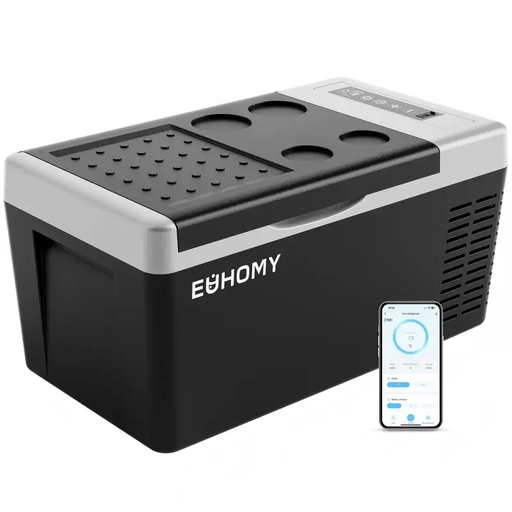
Why This Fits Their Persona: A flexible option for campers, caravanners and road-trippers who want one portable fridge for vehicle, campsite and home use.
Its stated -20°C to +20°C range makes the cooling type clear, while three battery-protection levels address parked-vehicle use.
18L capacity, 12/24V DC and 100–240V AC adapters, Bluetooth app control and a stated operating noise level of 42dB.
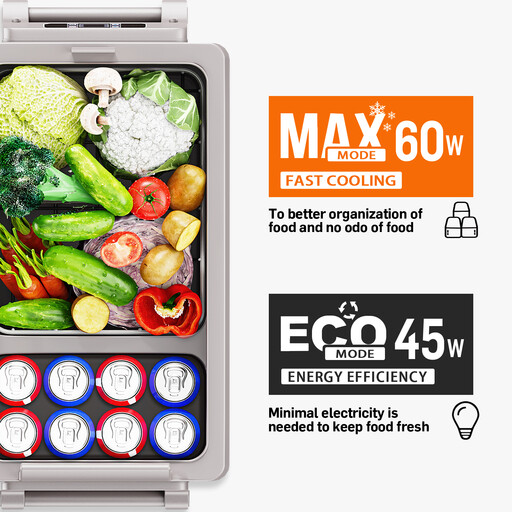
Why This Fits Their Persona: The larger format is suited to motorhomes, boats, lorries, fishing trips and family camping where food and drinks must be stored for longer periods.
Its dual storage areas and stated temperature range distinguish it from a basic insulated camping cool box.
49.4L capacity, 12/24V DC and 240V AC operation, LCD controls, Bluetooth app access and three battery-protection settings.
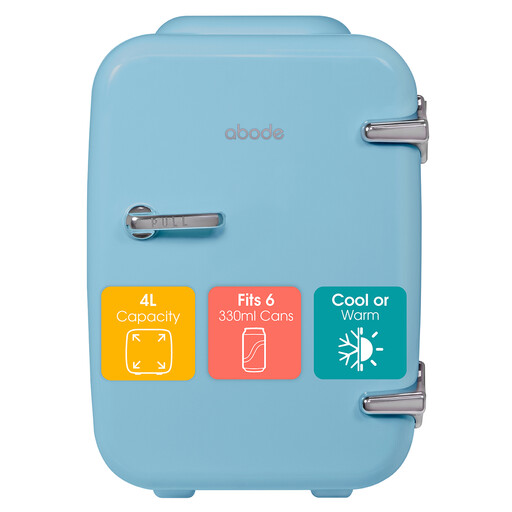
Why This Fits Their Persona: Its 2kg body and tabletop format work well in a home office, bedroom, university accommodation or on a short road trip.
The listing states its thermoelectric cooling performance as 16°C–20°C below ambient, rather than presenting it as a compressor freezer.
4L capacity, 12V DC and 230V AC power, cooling and warming modes, integrated handle and a stated warming range of 50°C–65°C.
We have compiled a complete, real-time list of products that fully satisfy these strict selection criteria and UK safety regulations.
Only if the vehicle socket remains powered and the battery protection system is suitable. A fridge connected to a standard ignition-controlled socket will usually stop when the engine is off. For overnight camping, consider a leisure battery or an approved portable power station and follow the appliance manual.
Running cost depends on wattage, duty cycle, outside temperature and your electricity or fuel setup. A stated 45W input does not mean the compressor consumes that amount continuously. Keeping the lid closed, pre-chilling food and maintaining ventilation can reduce unnecessary operation.
Lifespan depends on construction, ventilation, cable care and frequency of transport. Compressor units should be kept level where instructed and secured against movement. Clean spills promptly, avoid blocking vents and store the appliance dry when not in use. Always retain the receipt and check the supplied warranty or technical support terms.