
24/7 Customer Support

Free returns

Same-day & Next-day Delivery

Quality Guaranteed

Unlock Your Welcome Offers: FREE Delivery | Up to 80% OFF | Free 30-day JoyPlus trial
Download the APP
A portable car fridge can make long drives, camping trips and campervan holidays more convenient, but choosing the wrong type may leave you with warm food, a drained vehicle battery or a box that takes up more space than expected.
The main mistake is assuming that every electric cool box offers refrigerator-level cooling. Before buying, check the cooling technology, power requirements and actual capacity rather than relying on phrases such as “powerful cooling” or “portable freezer”.
By Joybuy Product Recommendation Officer
Many compact coolers use a semiconductor cooling chip. These are often suitable for drinks, skincare and snacks, but their performance is usually described as a reduction below ambient temperature. They generally cannot freeze food.
A compressor cool box, by contrast, is designed to reach a specific internal temperature and may work as both a fridge and freezer. This distinction matters if you need frozen food for a camping trip, fishing excursion or extended journey.
A 12V car fridge can continue running after the engine is switched off, depending on how the vehicle socket is wired. However, prolonged use may reduce the vehicle battery charge.
Look for a portable fridge with battery protection and adjustable protection levels. These settings can help reduce the risk of excessive battery drain, but they do not replace sensible use. For overnight operation, consider a leisure battery or suitable power station rather than relying only on a starter battery.
An 18-litre or 9-litre label describes the internal volume, not necessarily the amount of food or drink you can comfortably load. Compressor housings, shelves, baskets and internal dividers reduce usable space.
Measure the available area in your boot, passenger footwell, boat or campervan before ordering. Also check the lid opening, cable position and ventilation clearance. A fridge that fits on paper may be awkward to load or unsafe if its air vents are blocked.
For frozen storage, select a compressor-based car refrigerator freezer with a stated low-temperature setting. The EUHOMY 18L model and Alpicool C9PT 9L both list cooling down to -20°C, allowing them to function as a fridge or freezer.
A semiconductor model may be more compact and affordable, but it is better suited to maintaining a cooler temperature than to freezing. For example, the AstroAI 6L uses chip cooling, with cooling listed as 18–22°C below room temperature, and cannot freeze.
A genuine 12V and 24V fridge is useful for cars, campervans, trucks and boats, while an AC/DC portable fridge can also be used from a household socket at home or on a campsite.
Check whether the AC adapter is included. Some smaller electric coolers require an optional household adapter, while others include both AC and DC cables. Never connect a 12V-only appliance directly to a mains socket; use only the specified adapter.
Compressor units need airflow around the ventilation area to release heat. The EUHOMY 18L specification advises leaving approximately 10cm of clearance, while the larger 49.4L model also requires space around its compressor.
Noise is normally listed in decibels. A rating around 40–42dB may be suitable for a vehicle or sleeping area, although perceived noise depends on the surroundings and compressor cycle. Secure larger units with straps or another suitable method, particularly in a moving campervan or boat.
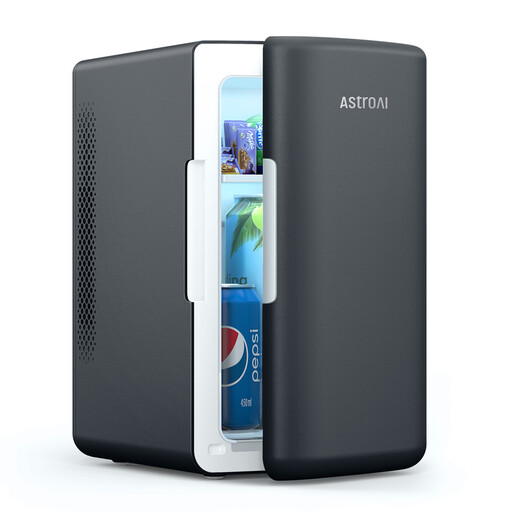
Why This Fits Their Persona: Its compact footprint suits commuters, bedrooms, offices and occasional car trips where frozen storage is not required.
The listing clearly identifies chip cooling rather than compressor freezing, helping buyers choose according to realistic expectations.
AC 220–240V and DC 12V operation; cooling and warming modes; accommodates up to eight 330ml cans in the standard setup.
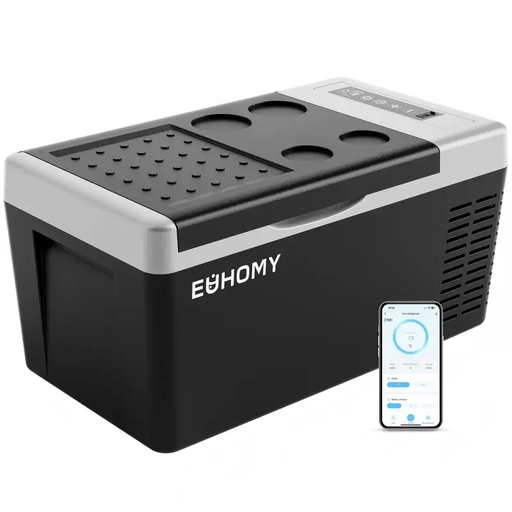
Why This Fits Their Persona: A practical middle-capacity option for UK road trips, camping weekends, boating and campervan travel.
Its compressor system is specified for a -20°C to +20°C range, avoiding confusion between cooling and genuine freezer use.
18-litre capacity; 12/24V DC and 100–240V AC support; three-stage battery protection; app control and listed operating noise of 42dB.
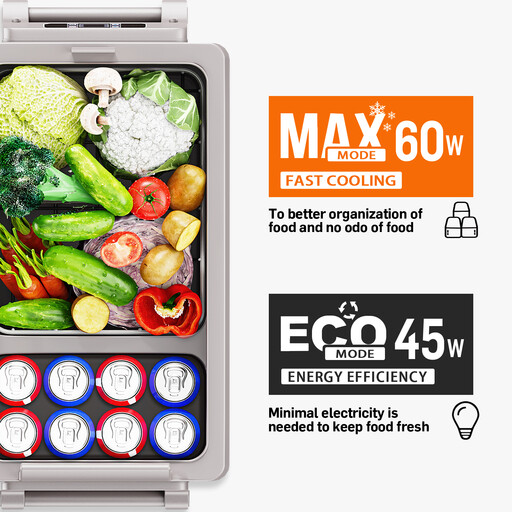
Why This Fits Their Persona: Its larger format is intended for extended camping, motorhome, truck, boat or group trips where food and drinks need separate storage.
The two-zone design and stated capacity make it easier to assess storage needs instead of buying several small coolers.
49.4-litre capacity; 12/24V DC and 240V AC operation; two storage areas; three battery-protection levels and Bluetooth control.
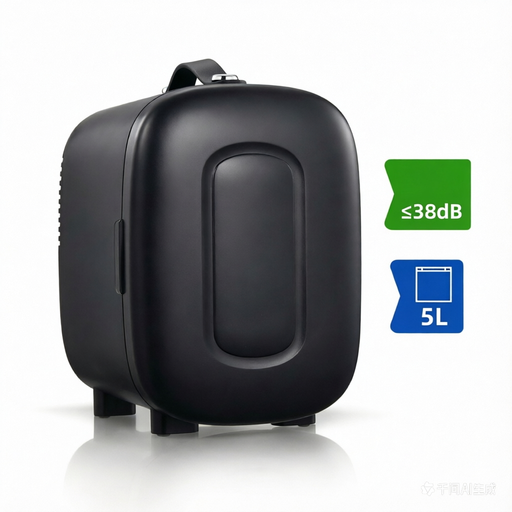
Why This Fits Their Persona: This small unit suits personal drinks, snacks, skincare or lunch storage in a bedroom, office or car.
The product information explains that warming maintains existing warmth and cooling reduces temperature relative to ambient conditions.
5-litre interior; AC and 12V DC power; removable shelf, door basket and detachable condensation tray; cooling and warming modes.
We have compiled a complete, real-time list of products that fully satisfy these strict selection criteria and UK safety regulations.
Only if it supports AC input or is used with the correct compatible adapter. Models described as AC/DC portable fridges may support household mains and 12V vehicle power, while some 12V units are intended for vehicle use only. Check the supplied accessories and voltage specifications before connecting.
Running cost depends on wattage, usage time, ambient temperature, insulation, temperature setting and electricity tariff. A listed 45W input does not automatically represent total daily consumption because the compressor cycles on and off. Battery protection helps manage vehicle use, but it does not indicate the full cost of operation.
Lifespan depends on ventilation, handling, power stability and cleaning. Avoid covering vents, overloading the interior or operating a compressor unit at an unsafe angle. Follow the manufacturer’s instructions, protect cables from damage and disconnect the appliance when the vehicle will be unused for an extended period.