
24/7 Customer Support

Free returns

Same-day & Next-day Delivery

Quality Guaranteed

Unlock Your Welcome Offers: FREE Delivery | Up to 80% OFF | Free 30-day JoyPlus trial
Download the APP
A flat tyre is more than an inconvenience; it can disrupt your entire day, whether you're on the daily commute, a school run, or the start of a holiday. A portable car tyre inflator seems like a simple solution, but the market is filled with devices that promise much and deliver little. As a Joybuy Product Recommendation Officer, my role is to help you see past the marketing jargon and choose a tool that offers genuine value and reliability.
Before you add any model to your basket, it's crucial to understand the common pitfalls that lead to buyer's remorse. Many drivers invest in a car air pump only to find it fails when they need it most.
To avoid these traps, focus on a few key specifications. These objective metrics will give you a much clearer picture of a product's capability than any marketing slogan.
Your first decision is how the device is powered. There is no single "correct" choice; it depends entirely on your needs.
Based on these practical criteria, here are a few options from our catalogue, matched to different types of UK drivers.
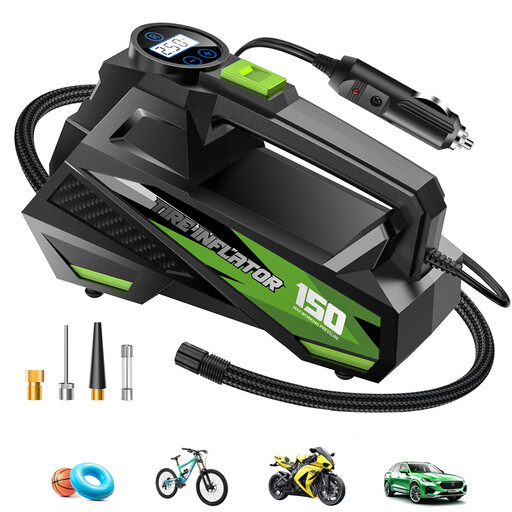
Why This Fits Their Persona: This is for the driver who wants a no-fuss, reliable tool to keep in the boot for emergencies. It's simple, affordable and does the job without complex features. The extended power cord is practical for reaching all four tyres easily.
By drawing power directly from the car's 12V socket, it completely avoids the "unreliable battery" trap. It will work whenever your car is running, providing peace of mind.
Its key advantage is its simplicity and reliability. There are no batteries to charge or maintain. The generous 3-metre cord provides excellent reach around most vehicles.
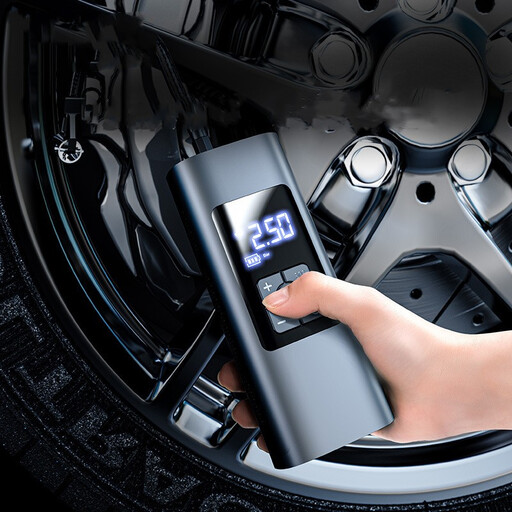
Why This Fits Their Persona: Perfect for the daily driver who values both convenience and preparedness. They can use the cordless function for quick pressure checks on the driveway, but have the 12V cable as a reliable backup for a proper flat tyre on the roadside.
The dual-power system is the ultimate safeguard against a dead battery. Even if you forget to charge it, the 12V cord ensures you're never left stranded, directly countering the main weakness of cordless-only models.
Its flexibility is unmatched. The 6000mAh battery is substantial for multiple top-ups, and it includes a digital gauge, auto shut-off and an LED light, ticking all the boxes for a modern, effective tool.
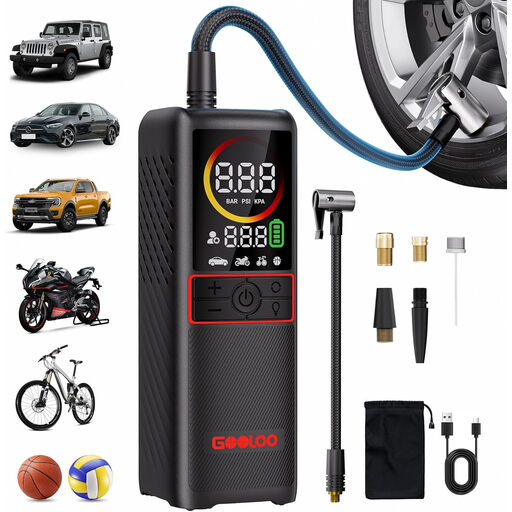
Why This Fits Their Persona: For those who embark on long journeys, camping trips or have multiple vehicles (car, bike, etc.), a high-capacity, multi-functional device is ideal. This model's large battery and power bank function make it a versatile travel companion.
It tackles the "unreliable battery" issue with a large 7500mAh capacity, providing enough power for multiple inflations. It also has a high airflow of 35L/Min, delivering on the promise of faster inflation without misleading claims.
The high-capacity battery and its function as a power bank to charge your phone are significant advantages for any road trip. The large LED screen and preset modes for different items (car, bike, ball) add to its ease of use.
We have compiled a complete, real-time list of products that fully satisfy these strict selection criteria and UK safety regulations.
Neither is inherently "better"; they serve different priorities. A 12V air compressor offers ultimate reliability as it's powered by your car, making it a great choice for a dedicated emergency tool. A cordless tyre pump offers superior convenience for regular pressure checks and use on items other than your car. For many, a dual-power model that offers both options is the most practical solution.
The lifespan depends on build quality, motor type and usage. A well-made inflator used for occasional top-ups can last for many years. To prolong its life, avoid running it for longer than the manufacturer's recommended duty cycle (e.g., 10 minutes of continuous use) to prevent overheating. For cordless models, periodically charging the battery every 2-3 months, even when not in use, will help maintain its health.
You can, but be aware that extreme cold can affect battery performance. Lithium-ion batteries lose efficiency in low temperatures, so a pump stored in a freezing car may have less power than expected. While it should still function, it's good practice to bring it indoors for a full charge before a long winter journey to ensure it's ready for an emergency.