
24/7 Customer Support

Free returns

Same-day & Next-day Delivery

Quality Guaranteed

Unlock Your Welcome Offers: FREE Delivery | Up to 80% OFF | Free 30-day JoyPlus trial
Download the APP
A portable car tyre inflator can be useful for routine pressure checks, long journeys and roadside top-ups. However, product listings often highlight impressive PSI figures without explaining what those numbers mean in everyday use. A compact pump may be suitable for a bicycle but underpowered for a family car, while a cordless model may be convenient yet unusable when its battery is flat.
Joybuy Product Recommendation Officer advice is simple: compare the power source, pressure control, valve compatibility and intended workload before you buy. These details matter more than a large number printed on the box.
A 150 PSI air compressor or 160 PSI pump has a high maximum pressure rating, but this does not automatically mean it will inflate a car tyre quickly. Inflation speed also depends on motor power, airflow, hose design, battery condition and the size of the tyre.
Maximum PSI is a limit, not a promised operating speed. For a standard car, check whether the product is designed for car tyres rather than only balls, toys or low-pressure inflatables.
A cordless tyre inflator avoids a cable running across the vehicle, which is helpful during a roadside stop. The trade-off is that the battery needs charging and may provide only a limited working period.
For example, the EAFC rechargeable model listed here has a 3,600mAh battery, a stated 15–25-minute battery life and a 3–4-hour charging time. That can be practical for occasional top-ups, but it is worth charging before a long trip. A wired 12V tyre inflator can be a more dependable choice for drivers who do not want to rely on stored battery power.
Some ultra-compact pumps are designed for air mattresses, swimming rings and inflatable toys rather than high-pressure tyres. The Baseus PocketGo, for instance, is specified for items requiring up to 3.5kPa and is explicitly not suitable for car, motorcycle or bicycle tyres.
Always check the stated pressure range and compatibility. A bicycle tyre pump may need a Presta valve adapter, while a car or motorcycle tyre generally uses a Schrader valve.
A wired car air pump usually connects to a vehicle’s 12V DC socket. The engine should be running during use, following the supplied instructions, to reduce the risk of draining the vehicle battery. Check the cable length, particularly if the 12V socket is positioned in the front cabin and the tyre is at the rear.
A 3-metre power cable, as supplied with one Baseus model, can make it easier to reach all four wheels. For electric vehicle owners, confirm that the vehicle has a suitable 12V outlet and that using accessories does not conflict with the vehicle manufacturer’s guidance.
Look for a digital tyre pressure gauge or digital display that lets you see the current reading and set a target. The correct pressure is found on the vehicle’s tyre placard, handbook or manufacturer information—not by copying the maximum pressure printed on the tyre sidewall.
Automatic shut-off is useful because it stops the pump at the selected value. Even so, allow the reading to settle and check the tyre with a separate gauge if accuracy is important. Pressure readings can vary between devices, and tyre pressure should be checked when tyres are cool where possible.
A small electric tyre pump is intended for topping up or dealing with an underinflated tyre, not necessarily inflating several completely flat large tyres repeatedly. Check whether the instructions recommend cooling breaks.
Useful accessories include a secure air hose, valve adapters, an inflation needle and a tapered nozzle. A motorcycle tyre pump and bicycle-compatible inflator should include the relevant connector or adapter. Higher pressure ratings are useful for different applications, but they do not make the pump suitable for commercial vehicles or heavy equipment.
The following selections are matched to different use patterns, using the specifications provided on their product listings.
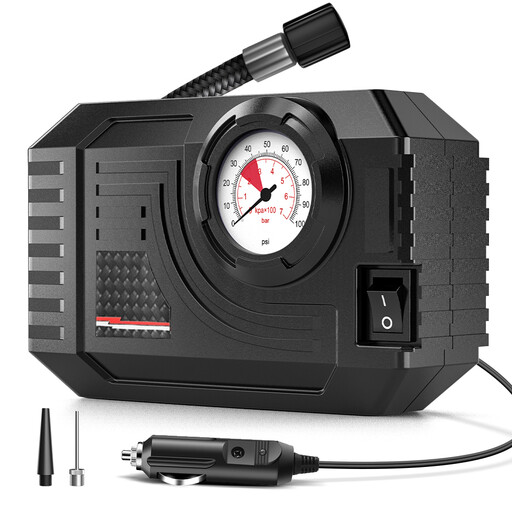
Why This Fits Their Persona: A straightforward wired pump for UK drivers who want one compact tool for occasional car, motorcycle or bicycle top-ups.
Its wired 12V design avoids dependence on a small rechargeable battery. Use the supplied instructions and run the vehicle engine during car or motorcycle operation.
Portable format; stated compatibility with car, motorcycle and bicycle tyres.
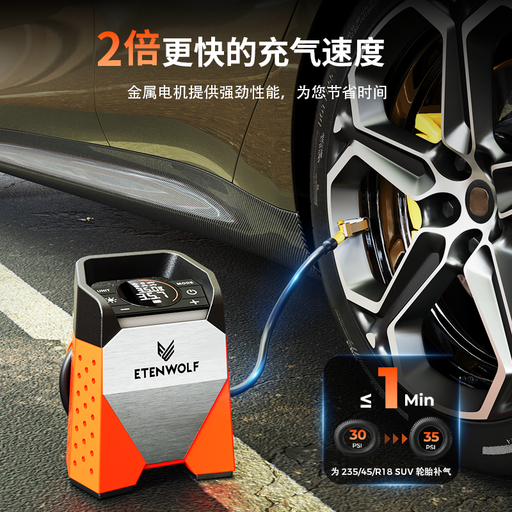
Why This Fits Their Persona: Suited to motorists wanting a battery-powered unit with a digital interface for cars, SUVs, bikes and balls.
The listing specifies battery power, automatic stopping and a digital target-pressure interface, rather than relying only on a headline PSI figure.
160 PSI maximum operating pressure; supplied Presta adapter and USB A-to-C cable.
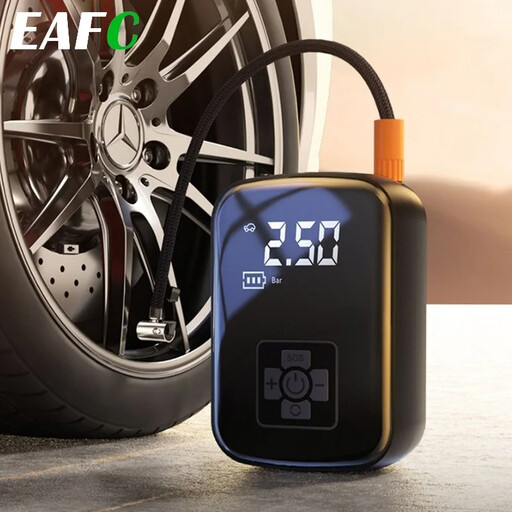
Why This Fits Their Persona: A cordless option for commuters, electric vehicle owners and outdoor users who value flexible positioning and built-in lighting.
The listing gives battery capacity, charging time, battery life and airflow, helping buyers assess cordless limitations before purchase.
3–150 PSI range; 25L/min stated airflow, five modes, lighting and automatic shut-off.
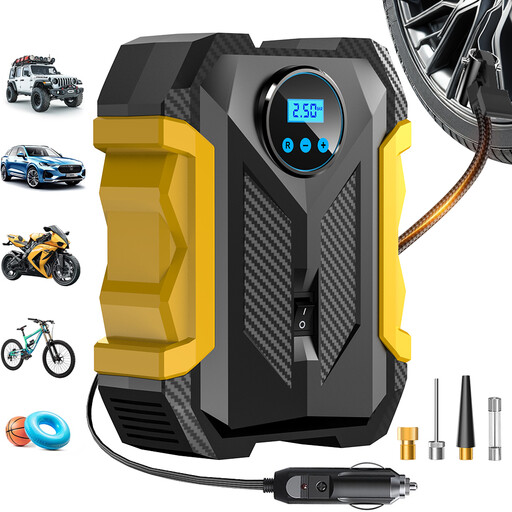
Why This Fits Their Persona: A practical wired choice for a household with a car, motorcycle and bicycles, or for keeping in a vehicle toolkit.
Its digital display gives a visible pressure target, while the 12V connection avoids the need to remember a separate battery charge.
150 PSI stated maximum; LED light, digital pressure display and 3-metre cord.
Check the product listing for included plugs, adapters and charging equipment. For UK use, also review the supplied compliance markings, instructions and warranty information before purchase.
We have compiled a complete, real-time list of products that fully satisfy these strict selection criteria and UK safety regulations.
It is generally safer to follow the product instructions and run the engine during use, unless the vehicle and pump guidance says otherwise. This helps reduce the chance of discharging the 12V battery. Never leave the pump unattended.
Battery duration varies with tyre size, starting pressure, temperature and the number of tyres inflated. Treat stated battery life as a guide rather than a guarantee. Fully charge the pump before travel and periodically recharge it during storage according to the manufacturer’s instructions.
For occasional use, the main saving is convenience rather than a guaranteed financial return. A pump uses electricity from a 12V socket or rechargeable battery, but its purchase price, charging needs and service life should be considered. Its practical value is having pressure maintenance available at home or during a journey.