For an occasional phone top-up, start with a compact 5,000mAh to 10,000mAh power bank; consider around 20,000mAh if you regularly charge several devices or spend longer between sockets. Check the ports, cable and output against your devices before choosing by capacity alone, and weigh the extra reserve against what you are willing to carry.
Who needs which charger?
Phone-only commuters and event-goers
If you mainly need a phone top-up before getting home, a small pack is easier to keep in a pocket or everyday bag. Check that its usable reserve covers your usual outing rather than assuming its rated capacity guarantees a full charge.
Long-trip and multi-device travellers
If you carry a tablet or more than one phone, prioritise reserve capacity and enough suitable outputs. A larger pack takes more room, so consider how often you will use that extra capacity.
USB-C users who need faster charging
If charging speed matters, compare the bank’s output, cable and port functions with your device’s requirements. A USB-C connector alone does not establish the charging rate.
What matters when choosing?
Start with what you need to charge and how long you will be away, then check carrying size and connection details. If the charger is for a flight, check its watt-hour rating and your carrier’s rules as well.
| Concern |
What to check |
Who this matters to |
| Everyday carry |
Compare dimensions and weight; decide whether a compact 5,000mAh backup covers your usual phone top-up. |
If I am out for a commute or event, I want a phone backup that is easy to bring along. Around 31% of consumers put carry practicality first. |
| Extended reserve |
List the devices and expected top-ups, then compare capacity and independent usable-charge results where available. |
For a long trip or a phone-and-tablet day, I need reserve power more than the smallest possible pack; roughly 25% of consumers prioritise that extra reserve. |
| Connections and speed |
Check USB-C input and output functions, per-port output, shared output and the required cable. |
When I need to charge a particular USB-C device promptly, compatible power delivery comes before the capacity figure. About 25% of consumers make connection and charging requirements their primary concern. |
| Flight carriage |
Read the watt-hour label and your carrier’s current rules; plan to keep the bank in cabin baggage. |
Before flying, I need to know whether I can carry the bank on my itinerary and how to pack it. Flight handling comes first for around 19% of consumers. |
Mistakes to avoid
-
Choosing by mAh alone
Rated capacity is not a promise of a particular number of device charges. Which? reports that some power banks it tested could not deliver even one full charge.
Use capacity to narrow the choice, then compare usable-charge testing where available alongside weight, dimensions and recharge time.
-
Assuming every port charges at its maximum simultaneously
Output can differ by port and when ports are used together. INIU specifies up to 45W on an individual USB-C output of its P41, but a 15W maximum total output when all three ports are active.
For several devices or a laptop, check the exact model’s per-port and shared-output figures, charging compatibility and cable requirements.
-
Planning a flight without checking carriage rules
The UK Civil Aviation Authority says to keep power banks with you in the cabin. A charger that otherwise suits your devices still needs to fit the rules for your carrier and itinerary.
Check its watt-hour label and the carrier’s current policy before travelling; do not pack a damaged or swollen bank.
Getting the carriage requirements wrong could prevent you from taking the bank on the intended flight.
-
Overlooking model-specific recalls
UK recall information identifies an overheating risk for particular models, including Anker PowerCore 20K A1366 and Belkin BPB002 and PB0003. A recall for one model is not a finding about every product from that brand.
Check the exact model against current recall notices and stop using an affected recalled unit.
Brands to consider
Anker
Anker’s UK range includes compact USB-C packs as well as higher-capacity models.
- Anker specifies a built-in USB-C cable, 10,000mAh capacity, up to 30W USB-C output and a 215g weight for its Nano A1259.
- Check the exact model: Electrical Safety First identifies the separate PowerCore 20K A1366 as a recalled model with a potential overheating risk.
Belkin
Belkin lists portable chargers with different capacities, connections and intended devices, including USB-C models aimed at compatible laptops.
- Belkin specifies up to 60W USB-C charging and three ports for its 10,000mAh UltraCharge Pro model; confirm compatibility with the device you intend to charge.
- A UK product recall identifies Belkin BPB002 and PB0003 power banks whose batteries can overheat. Check model numbers rather than treating the recall as applying to the whole range.
INIU
INIU’s P41 is a compact 10,000mAh option with two USB-C ports and one USB-A port, according to its manufacturer.
- INIU specifies a 182g weight and up to 45W from an individual USB-C output for the P41.
- INIU lists a 15W maximum total output with all three ports in use, so do not assume simultaneous devices receive the single-port maximum.
Portable chargers on Joybuy
These choices cover compact phone backups, USB-C charging and larger-capacity options for longer outings or several devices. Compare each one with your own devices and carrying needs.
 No image available
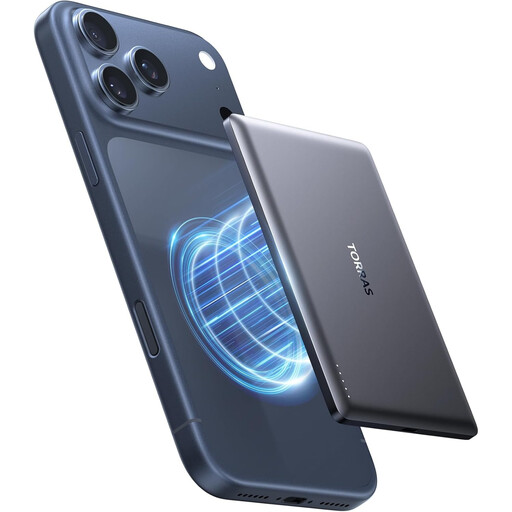
TORRAS MiniMag 5000mAh MagSafe Power Bank, Gray Titan
A compact phone backup to consider when carrying size matters. Its named features include magnetic charging and a USB-C cable; check your phone and case compatibility before relying on magnetic attachment.
View on Joybuy
 No image available
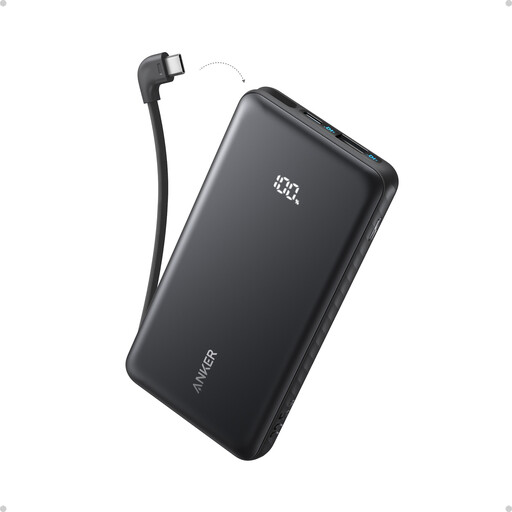
Anker Zolo 10,000mAh 22.5W Power Bank with Built-in USB-C Cable
Consider this if you want a USB-C cable attached to the bank for an outing. The stated capacity is 10,000mAh and the stated maximum output is 22.5W; check charging compatibility and shared output if connecting more than one device.
View on Joybuy
 No image available
MOVESPEED S05Pro 5000mAh Power Bank with Adjustable Stand
A smaller-capacity option if you want a phone backup with a stand. The product name specifies 15W output, Type-C and magnetic wireless charging; confirm that the magnetic feature works with your phone and case.
View on Joybuy
 No image available
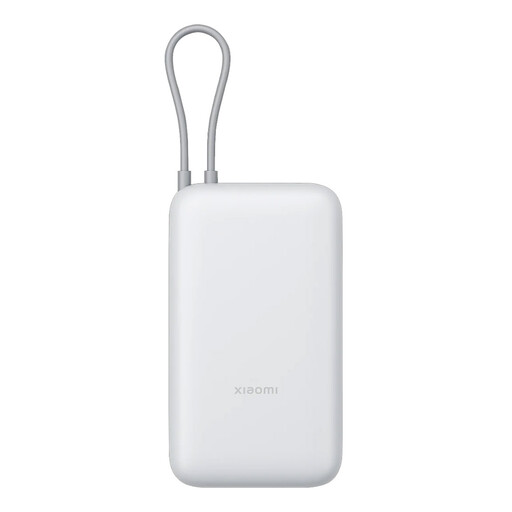
Xiaomi 20000mAh Power Bank with Integrated Cable, GL Light Gray
Consider the larger stated capacity for longer stretches between sockets if an integrated cable suits your devices. Check its carrying dimensions, your device’s charging requirements and its watt-hour label if you plan to fly.
View on Joybuy
 No image available
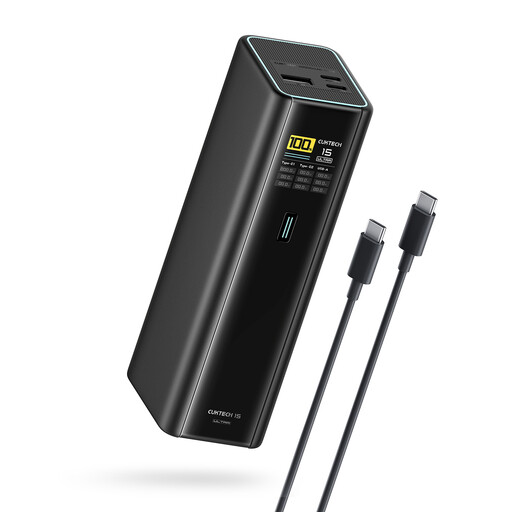
CUKTECH 15 Ultra PB200U 20000mAh 140W Power Bank, Black
Its stated capacity and three USB-C ports make it worth checking for a longer, multi-device outing. The product name specifies 140W and PD3.1; confirm per-port and shared output, cable capability and laptop compatibility before relying on those figures for your setup.
View on Joybuy
Common questions
How much capacity should I consider for a phone and tablet?
Consider a higher-capacity bank if you expect to charge both devices between visits to a socket. PCMag UK describes 10,000mAh as enough for about two charges of many flagship phones, but the actual result for your phone-and-tablet combination depends on the devices and the bank’s delivered power.
Can a USB-C power bank charge my laptop?
It can if the laptop accepts compatible USB-C charging and the bank, port and cable meet its power requirements. Check your laptop’s required input and the bank’s per-port output; a USB-C socket by itself is not enough to establish compatibility.
Can I put a power bank in checked luggage?
No: the UK Civil Aviation Authority says power banks must stay with you in the cabin. If your cabin bag is taken for the hold, remove the power bank first and check your carrier’s current instructions.
What power-bank size can I take on a plane?
Use the bank’s watt-hour rating, not just its mAh figure, when checking whether it can travel with you. Read the current rules for your airline and itinerary before buying or packing, and keep an eligible bank in cabin baggage as the UK Civil Aviation Authority advises.
What should I do with a swollen or damaged power bank?
Stop using it and do not take a damaged battery on an aircraft. For disposal in the UK, government guidance says batteries and electrical waste should not go in household rubbish; use an appropriate collection service and follow its instructions for damaged batteries.


