
24/7 Customer Support

Free returns

Same-day & Next-day Delivery

Quality Guaranteed

Unlock Your Welcome Offers: FREE Delivery | Up to 80% OFF | Free 30-day JoyPlus trial
Download the APP
That familiar sense of dread as your phone battery dips into the red while you're on a train, in a lecture or miles from a socket is a modern-day frustration. With our devices being central to work, navigation and staying connected, a reliable power source is no longer a luxury—it's an essential. But the market is flooded with options, from pocket-sized power banks to powerful wall plugs.
As the Joybuy Product Recommendation Officer, my role is to help you navigate these choices. This guide cuts through the clutter to offer practical advice on selecting a portable charger that fits your lifestyle, focusing on what truly matters: speed, size and convenience for your modern devices.
Before looking at specific models, it helps to understand the key features that will make a difference in your daily use.
A power bank's capacity is measured in milliampere-hours (mAh). A higher number means more stored energy, but it also usually means a larger and heavier unit.
Consider your typical day. For a daily commute, a smaller, lighter power bank is often more practical than a high-capacity brick.
The speed at which a charger powers your device is measured in watts (W). To take advantage of modern fast-charging capabilities, you need a charger that supports it. A fast charger with a compact USB-C charger port is now the standard for new devices. For an iPhone 15, a 20W charger can deliver a significant power boost in just 30 minutes. A 30W charger can do it even faster and is also capable of charging larger devices like an iPad or MacBook Air.
Your charging needs will determine the best form factor.
Based on functionality, design and user convenience, here are some standout options for keeping your USB-C devices powered up.

Why It Stands Out: This model's defining feature is its integrated, foldable USB-C connector. It removes the need to carry a separate cable, offering a truly all-in-one solution for on-the-go charging. It plugs directly into the bottom of your phone, making it easy to use your device while it powers up.
Pros:
Who is it for? The minimalist commuter or student who wants a hassle-free, pocket-sized power source for a single-day top-up without worrying about forgetting a cable.
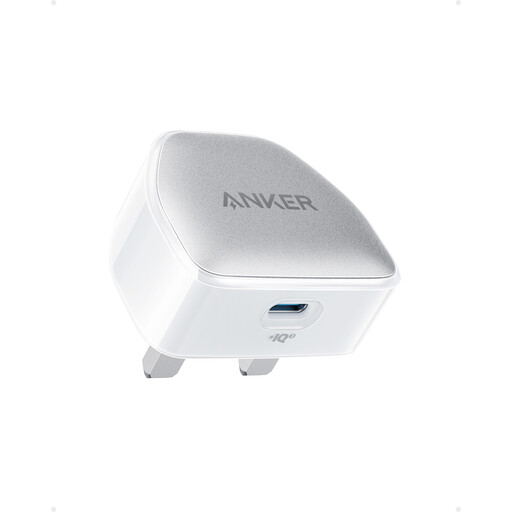
Why It Stands Out: This is a prime example of a modern travel wall charger. It is significantly smaller than the standard 20W plugs that used to come with devices, yet it delivers the same power. Its tiny footprint means it won't block adjacent sockets and takes up almost no space in a bag.
Pros:
Who is it for? The traveller, office worker or anyone who needs a reliable and powerful iPhone 15 charger or compact USB-C charger to use at home, in the office or on the road.
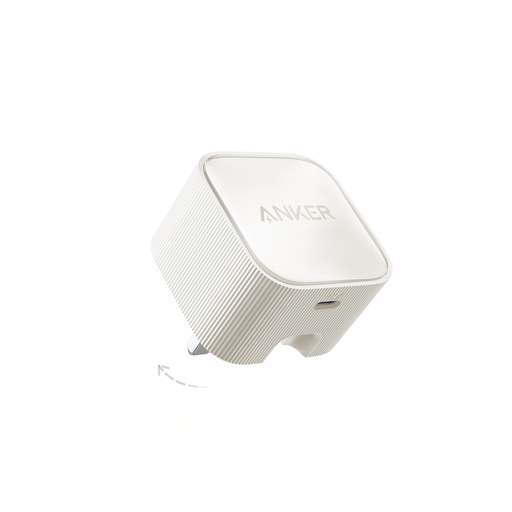
Why It Stands Out: This charger offers a step up in power to 30W while retaining a compact, travel-friendly design with foldable pins. This extra wattage provides faster charging for phones and gives it the versatility to efficiently power larger devices like an iPad Air or even a MacBook Air.
Pros:
Who is it for? The power user or tech enthusiast who wants a single, compact wall charger that can handle everything from their phone to their tablet at high speed.
The world of charging technology is vast. If these specific models aren't quite what you're looking for, or if you need a different capacity, more ports or wireless charging features, there are many other solutions available.
Explore our full range of charging accessories to find the perfect fit for your needs.
[Browse Our Complete Battery Charger Collection](https://www.joybuy.co.uk/explore/battery-charger/L0HWinjc)
1. What is the difference between a power bank and a portable charger? The term "portable charger" is a broad category that includes any device used to charge electronics on the go. A power bank is a specific type of portable charger that contains a battery—you charge it up at home and then use its stored power to charge your devices anywhere. A compact wall plug, like the Anker Nano models above, is also a type of portable charger, but it requires a mains socket to function.
2. How many times can a 5,000mAh power bank charge my phone? A 5,000mAh power bank will typically provide just under one full charge for most modern flagship smartphones (e.g., iPhone 15 Pro, Samsung Galaxy S24). This is due to energy loss during the transfer process. It's designed to be an emergency boost to get you through the day, not for multiple full recharges.
3. Is a 20W or 30W charger fast enough for an iPhone 15? Yes, both are excellent choices. A 20W charger is the standard for fast-charging an iPhone, providing a 50% charge in about 30 minutes. A 30W charger can do this slightly faster and offers the added benefit of being able to charge larger devices like an iPad or MacBook Air at a respectable speed, making it a more versatile option.