
24/7 Customer Support

Free returns

Same-day & Next-day Delivery

Quality Guaranteed

Unlock Your Welcome Offers: FREE Delivery | Up to 80% OFF | Free 30-day JoyPlus trial
Download the APP
A portable compressor cooler box can be a practical alternative to a conventional cool box when you need dependable chilled or frozen storage away from the kitchen. Campers, caravanners, anglers, boat owners and delivery drivers may all benefit from a unit that runs from a vehicle socket, campsite supply or household outlet.
However, product listings can make similar-looking models seem interchangeable. The most common buying mistakes usually involve capacity claims, power compatibility and unclear operating requirements.
A large litre figure does not always tell you how much food and drink you can organise inside. Internal dividers, compressor placement and basket design affect usable space. A 49.4L car fridge freezer, for example, may suit several people on a longer trip, while an 18L model may be easier to carry but require more frequent restocking.
Check whether the product uses one compartment or a dual-zone cooler layout. Two storage areas can help separate drinks from food and reduce odour transfer, but they may also limit the size of individual items.
A 12V 24V camping fridge should clearly state whether it supports both voltages. Cars, SUVs, campervans and many boats use 12V systems, while some lorries, buses and larger commercial vehicles use 24V. Using the wrong supply can damage equipment.
Also check whether the unit includes a 240V AC camping fridge adapter. This is useful when pre-cooling at home, using a campsite mains hook-up or keeping food stored in a garage.
A compressor needs airflow to release heat. The EUHOMY models listed here specify clearance around the compressor ventilation area. Blocking these vents inside a boot, caravan cupboard or boat locker can affect operation.
A cooler box also needs securing during travel. Even a sturdy car compressor cooler may slide during sharp turns or sudden braking if left loose. Use suitable ratchet straps or bungee cords where recommended and keep the lid accessible without obstructing the driver.
For flexible use, look for a temperature range that supports both refrigeration and freezing. The EUHOMY 49.4L model allows settings from -20°C to 20°C, while the EUHOMY 18L model has the same stated range. This enables use as a portable refrigerator freezer, although actual cooling performance depends on ambient temperature, ventilation, loading and power supply.
A unit designed only to chill drinks may not meet the needs of anglers, families carrying frozen food or travellers storing meat. Always check whether the product description specifically identifies freezer operation.
For vehicle use, confirm the presence of 12V and 24V DC support, the type of cable supplied and whether your accessory socket remains powered when the ignition is off. Continuous cooling may not be possible if the socket shuts down with the vehicle.
A battery-protected car fridge should offer selectable low, medium and high protection levels. These settings are intended to reduce the risk of excessive vehicle battery drain, but they do not replace sensible power management. Monitor the battery when parked for long periods, particularly in a motorhome, boat or older vehicle.
Noise figures can be useful when sleeping in a tent, motorhome or cabin. The 49.4L model lists operation at approximately 40dB, while the 18L model lists approximately 42dB. These are product specifications rather than a guarantee of how noticeable the unit will be in every environment.
The 49.4L model is listed as Energy Class C and the 18L model as Energy Class D. Energy labels help with comparison, but running cost also depends on ambient heat, selected temperature, ECO or MAX mode, lid opening frequency and the electricity tariff or battery system being used.
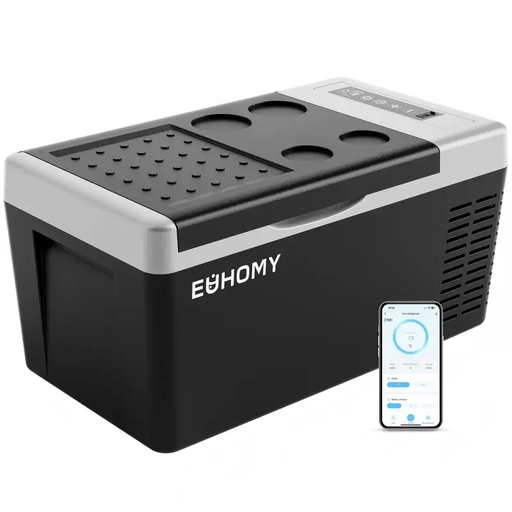
Why This Fits Their Persona: A compact option for solo travellers, couples, day trips and smaller campervan setups where boot space matters.
Its 18L capacity is clearly stated, helping buyers avoid paying for unused bulk. It supports 12V/24V DC and 100-240V AC, with three battery-protection levels.
-20°C to +20°C setting range, Bluetooth and app control, magnetic lid seal and a listed operating noise level of 42dB.
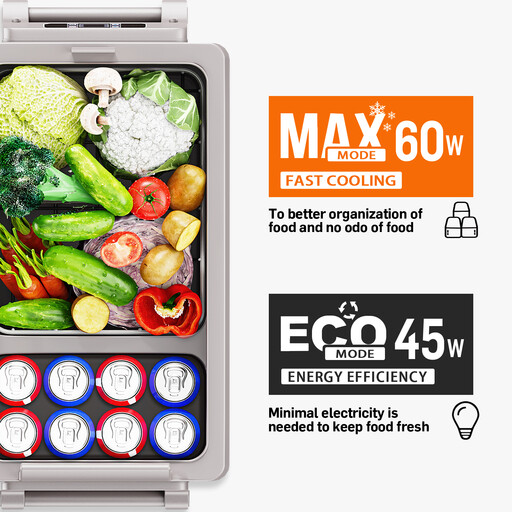
Why This Fits Their Persona: Designed for families, caravanners, motorhome owners and longer trips requiring substantial chilled or frozen storage.
The dual storage layout, 12V/24V DC and 240V AC compatibility address capacity, odour separation and multi-location use in one specification set.
49.4L capacity, temperature settings from -20°C to 20°C, three battery-protection levels and a listed noise level of 40dB.
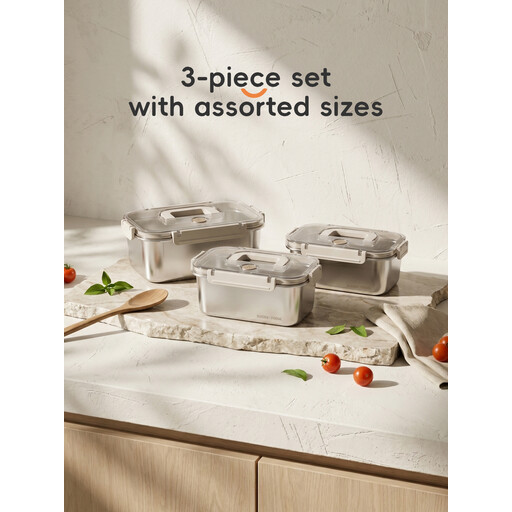
Why This Fits Their Persona: A useful companion for anglers, families and motorhome users who need orderly food portioning inside a portable refrigerator freezer.
The stackable rectangular format helps use cooler space efficiently and separates prepared food from drinks. It is an accessory rather than a powered cooler, so check compatibility with your chosen unit.
304 stainless-steel containers with PP and silicone components, detachable sealing parts and three included sizes: 1700ml, 2100ml and 3200ml.
We have compiled a complete, real-time list of products that fully satisfy these strict selection criteria and UK safety regulations.
Before switching on your cooler:
For household or campsite use, a 240V AC camping fridge can be connected through the supplied adapter. Keep cables dry and follow the manufacturer’s instructions for outdoor electrical equipment.
It can draw power while the vehicle is parked, particularly if the socket remains active. Models with adjustable battery protection can help reduce the risk of excessive discharge, but users should still monitor the battery and avoid relying on a standard starter battery for extended unattended operation.
Noise varies by design and surroundings. The listed EUHOMY models specify approximately 40dB and 42dB respectively. A compressor cooler may produce an audible cycling sound, so place it away from sleeping areas where possible.
Lifespan depends on ventilation, transport conditions, cleaning, cable care and frequency of use. Anti-shock features may help with travel over uneven roads, but secure installation and keeping the compressor vents clear remain important for ongoing operation.