
24/7 Customer Support

Free returns

Same-day & Next-day Delivery

Quality Guaranteed

Unlock Your Welcome Offers: FREE Delivery | Up to 80% OFF | Free 30-day JoyPlus trial
Download the APP
A portable compressor fridge freezer can make camping, road trips, boating and caravan travel far more convenient. It can chill food and drinks, and some models can also freeze provisions independently of ambient temperature. However, choosing by capacity or promotional cooling claims alone can lead to an unsuitable purchase.
The main traps are often hidden in the details: confusing thermoelectric coolers with compressor fridges, overlooking power compatibility, or ignoring ventilation and battery protection. This guide explains the specifications that matter for UK users and highlights suitable options for different lifestyles.
Small AC/DC cooler boxes often use a thermoelectric chip. They may cool to a stated number of degrees below room temperature, but their performance depends heavily on the surrounding temperature. They generally cannot freeze food.
A compressor model works differently. It actively controls the internal temperature and can reach sub-zero settings, making it more suitable as a car fridge freezer, portable freezer for camping or long-distance travel appliance.
A product may connect to a 12V cigarette lighter socket but still drain the battery if the vehicle is parked with the socket powered. Look for adjustable battery protection, ideally with low, medium and high settings.
You should also check whether your car, campervan, motorhome or boat has a continuously powered accessory outlet. If not, the fridge may stop when the ignition is switched off unless connected to a suitable auxiliary battery or power station.
A compressor needs to release heat. Placing the unit tightly against a seat, wall or luggage can reduce cooling performance and increase energy use. Allow the clearance stated in the instructions; the EUHOMY model, for example, specifies 10cm around the compressor ventilation area.
Capacity can also be misleading. An 18L portable fridge may hold cans, meal boxes and chilled ingredients, but thick insulation and the compressor compartment reduce usable space. Consider the shape of your food containers, not just the litre figure.
For camping and travel, check whether the unit is a genuine compressor cooler and whether it can operate as both a fridge and freezer. A stated range such as -20°C to +20°C provides more flexibility than a cooler that only reduces temperature relative to the room.
The EUHOMY 18L Compressor Cooler Box is specified for -20°C to +20°C and can be used as either a refrigerator or freezer. Its product information also states that it can cool from 10°C to 0°C in approximately 15 minutes under stated conditions. Treat this type of figure as a product specification rather than a guarantee for every load, climate or power setup.
A versatile 12V camping fridge should ideally support both vehicle and mains power. Check for:
An AC/DC cooler box is useful when you pre-chill food at home, transport it in a vehicle and then connect to mains electricity at a campsite. A 24V portable refrigerator may be especially suitable for larger vehicles, but always verify the outlet and cable requirements before use.
Noise matters when sleeping in a tent, caravan or motorhome. The EUHOMY 18L model lists a noise level of 42dB, while its anti-shock design is specified for bumpy roads and slopes up to 30 degrees. These features may suit travel, although the unit should still be placed securely and operated according to its manual.
Keep ventilation openings clear, use a stable surface and avoid prolonged exposure to direct sunlight. For a boat and caravan fridge, also consider how the lid opens and whether the unit can be secured during movement.
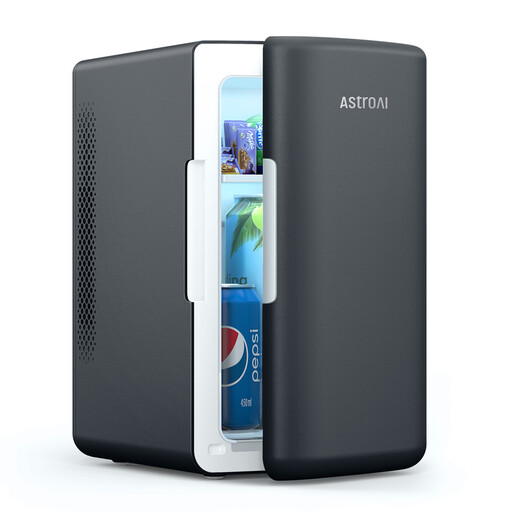
Why This Fits Their Persona: A compact choice for drivers who need chilled drinks, snacks or skincare items in a car, bedroom or office rather than frozen food.
The listing clearly identifies thermoelectric cooling rather than compressor refrigeration, so buyers know it cannot freeze.
6L capacity, 12V DC and 220–240V AC operation, plus cooling and warming modes.
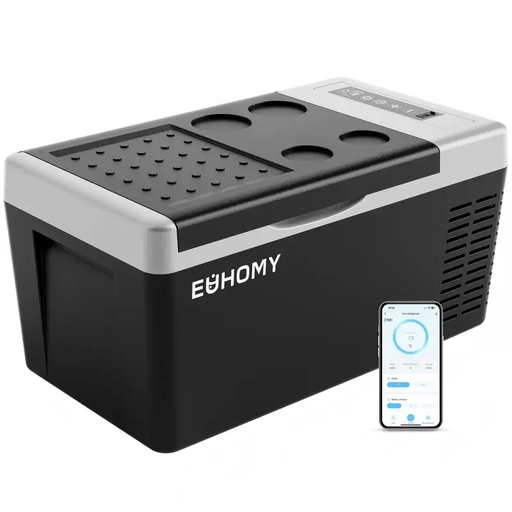
Why This Fits Their Persona: Suitable for campers, road trippers and caravan owners who want one portable unit for chilled and frozen supplies.
It uses compressor cooling, includes three-stage battery protection and specifies ventilation clearance for installation.
-20°C to +20°C range, WiFi app control, 12/24V DC and 100–240V AC compatibility, and a listed 42dB operating noise level.
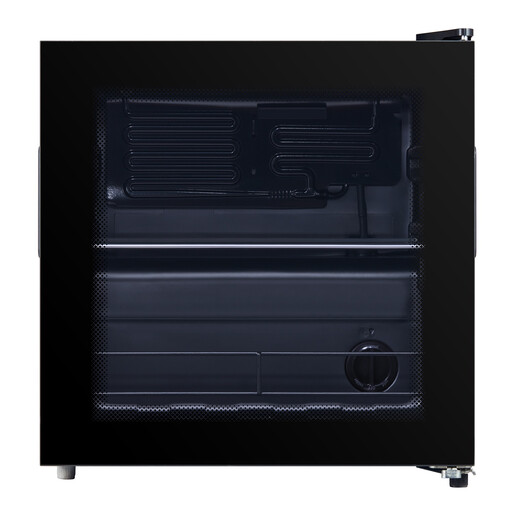
Why This Fits Their Persona: A larger mains-powered drinks refrigerator for a caravan, motorhome interior, home bar or static accommodation where portability is less important.
Its intended role is clear: it offers larger chilled storage but is not presented as a 12V freezer for off-grid vehicle use.
44L capacity, adjustable 0°C to 16°C temperature range and a compressor-based cooling system.
We have compiled a complete, real-time list of products that fully satisfy these strict selection criteria and UK safety regulations.
Only if the vehicle socket or a separate leisure battery is designed to provide continuous power. Check the car handbook and fridge instructions first. Use the available battery protection setting, but remember that protection may stop the appliance after the battery reaches a preset voltage; it does not create unlimited power.
Consumption varies with outside temperature, target temperature, insulation, loading and how often the lid is opened. A model may list its compressor input in watts; the EUHOMY product information lists 45W under specified cooling conditions. For longer stays, compare this figure with the capacity of your leisure battery or portable power station.
It can be, provided the power supply, ventilation and mounting arrangements are suitable. Confirm whether your setup uses 12V, 24V or mains electricity, and secure the appliance against movement. For static caravan use, a larger mains model may provide more storage, while a compressor cooler is generally more flexible for day trips and off-grid travel.