
24/7 Customer Support

Free returns

Same-day & Next-day Delivery

Quality Guaranteed

Unlock Your Welcome Offers: FREE Delivery | Up to 80% OFF | Free 30-day JoyPlus trial
Download the APP
A portable electric fan can make a bedroom, home office or rented flat more comfortable without the installation involved with fixed cooling. However, product pages often focus on headline speed settings and stylish designs while leaving out the details that affect everyday use.
Before buying, watch for three common traps:
The right choice depends on where you will position the fan, how often you will move it and whether you need personal airflow or broader room circulation.
For a desk, bedside table or student room, a compact desk fan, USB fan or cordless fan can provide targeted airflow. These models are easy to place close to you but may not circulate air effectively across a larger lounge.
A taller tower fan generally takes up less floor space than a traditional pedestal design and can distribute air vertically. An oscillating fan also moves airflow from side to side, helping cover a wider area. If you are choosing a floor-standing model, check its height and whether the head or air outlet can be tilted.
An adjustable height fan offers more flexibility for use beside a sofa, bed or desk. For example, the Airmate air circulation fan can be adjusted from 0.45m to 1.08m, allowing it to function at different levels rather than being restricted to one position.
A mains-powered fan is generally practical for continuous operation in a bedroom or living room. A rechargeable fan is more convenient when moving between rooms or using it away from a socket. Check whether the battery is built in, which connector is supplied and whether the fan can operate while charging.
USB-C or USB charging is useful for home offices, travel and small-footprint setups where you already have a suitable adapter or power bank. However, portable models are designed mainly for personal cooling. They may not replace a larger tower or circulation fan when you need airflow throughout a room.
A quiet fan or low-noise fan may be preferable for light sleepers, children’s bedrooms and video calls. DC motors can offer smoother speed adjustment and lower stated energy use than some AC motor designs, but always check the manufacturer’s specifications rather than assuming every DC fan will be silent.
Useful controls include a remote control, timer, LED display and clearly marked speed settings. A fan with remote control can be helpful when placed beside a bed or across a room.
For UK use, check the supplied instructions, plug type, warranty information and the presence of appropriate UK or accepted European conformity marking. Keep any electric fan away from water, excessive humidity and unstable surfaces. Bladed designs require particular care around children and pets; do not insert fingers or objects through the grille while the fan is operating.
The following options suit different shopping priorities rather than one universal type of user.
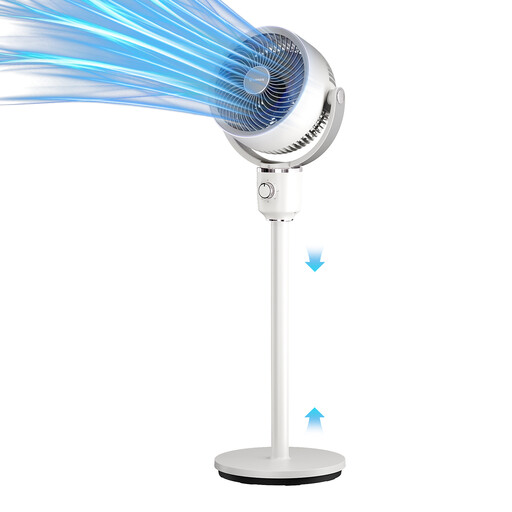
Why This Fits Their Persona: A practical choice for shoppers wanting one fan for a desk, floor or taller room position without buying separate units.
Its adjustable height and detachable design address the limitation of a fixed-position fan. Removable front grille and blades also make routine cleaning more straightforward.
Three speed modes, manual tilt from -10° to 90° and 60° automatic oscillation. The stated airflow distance is up to 10 metres.
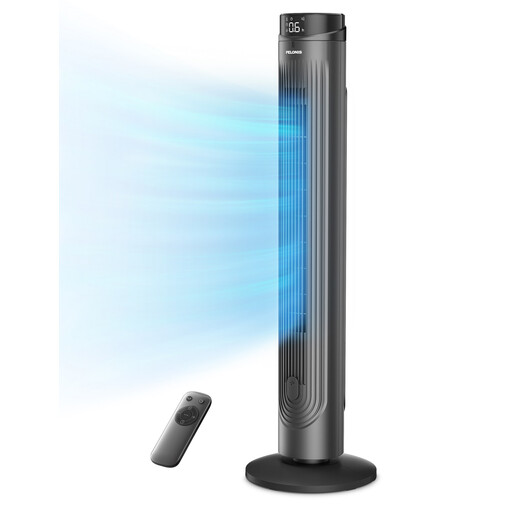
Why This Fits Their Persona: Designed for bedrooms and living rooms where broad airflow, detailed controls and a floor-standing format are priorities.
The stated 12 speeds provide more adjustment than a simple three-speed model, while the timer can reduce unnecessary overnight running.
42-inch tower format, bladeless airflow outlet, remote control, LED display and 24-hour timer. It uses a DC motor.
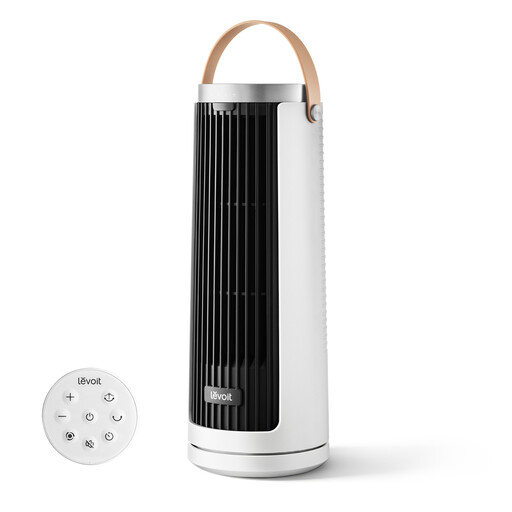
Why This Fits Their Persona: Its compact size suits desks, bedside tables, study spaces and travel where a full-sized floor fan would be inconvenient.
The rechargeable battery and USB Type-C connection avoid dependence on a nearby mains socket. Its low-noise positioning is intended for personal use rather than whole-room circulation.
Multiple airflow modes, cordless operation and USB Type-C recharging in a lightweight portable tower design.
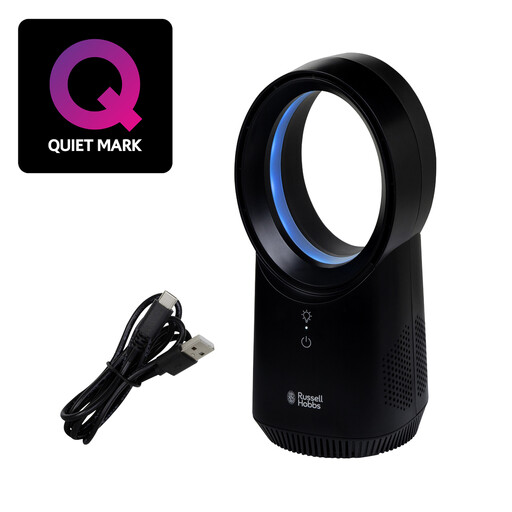
Why This Fits Their Persona: A compact option for home offices, bedside tables and households that prefer a cordless, easy-to-wipe design.
The bladeless outlet removes exposed rotating blades, while USB rechargeable operation reduces cable clutter around a desk or bedside surface.
Three speed settings, USB rechargeable battery, portable format and a stated two-year manufacturer’s guarantee.
Electric fan running cost depends on its wattage, daily usage and your electricity tariff. Use this simple calculation:
Power in kW × hours used × electricity price per kWh = estimated cost
For instance, a 30-watt fan used for eight hours consumes 0.24 kWh. Check the rating label or product specification before comparing energy-efficient fan claims. Timers, lower speed settings and DC motor designs may help reduce consumption, but actual cost depends on the model and how it is operated.
Clean the grille, blades or air outlet regularly according to the instructions. Dust can restrict airflow and create additional noise. Always disconnect a USB fan or mains-powered fan before cleaning, and do not use water on electrical components.
We have compiled a complete, real-time list of products that fully satisfy these strict selection criteria and UK safety regulations.
Yes, provided its airflow, noise level and placement suit the room. A low-noise desk or rechargeable fan can work beside a bed, while a tower fan with a timer may cover more of the room. Place it on a stable surface with clear space around the intake and outlet.
Battery runtime varies according to capacity, speed setting and whether oscillation is active. Check the manufacturer’s stated runtime and charging guidance. Avoid leaving the unit charging unattended for extended periods and replace damaged cables or batteries.
Not necessarily. Running cost is determined mainly by wattage and hours of use, rather than the fan’s shape. Compare the stated power consumption and use a timer or lower setting when full airflow is unnecessary.