
24/7 Customer Support

Free returns

Same-day & Next-day Delivery

Quality Guaranteed

Unlock Your Welcome Offers: FREE Delivery | Up to 80% OFF | Free 30-day JoyPlus trial
Download the APP
Portable electric massagers can make everyday relaxation more convenient, whether you spend long hours at a desk, travel frequently or want targeted comfort without booking an appointment. However, product pages often focus on massage modes and dramatic terminology while giving less attention to fit, battery performance and safe operation.
The right choice depends less on the longest feature list and more on whether the device suits the body area, your routine and the amount of maintenance you are prepared to manage.
Terms such as 6D massage, deep tissue massage, red light therapy and “professional” massage sensations can sound persuasive. They do not automatically indicate that a device will feel comfortable or suit your body.
Look for practical information instead:
A lower back massager and a neck and shoulder massager use different shapes and pressure points. A product designed for one area may feel awkward or ineffective when used elsewhere.
A massager may be described as portable but still be inconvenient for commuting or travel if it is bulky, heavy or difficult to charge. Check the listed dimensions and weight, along with whether it can be used hands-free.
Wrap-around products can be useful at home or in an office chair, while compact rechargeable massagers may suit luggage better. For eye devices, the fit around the nose, temples and cheekbones is particularly important because excessive pressure can make a short relaxation session uncomfortable.
Heat therapy and air compression massage can feel relaxing, but more intensity is not automatically preferable. Users should follow the manual, begin with a lower setting and avoid using a device over injured or irritated areas.
For products with heat, check whether the temperature is adjustable and whether sessions are time-limited. Avoid using an eye massager with heat if the manufacturer’s safety guidance or your healthcare professional advises against it. These devices are intended for relaxation and comfort, not to diagnose or treat a medical condition.
Choose the format around your most common use:
A hands-free massager can be more practical than a handheld design when you need to read, work or watch television during a session. However, it should not restrict movement or place excessive pressure on the shoulders.
A rechargeable massager is more convenient than a mains-only model for bedrooms, offices and travel. Check:
For example, the SKG H7 Ultra is listed with a 2,000 mAh battery and approximately 90 minutes of massage per charge. Actual runtime may vary according to heat, light and massage settings, so treat the stated figure as a guide rather than a guarantee.
For electrical wellness products sold in the UK, check that the listing provides clear instructions, charging information and warnings. Look for appropriate conformity information, such as UKCA or CE marking where applicable, and confirm that the supplied charger is suitable for UK use.
Do not rely on a product’s marketing claims alone. A responsible listing should explain cleaning, storage, battery care and situations where use should be avoided. Red light therapy should also be viewed as an additional product feature rather than evidence of a medical effect. If you have an injury, eye condition, neck problem or other health concern, seek suitable medical advice before use.
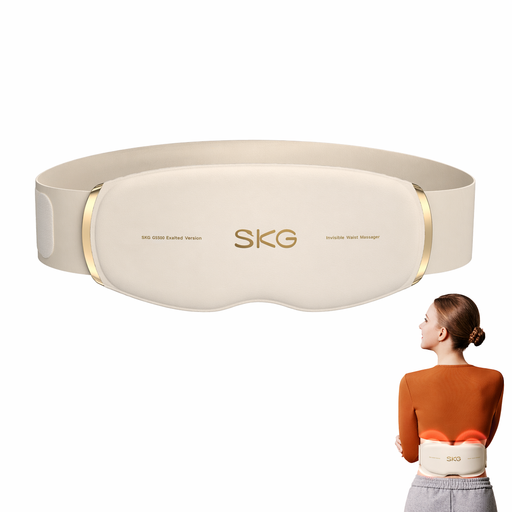
Why This Fits Their Persona: Its slim and portable positioning suits shoppers seeking a straightforward lower back device for home, office or occasional travel use.
It is presented as a dedicated lower back massager rather than a general device, helping buyers match the product to a specific body area.
Listed features include red light, heat and a slim portable format for targeted relaxation.
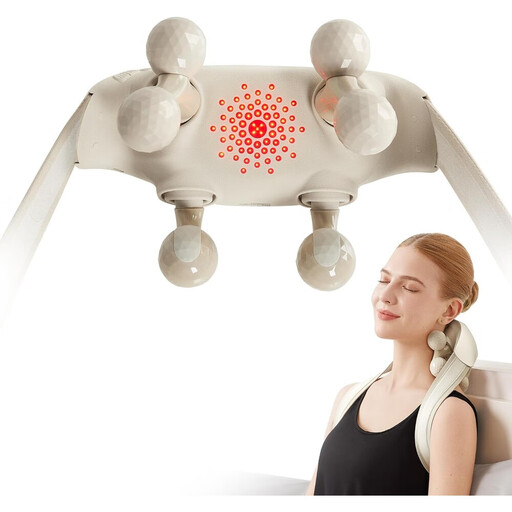
Why This Fits Their Persona: This option is suited to users who want a wrap-around neck and shoulder massager with multiple features for regular home or office sessions.
Its listed weight, dimensions and battery details make it easier to judge portability instead of relying only on “hands-free” wording.
It lists 6D massage heads, heat, LED lighting, a 2,000 mAh battery and approximately 90 minutes of use per charge.
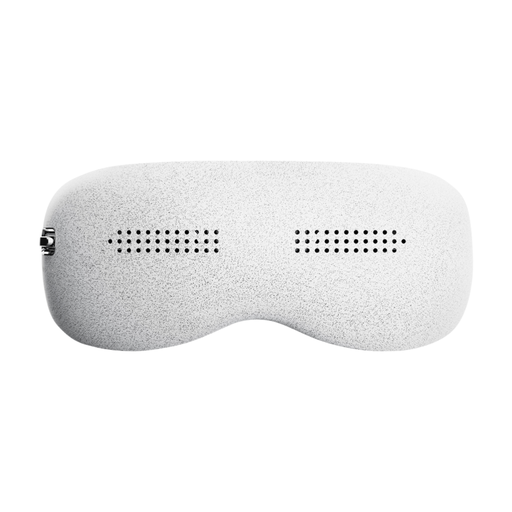
Why This Fits Their Persona: It is designed for screen-heavy users, frequent travellers and anyone seeking a dedicated eye relaxation routine at home.
It states the intended 10-minute session and provides positioning, moisture and charging guidance, rather than presenting eye care as an unlimited treatment.
It offers warm and cool compresses, air pressure, vibration, wireless use and a built-in music playlist.
We have compiled a complete, real-time list of products that fully satisfy these strict selection criteria and UK safety regulations.
Read the user manual before the first session and charge the device with the supplied or approved cable. Start with the lowest practical intensity, especially when using deep tissue massage or heat therapy. Keep sessions within the stated time limit and stop if you experience discomfort, numbness, skin irritation or unusual symptoms.
Keep electrical products dry unless they are specifically designed for water exposure. Wipe contact surfaces as instructed and store rechargeable devices away from excessive heat and moisture. For eye products, do not press the device tightly against the eyes and do not use it as a substitute for professional advice about persistent eye strain or dry eye symptoms.
Their electricity use is generally limited because sessions are short, but the exact cost depends on battery capacity, charging frequency and your electricity tariff. A rechargeable massager usually avoids the need to keep it connected to the mains during use. Automatic shut-off can also help prevent unnecessary battery drain.
Lifespan depends on battery quality, charging habits, storage and mechanical wear. To support longer use, avoid overcharging where the manual advises against it, do not bend cables and keep the device clean. Check the warranty, replacement policy and availability of instructions before purchasing.
An eye massager may provide a warm, cool, vibrating or compression-based relaxation experience, but it should not be treated as a medical device for diagnosing or treating eye conditions. Follow the manufacturer’s directions and consult an appropriate healthcare professional if symptoms persist, worsen or affect your vision.