
24/7 Customer Support

Free returns

Same-day & Next-day Delivery

Quality Guaranteed

Unlock Your Welcome Offers: FREE Delivery | Up to 80% OFF | Free 30-day JoyPlus trial
Download the APP
As a Joybuy Product Recommendation Officer, my role is to help you navigate the crowded market of electric vehicle accessories. Choosing a portable EV charger UK drivers can rely on involves more than just finding the right plug. Many new EV owners, especially those renting or without a dedicated wall box, fall into common traps that lead to frustration and wasted money.
This guide cuts through the marketing jargon to focus on what truly matters. We will highlight the critical features you need for safe, convenient charging from any standard UK wall socket and steer you away from three common purchasing pitfalls.
Ignoring Weatherproofing (The IP Rating Trap): The UK weather is famously unpredictable. Many chargers advertised for home use have low Ingress Protection (IP) ratings, meaning they are not built to withstand rain. A charger with a rating below IP55 is a risk when used outdoors, potentially leading to damage or failure when you need it most. A true waterproof car charger for outdoor use should have a high IP rating for both the control box and the connector.
The "One-Size-Fits-All" Cable Length Myth: A common regret is buying a cable that is too short, leaving you stretching it taut across a pavement or unable to reach the socket from your preferred parking spot. Conversely, an excessively long cable can be a cumbersome trip hazard to manage and store. Choosing the right length for your specific parking situation is crucial.
Overlooking Essential Safety Certifications: A portable charger handles a significant and sustained electrical load. Uncertified products, often found on marketplace sites, may lack fundamental safety features like overheating protection, proper earthing or overcurrent cut-offs. Using an uncertified 3 pin EV charger is a serious fire and safety risk. Always look for UKCA and CE markings as a minimum baseline.
To ensure you get a reliable and safe product, focus on these three core parameters.
This is the most important consideration. A portable charger must be built to handle high power for many hours safely.
Not all home wiring is the same. The ability to manage how your car draws power is a significant advantage.
This relates to the physical usability of the charger day-to-day.
We have selected a few products that meet these strict criteria, matching them to common user scenarios in the UK.
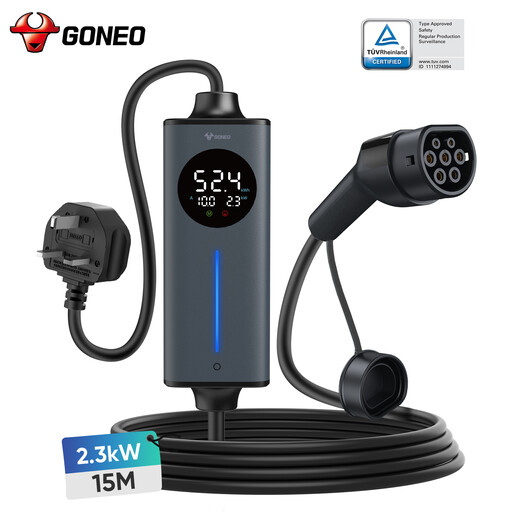
Why This Fits Their Persona: For those whose only available 3-pin socket is at the back of the house or far across a wide driveway, this charger's extensive reach is a problem-solver. It eliminates the need for unsafe extension cords.
Directly solves the "cable too short" pitfall with its 15-metre length. Its IP66 rating also means it can be safely run across a path or garden, avoiding the weatherproofing trap.
Maximum reach for difficult charging scenarios. Features adjustable current and a clear LED display for full control.
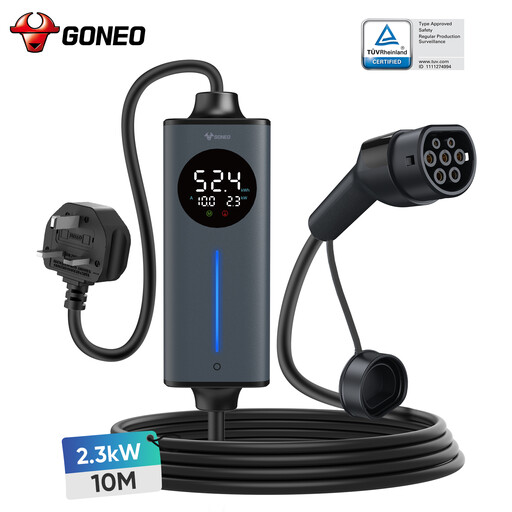
Why This Fits Their Persona: This is a versatile choice for the typical UK EV owner with a driveway. The 10-metre length is ample for reaching from a garage or front-of-house socket to the car without creating excessive, messy slack.
It hits the sweet spot for length, avoiding both the "too short" and "too long" pitfalls for most users. It includes all essential safety certifications and a robust IP66 waterproof rating.
Excellent balance of reach and manageability. Features a delayed start timer to take advantage of cheaper overnight electricity tariffs.
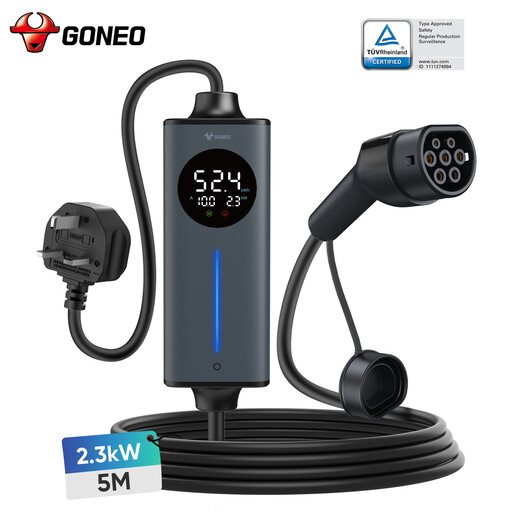
Why This Fits Their Persona: Ideal for those who need a charger to keep in the boot for emergencies, visiting friends and family or for renters who can park right next to a socket. Its shorter length makes it lightweight and easy to pack and store.
This model avoids the trap of being too bulky. It provides all the same critical IP66 weatherproofing and safety features as its longer counterparts in a more compact package.
Maximum portability and ease of storage. Perfect as a backup or travel charger without compromising on safety features.
We have compiled a complete, real-time list of products that fully satisfy these strict selection criteria and UK safety regulations.
1. How long does it take to charge an EV with a 3-pin plug charger? Charging from a standard UK socket provides about 2.3kW of power. This is a relatively slow "trickle" charge, which typically adds around 8-10 miles of range for every hour of charging. While not fast, it is perfectly sufficient for overnight charging, especially for plug-in hybrids (PHEVs) or for fully electric drivers who just need to top up their daily commute mileage.
2. Is it safe to use a portable EV charger in the rain? This depends entirely on the product's IP rating. A charger with an IP66 waterproof rating, like the ones recommended above, is designed for safe operation in wet conditions. The control box and car-side connector are sealed against rain. However, the domestic 3-pin plug and the wall socket it connects to are not waterproof and must always be sheltered from direct exposure to water.
3. Can I use a standard extension lead with my portable EV charger? It is strongly advised not to use a standard indoor or garden extension lead. These are typically not rated for the high, continuous power draw of an EV charger and can overheat, creating a significant fire hazard. If an extension is absolutely necessary, you must use a heavy-duty, 13A-rated lead with the thickest possible cable (e.g., 1.5mm? or higher) and keep it as short as possible. Always fully uncoil any extension lead before use.