
24/7 Customer Support

Free returns

Same-day & Next-day Delivery

Quality Guaranteed

Unlock Your Welcome Offers: FREE Delivery | Up to 80% OFF | Free 30-day JoyPlus trial
Download the APP
As an electric vehicle owner in the UK, you understand the convenience of charging at home. While a professionally installed wallbox is a great solution, it isn't always practical or possible, especially for renters, those in flats or households with multiple EVs. This is where the portable EV charger with a UK 3-pin plug comes in—a simple, flexible solution that uses any standard domestic socket.
However, the growing popularity of these chargers has flooded the market with options, and not all are created equal. Choosing the wrong one can lead to frustration, wasted money or even safety hazards. Before you buy, be aware of these common pitfalls.
To make an informed choice, focus on the technical specifications that directly impact safety, convenience and usability. A portable EV charger UK 3 pin is more than just a cable; it's a sophisticated piece of equipment. Here are the core parameters to scrutinise.
These devices are officially known as Mode 2 EV charging cables. They are designed to safely draw power from a standard 13-amp household socket.
The physical properties of your 3 pin to type 2 charging cable are just as important as its electronics.
travel electric car charger that will face the unpredictable UK climate.A home EV charger for household socket must have multiple layers of protection. Reputable models will list these features clearly. Look for:
We've filtered through the options to identify chargers that meet these critical criteria, matching them to common user needs across the UK.
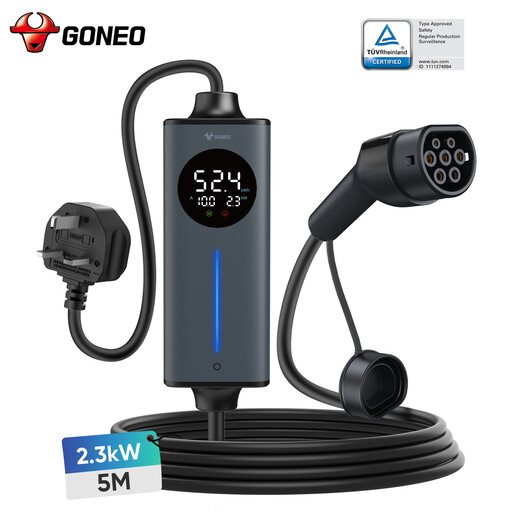
Why This Fits Their Persona: Perfect for EV owners who consistently park near a domestic socket. The 5-metre length is ample for most driveways and garages, making it a practical and cost-effective choice for reliable overnight charging without excess cable to manage.
It avoids the trap of overspending on unnecessary cable length. It includes essential smart features like adjustable current and a delay timer, providing control that basic chargers lack.
Features a full suite of safety protections and an IP66 rating, ensuring safe operation. The clear LED screen provides real-time charging status at a glance.
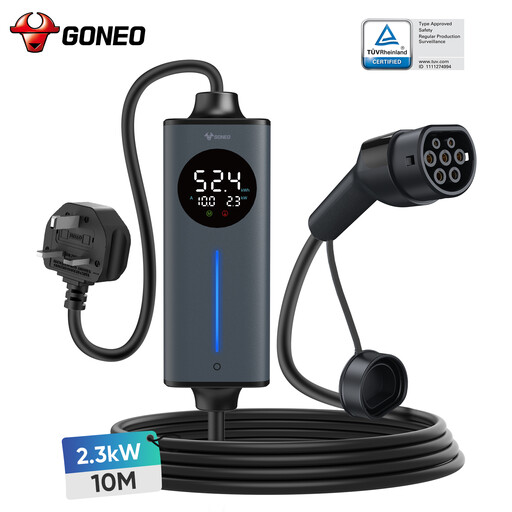
Why This Fits Their Persona: Ideal for those with long driveways, street parking challenges or who frequently visit friends and family. The 10-metre reach provides the freedom to charge in situations where a standard cable would fall short, making it a versatile tool for home and travel.
Directly solves the "cable too short" pitfall by doubling the length of many standard chargers. It maintains all the crucial safety and smart features, ensuring you don't sacrifice function for flexibility.
The generous 10-metre length offers maximum convenience. It is also IP66 rated for robust weather protection, making it a reliable choice for year-round outdoor use.
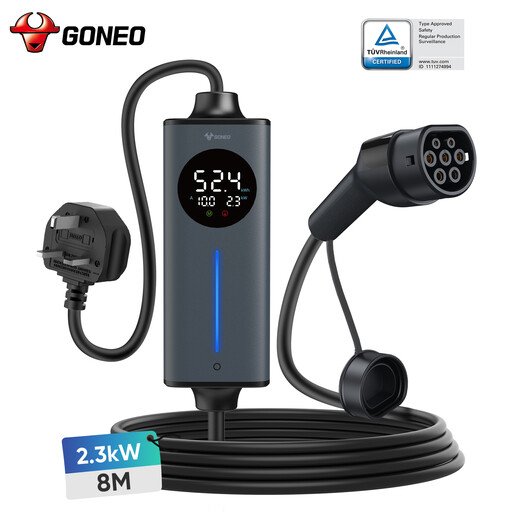
Why This Fits Their Persona: As a renter, you need a charging solution that requires no installation. As a traveller, you need adaptability. This 8-metre charger offers a great balance of reach and portability, making it an excellent all-in-one `granny charger for electric car` that you can rely on at home or in a holiday cottage.
It avoids the limitations of a short cable and the lack of control found in basic chargers. The delay timer is particularly useful for setting charging to begin during off-peak hours, no matter where you are.
The 8-metre length is a versatile sweet spot between the 5m and 10m options. It includes all the same advanced safety and smart charging features, making it a dependable travel companion.
We have compiled a complete, real-time list of products that fully satisfy these strict selection criteria and UK safety regulations.
Yes, it is safe when done correctly. The key is to use a high-quality, certified charger that features built-in protections like an RCD for leakage, over-voltage and temperature monitoring. Always plug directly into a mains socket that is in good condition—never use a standard indoor extension lead. For added safety, choose a charger with adjustable current so you can reduce the load on older household wiring.
A 3-pin charger typically delivers around 2.3kW of power. This translates to adding approximately 8-10 miles of range for every hour of charging. While not as fast as a dedicated wallbox, it is perfectly sufficient for overnight top-ups, easily adding 80-100 miles of range over a 10-hour period, which covers more than twice the average UK daily commute.
You should only use a portable charger outdoors if it has an appropriate weather-resistance rating. Look for a minimum of an IP66 rating on the charger's control unit. This indicates it is protected against dust and powerful water jets, making it suitable for use in typical British weather. However, the 3-pin plug itself and the wall socket it connects to must always be kept dry and sheltered from the elements.