
24/7 Customer Support

Free returns

Same-day & Next-day Delivery

Quality Guaranteed

Unlock Your Welcome Offers: FREE Delivery | Up to 80% OFF | Free 30-day JoyPlus trial
Download the APP
As an EV owner in the UK, the convenience of charging at home is undeniable. A portable EV charger with a UK 3-pin plug, often called a 'granny charger', offers a straightforward solution without the expense and hassle of installing a dedicated wallbox. However, the market is filled with options that look similar but hide critical flaws. Choosing the wrong one can lead to more than just frustration; it can be a genuine safety risk and a waste of money.
Before you buy, be aware of these common purchasing pitfalls:
To make a smart purchase, you need to look past the marketing hype and focus on a few core specifications. These are the non-negotiable features that determine the safety, usability and efficiency of an electric car charger for a household socket.
When connecting a high-power device to your home's mains and your car's sensitive electronics, safety is paramount. Always look for a charger that is explicitly UKCA and CE certified. These markings indicate that the product complies with UK and European safety standards. A certified charger will include multiple layers of protection:
Before adding any charger to your basket, take a tape measure and check the distance from your most convenient 3-pin socket to where your car's charging port will be. A Type 2 3-pin charger comes in various lengths, typically from 5 to 20 metres. Choose a length that gives you some slack without being excessively long and cumbersome.
Equally important is the IP (Ingress Protection) rating. For a device that will be used outdoors in the British weather, look for a rating of at least IP66. This ensures the charger's housing and connectors are protected against dust ingress and powerful water jets, making it safe to use in the rain.
A quality slow EV charger for home use should offer more than just basic power delivery. Smart features provide control, safety and cost savings:
Based on these essential criteria, we've matched some reliable options to different user needs. These recommendations focus on products that deliver on safety, practicality and smart functionality.
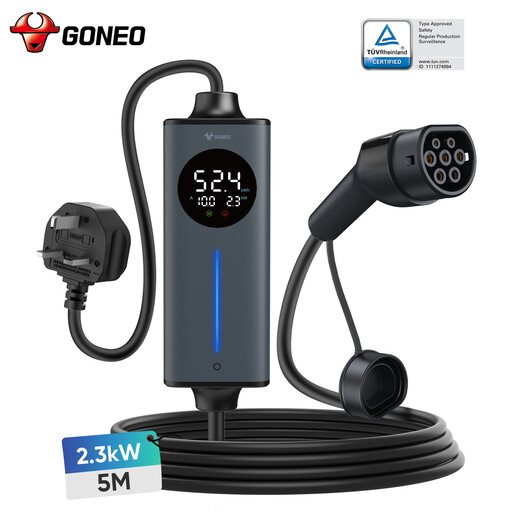
Why This Fits Their Persona: Ideal for EV owners with off-street parking right next to a household socket, such as in a garage or on a small driveway. The 5-metre length is sufficient for most standard situations, providing a reliable and cost-effective solution for overnight top-ups or as an emergency car charger EV.
It includes a delay timer to avoid peak electricity rates and is built with full safety certifications, preventing the risks associated with uncertified chargers.
Features adjustable current, a clear LED display for monitoring and an IP66 rating for safe outdoor use. Compact and easy to store.
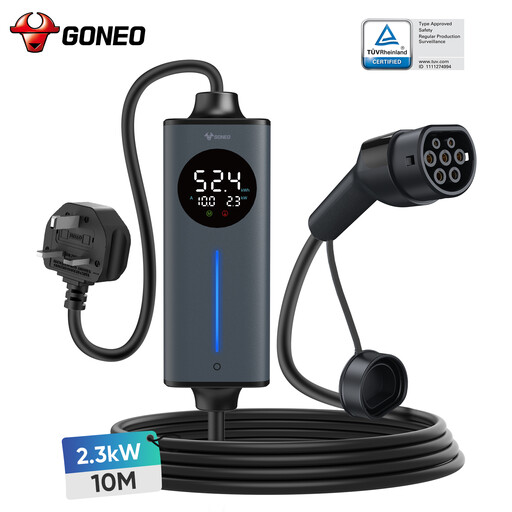
Why This Fits Their Persona: Perfect for those who park on a typical UK driveway and need to run the cable from a garage or front-of-house socket. The 10-metre length provides ample reach without creating excessive, hazardous slack, solving the common "cable is too short" problem.
Directly addresses the cable length fallacy by offering a practical, generous length. The IP66-rated, durable build avoids the pitfall of flimsy chargers that fail after exposure to weather.
Excellent balance of reach and manageability. Includes all essential smart features like delayed start and dual temperature monitoring for safe, cost-effective charging.
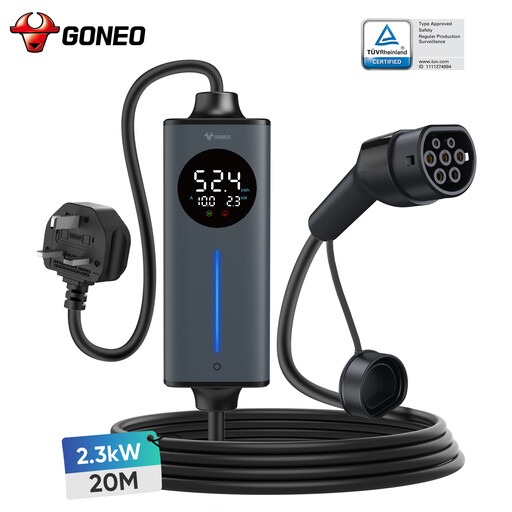
Why This Fits Their Persona: For users with very long driveways, challenging parking arrangements, or those who want a single, highly versatile mobile EV charging cable for home and travel. This 20-metre cable provides maximum flexibility, ensuring you can reach a socket in almost any situation.
This charger eliminates any concern about reach. Despite its length, it maintains all the crucial safety and smart charging features, ensuring it is not just a long cable but a complete, safe charging system.
Maximum 20-metre reach for ultimate flexibility. Retains all smart features, including adjustable current, delay timer and a full suite of safety protections certified to UKCA and CE standards.
We have compiled a complete, real-time list of products that fully satisfy these strict selection criteria and UK safety regulations.
A portable EV charger using a standard UK 3-pin socket typically delivers power at around 2.3kW. This translates to adding approximately 8-10 miles of range per hour of charging, depending on your vehicle's efficiency. It is ideal for overnight top-ups, adding 60-80 miles of range over an 8-hour period, but it is not designed for rapid, full charging of a large battery from empty.
Yes, provided it has an appropriate IP rating. Look for a charger rated at IP66, which means its casing is sealed against dust and can withstand powerful jets of water. This makes it safe for use in typical British weather conditions. However, you should always ensure the 3-pin plug itself is connected to a dry, weather-protected indoor or outdoor socket. Never leave the plug exposed to the elements.
The cost depends on your electricity tariff. A 2.3kW charger uses 2.3 kilowatt-hours (kWh) of electricity for every hour it runs. If you use a delayed start timer to charge during an off-peak period (e.g., from midnight to 7 am), your rate might be as low as 7.5p per kWh. An 8-hour overnight charge would consume 18.4 kWh (2.3kW * 8h), costing approximately ?1.38. Charging at a peak daytime rate of 28p per kWh would cost around ?5.15 for the same session.