
24/7 Customer Support

Free returns

Same-day & Next-day Delivery

Quality Guaranteed

Unlock Your Welcome Offers: FREE Delivery | Up to 80% OFF | Free 30-day JoyPlus trial
Download the APP
For many electric vehicle owners in the UK, the convenience of a dedicated wallbox isn't always an option. Whether you're renting, living in a flat or simply don't have a suitable location for a permanent installation, the need for a flexible charging solution is real. A portable EV charger that uses a standard UK 3-pin plug can be an invaluable tool, but navigating the market can be tricky. Many products are plagued with issues that only become apparent after purchase.
As the Joybuy Product Recommendation Officer, my role is to help you sidestep these common issues. Before you buy, be aware of these frequent pitfalls:
To ensure you get a reliable and practical charger, focus on these core specifications. They are the difference between a convenient tool and a costly paperweight.
When you see a product advertised as an IP66 waterproof car charger, it's more than just marketing jargon. The IP rating is a crucial standard that defines a device's resistance to dust and water.
For many UK homes, the distance from an indoor or garage socket to the car's charging port is greater than you might think. A 10m electric car charger provides the flexibility needed to bridge this gap comfortably. It allows you to park naturally on your drive or in your designated space without being tethered to the wall. While shorter cables are more portable, measuring the distance you need before you buy is a critical step to avoid disappointment.
The ability to charge an electric car from a normal socket is incredibly convenient, but it must be done safely. A standard UK 3-pin socket is typically rated for 13A, but continuous high-load drawing can be a concern for older wiring.
An adjustable current EV charger allows you to manually lower the amperage (e.g., to 10A or less), reducing the strain on your home's electrical system. This feature, combined with a standard Type 2 granny charger connector (the EU/UK standard for most modern EVs), ensures both compatibility and safe, controlled power delivery. Look for models with clear displays that show voltage, current and temperature for complete peace of mind.
Based on these essential criteria, we've matched specific products to the UK drivers who would benefit most from them.
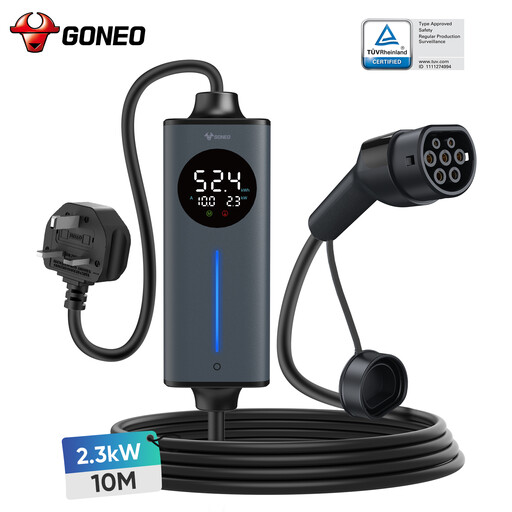
Why This Fits Their Persona: This user has off-street parking but no wallbox. The 10-metre cable is essential for reaching their car from a socket in the garage or near the back door, providing a practical daily charging solution without any installation hassle.
Its generous 10m cable directly solves the common pitfall of underestimating the distance from socket to car, ensuring it's always long enough for the job.
Features an IP66 rating for reliable outdoor use and a delay function to schedule charging for cheaper, off-peak electricity rates.
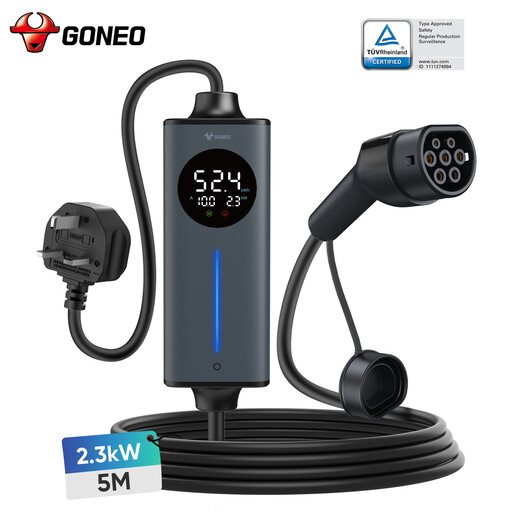
Why This Fits Their Persona: This user needs a reliable charger to keep in the boot for visiting family, weekends away or staying at holiday lets. The 5-metre cable is sufficient for most temporary setups and is more compact and easier to manage than a longer version.
Its certified IP66 rating provides confidence that it will function safely even if used in the rain at a holiday cottage, avoiding the risk of failure from a non-rated "weather-resistant" charger.
Includes crucial safety features like adjustable current and dual temperature monitoring, making it a safe and dependable travel companion.
We have compiled a complete, real-time list of products that fully satisfy these strict selection criteria and UK safety regulations.
Yes, it is safe provided you use a high-quality, certified portable charger. A reliable device will include multiple safety protections, such as overvoltage, overcurrent and leakage protection. The most important feature is adjustable current, which allows you to set a lower charging rate (e.g., 10A) to prevent overloading your home's wiring, especially in older properties. Always ensure the plug and socket are dry and in good condition.
Charging with a 3-pin plug, often called "trickle charging," is the slowest method. These chargers typically deliver around 2.3kW of power. This translates to adding approximately 8-10 miles of range per hour of charging. While not fast, it is perfectly adequate for overnight charging, ensuring your car is ready for the next day's commute or local journeys.
You should only leave a portable charger outside if it has an appropriate IP rating. An IP66 rating ensures the main control box is protected against dust and powerful water jets, making it suitable for use during heavy rain. However, the 3-pin plug itself and the domestic socket it connects to are not waterproof and must always be kept dry and protected from the elements, for example, inside a garage or a weatherproof outdoor socket enclosure.