
24/7 Customer Support

Free returns

Same-day & Next-day Delivery

Quality Guaranteed

Unlock Your Welcome Offers: FREE Delivery | Up to 80% OFF | Free 30-day JoyPlus trial
Download the APP
As an electric vehicle owner in the UK, the freedom to charge anywhere is a powerful advantage. A portable EV charger that uses a standard 3-pin plug offers incredible flexibility, whether you're a renter without a dedicated wallbox, visiting family or need a reliable backup. However, the market is filled with options, and making the wrong choice can lead to frustration, slow charging or even serious safety hazards.
Before you buy, it's crucial to understand the common pitfalls. Many buyers are caught out by three key issues:
This guide will help you navigate these issues, focusing on the core parameters that truly matter for a safe and effective portable charging solution.
To ensure you get a reliable and safe product, focus on these non-negotiable specifications. These details determine whether a charger is a useful tool or a potential liability.
This is the most critical factor when you plan to charge an EV from a standard socket in the UK. Your charger must be built to handle the British climate and protect against electrical faults.
The distance from your wall socket to your car's charging port is a simple but often overlooked detail. Before browsing, measure this distance and add at least a metre or two for flexibility.
A longer cable negates the need for standard household extension cords, which are not rated for the sustained load of EV charging and should never be used.
A portable EV charger UK 3 pin model is designed to work with a standard domestic socket, which limits the power output.
Based on these essential criteria, we've identified several portable chargers that match distinct UK user profiles. Instead of focusing on marketing hype, these recommendations are matched to practical, real-world needs.
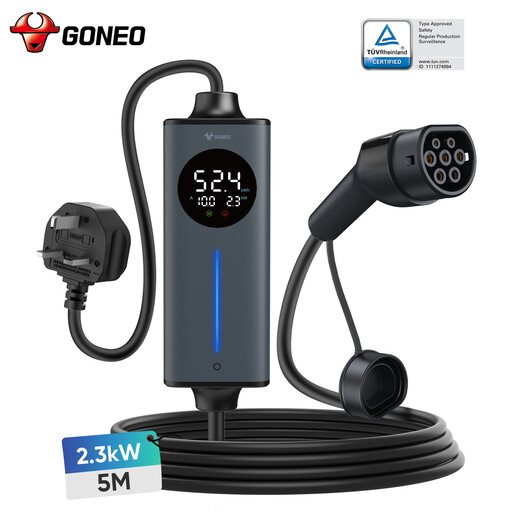
Why This Fits Their Persona: This is for the EV owner with a straightforward home setup. The 5-metre cable is the ideal length for charging in a garage or on a private driveway where the car is parked close to a domestic socket. It's a no-fuss solution for daily overnight top-ups.
It avoids the "too-short cable" trap for standard parking spots and includes comprehensive safety features like leakage protection and an IP66 rating, steering clear of the safety gamble.
Features a clear LED display for monitoring charge status and a delay timer to schedule charging for off-peak hours, helping to manage electricity costs.
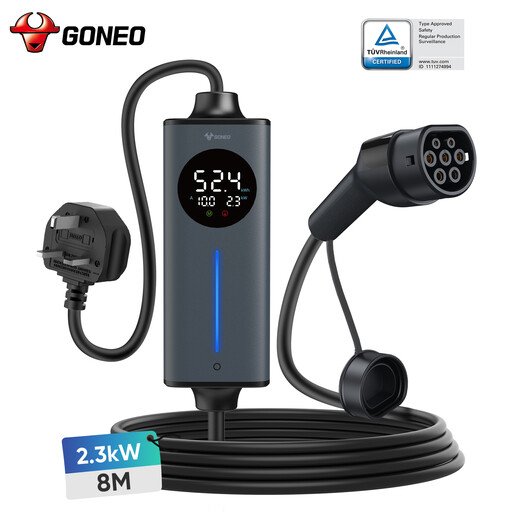
Why This Fits Their Persona: Ideal for the EV driver who frequently travels for weekends away or visits friends and family. The 8-metre cable provides valuable extra reach for navigating unfamiliar parking situations at holiday lets or relatives' homes where sockets may be inconveniently placed.
The extended length provides a practical buffer against poorly located sockets, a common travel frustration. Its robust IP66 rating means you don't have to worry about unpredictable British weather when charging away from home.
Offers a great balance between extended reach and portability. It's long enough for most situations but still compact enough to be stored neatly in the boot as a permanent travel companion.
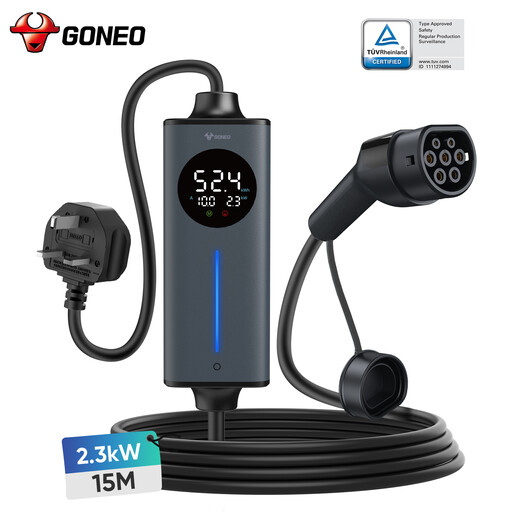
Why This Fits Their Persona: This is a problem-solver for renters or residents in flats and terraced houses without off-street parking. The 15-metre cable is long enough to run from an indoor or back-of-house socket to a car parked on the street, providing a viable home charging solution.
It directly solves the most common pitfall for renters: insufficient cable length. This avoids the dangerous practice of daisy-chaining extension leads and ensures a safe, continuous connection from the socket to the car.
The extra-long reach provides a charging lifeline for those in challenging residential situations, making a home EV charger a possibility where it otherwise wouldn't be.
We have compiled a complete, real-time list of products that fully satisfy these strict selection criteria and UK safety regulations.
Yes, it is safe, provided you use a high-quality, certified portable charger. A suitable electric car charger 3 pin plug will have multiple built-in safety features, such as RCD leakage protection, overheating sensors and robust weatherproofing (like an IP66 rating). It is critical to plug it directly into a properly grounded wall socket and never use a standard household extension lead.
A 2.3kW EV charger will add approximately 8-10 miles of range for every hour it is connected. This makes it ideal for overnight charging. For example, a 10-hour overnight session can add 80-100 miles of range, which is more than enough to cover the average daily commute in the UK. It is not designed for rapid top-ups but is a very effective way to ensure your car is ready to go each morning.
This depends entirely on the charger's IP rating. A charger with an IP66 rating is designed to be dust-tight and protected against powerful jets of water, making it suitable for use outdoors in heavy rain. However, the 3-pin plug itself should always be connected to a dry and preferably weatherproof outdoor socket or an indoor socket. Never leave the domestic plug end exposed to the elements.