
24/7 全天候客户支持

免费退货

当日/次日达

品质保障

开启新人专享福利: 全场免邮 | 低至 2 折 | 免费试用 30 天 JoyPlus 会员
下载 Joybuy
As warmer days become more frequent in the UK, a reliable portable fan has shifted from a holiday luxury to an everyday essential. Whether you're navigating a stuffy commute, trying to focus in a warm office or ensuring a comfortable nap for your little one, the right personal fan can make all the difference.
However, the market is flooded with options that often over-promise and under-deliver. Many of us have been caught out by a fan that dies after an hour or a "quiet" model that sounds like a lawnmower. Before you buy, it's crucial to understand the common traps that lead to disappointment and wasted money.
As a Joybuy Product Recommendation Officer, my role is to help you see past the marketing clutter. Here’s what to watch out for:
To find a dependable rechargeable fan, you need to look beyond the flashy claims and focus on a few core parameters. These details will tell you how the fan will actually perform in your day-to-day life.
The battery's capacity, measured in milliampere-hours (mAh), is a good starting point. A higher number generally means more power in the tank. However, this figure is meaningless without considering the motor's efficiency.
A well-made fan with a 2000mAh battery might outlast a poorly designed one with 3000mAh. Instead of focusing only on mAh, look for manufacturers who provide clear runtime estimates for each speed setting (e.g., 12 hours on low, 6 hours on medium and 3 hours on high). Also, check the charging method; a USB fan with a modern USB-C port will typically recharge faster and more conveniently than one with an older micro-USB.
The motor is the heart of your fan. Many modern, higher-quality models use a brushless DC motor. These are generally more energy-efficient, longer-lasting and produce less noise than their older, brushed counterparts.
For a quiet portable fan, the noise level, measured in decibels (dB), is the most important specification. For context:
If a manufacturer doesn't list the dB rating, it may be a sign that the fan is not designed for quiet operation.
A portable fan should fit your lifestyle. Consider where you'll use it most:
To help you choose, we've matched some well-specified models to different user needs. These selections are based on their features and how they address the common buying pitfalls.
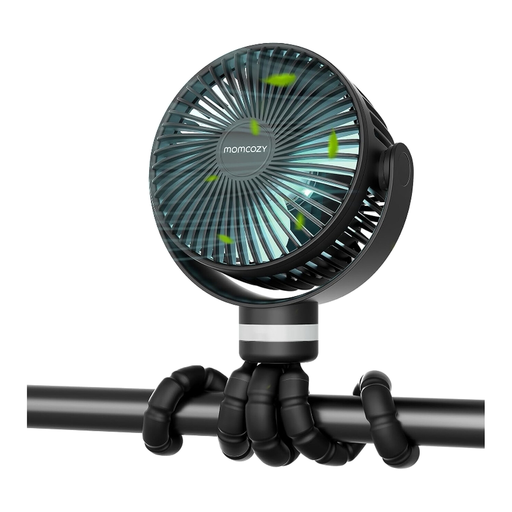
Why This Fits Their Persona: This is designed for parents who need a safe and reliable cooling solution for prams, cots or car seats. The flexible tripod legs provide a secure grip on various surfaces, ensuring the fan stays put during walks or car journeys.
It counters the flimsy design trap with a robust metal and silicone tripod. It also avoids the battery life illusion with a huge 8000mAh battery, providing a realistic 12-27 hour runtime and addresses safety with a fan gap of less than 5mm.
Exceptional battery life for all-day outings and a purpose-built, child-safe design. The 360° rotation and built-in LED light add practical versatility.
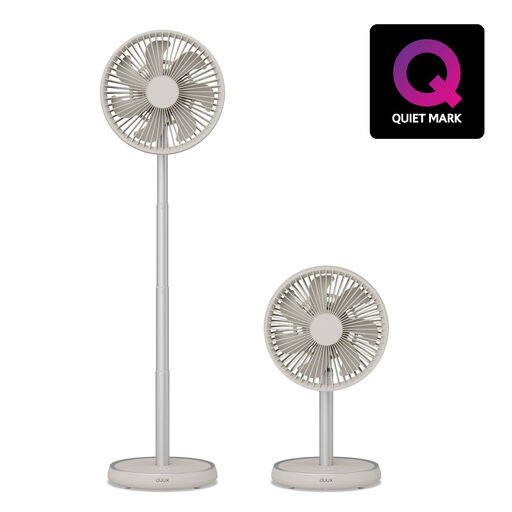
Why This Fits Their Persona: For those who value aesthetics and quiet performance, this fan is ideal. Its minimalist design fits into a modern home or office and its cordless nature means it can be moved from desk to bedside table without hassle.
It directly tackles the "deceptively quiet" trap by providing a specific noise rating (from 28dB) and being Quiet Mark approved. Its height-adjustable design avoids the need for a separate desk and floor fan, preventing unstable setups.
Its key advantage is versatility, converting from a 34cm desk fan to a 75cm pedestal fan. The ultra-quiet operation and up to 15-hour battery life make it a premium choice.
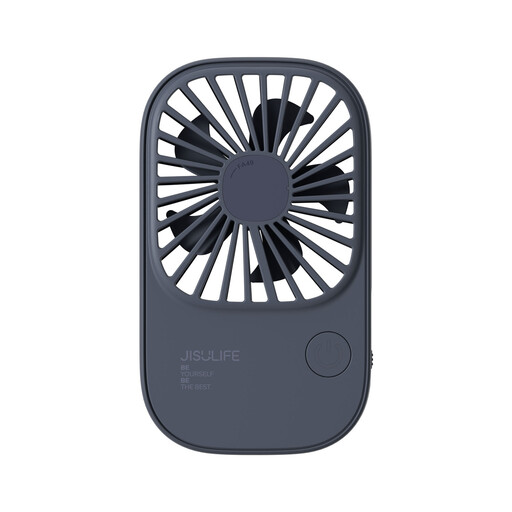
Why This Fits Their Persona: This ultra-slim mini fan is built for life on the move. Weighing only 104g, it's perfect for slipping into a pocket or bag for use on the train, bus or during a lunch break. The included lanyard allows for hands-free carrying.
It avoids the battery life illusion by providing clear, tiered runtime estimates for its 2000mAh battery: up to 14 hours on low and 4 hours on high. This manages user expectations perfectly for a compact travel fan.
Its primary advantage is its extreme portability and lightweight design. The inclusion of a rear stand for desktop use and a safety lock adds significant practical value.
We have compiled a complete, real-time list of products that fully satisfy these strict selection criteria and UK safety regulations.
The running cost is minimal. A rechargeable fan consumes a very small amount of electricity when charging via USB, typically costing just a few pence for a full charge. This is significantly more energy-efficient and cheaper to run than a standard mains-powered fan.
This depends entirely on the model's battery size (mAh) and motor efficiency. A compact handheld fan might offer 3-8 hours of use, while larger models with bigger batteries can run for over 20 hours on their lowest setting. Always check the manufacturer's stated runtime for different speeds to get a realistic idea of performance.
Yes, in most cases. Portable electronic devices containing lithium-ion batteries, such as a rechargeable fan, must be packed in your carry-on luggage, not in your checked bags. Airline policies can vary, so it is always a good idea to check with your specific airline before you travel.