
24/7 全天候客户支持

免费退货

当日/次日达

品质保障

开启新人专享福利: 全场免邮 | 低至 2 折 | 免费试用 30 天 JoyPlus 会员
下载 Joybuy
A portable fan can make commuting, desk work, travel and warm nights more comfortable without taking up the space of a full-size appliance. However, compact fans vary considerably in power, battery performance, mounting options and noise.
The right choice depends on where you will use it. A handheld fan may suit a train journey, while a desk fan works better for a home office. Drivers may need a USB car cooling fan, and parents may prioritise secure mounting and enclosed blades for pram use.
Battery figures are usually measured at the lowest speed. A fan advertised for many hours may run for much less time on its highest setting. Before buying a USB rechargeable fan, check whether the listed runtime covers different speed levels and how long charging takes.
A battery-operated fan with a display can make remaining charge easier to monitor. If no battery information is provided, you may need to carry a power bank for longer journeys.
A small fan can produce a noticeable breeze close to your face, but it will not cool an entire room like a larger floor or tower fan. Adjustable airflow direction is also important. A fixed mini fan may be awkward on a desk, in a car or beside a bed.
Look for a rotating head, foldable body, stand, clip or lanyard depending on how you plan to use it. For a vehicle, check whether the mounting method suits your dashboard or windscreen.
Motor speed, blade design and airflow direction affect both noise and performance. A quiet fan may be more suitable for study or sleep, while a higher-output portable electric fan may be preferable outdoors. Product descriptions do not always provide a measured decibel figure, so treat broad noise claims as guidance rather than a guarantee.
Battery capacity is commonly shown in mAh, but capacity alone does not confirm runtime. Speed setting, motor power and airflow mode also matter. A USB rechargeable fan with USB-C charging can be convenient because it may work with compatible laptop chargers, power banks and adapters.
Check:
For air travel, check the airline’s current rules for lithium-battery devices before packing a cordless fan.
A 3-speed fan offers low, medium and high settings for basic adjustment. Models with four or five settings provide more control, but additional modes may affect battery duration.
A rotating head is useful when sharing airflow with another person. A foldable handheld fan can often convert into a desk fan, while a neck fan or lanyard model leaves both hands free. For a car cooling fan, 360-degree adjustment can help direct air towards the driver or passenger.
A desk model should have a stable base that will not easily slide on a smooth surface. Car models may use a suction cup, vent clip or 12V/24V cigarette-lighter connection. Clean the mounting surface before fitting a suction base and check it regularly during use.
For products used near children, inspect the grille, mounting security and manufacturer’s instructions. A pram fan should not be treated as a toy and should only be used under adult supervision. Look for clear instructions, appropriate electrical information and relevant conformity markings, such as CE or UKCA where applicable. These markings should not replace reading the safety guidance.
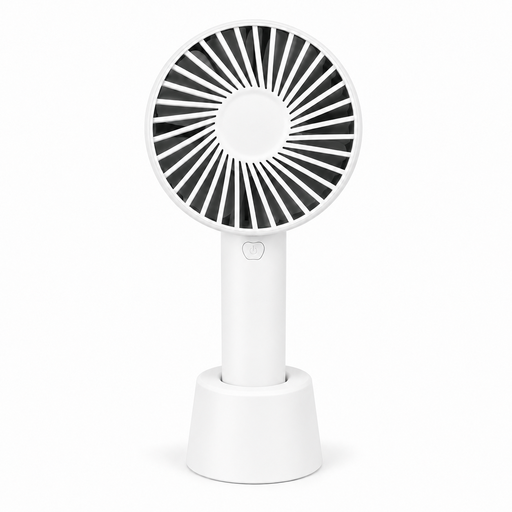
Why This Fits Their Persona: A straightforward personal fan for students, commuters and first-time buyers who want handheld and desk use without carrying a larger appliance.
The included stand supports hands-free use, while USB recharging avoids dependence on disposable batteries.
Lightweight design, USB rechargeable battery, desktop stand and wrist strap.
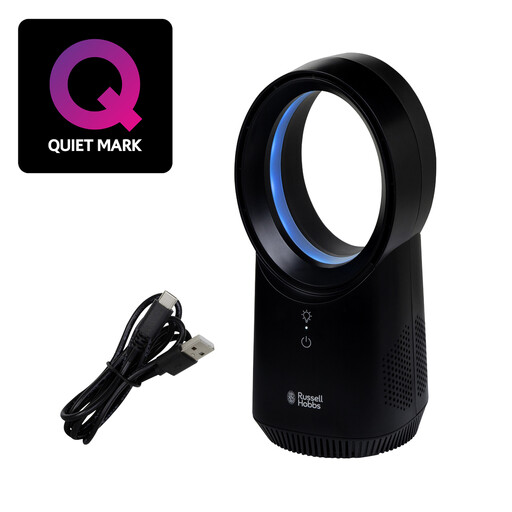
Why This Fits Their Persona: Suitable for home offices, bedrooms and bedside tables where a compact cordless design and simpler cleaning are priorities.
Its bladeless construction avoids exposed rotating blades and the product information specifies USB rechargeable cordless operation.
Bladeless design, multiple speed levels, compact body and a 2-year manufacturer’s guarantee.
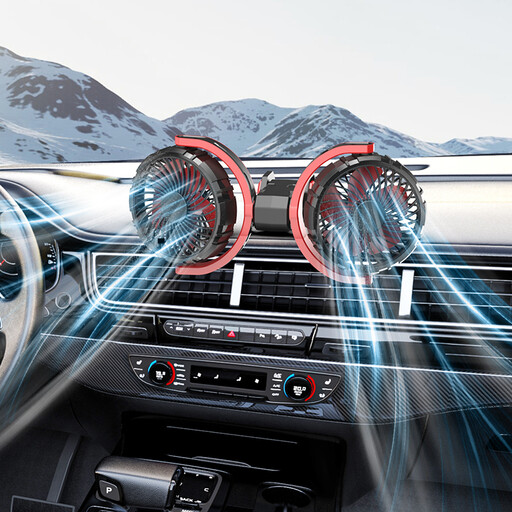
Why This Fits Their Persona: Designed for drivers and passengers who need broader airflow during commuting, road trips or use in larger vehicles.
The dual-head layout addresses limited single-direction airflow, while the foldable structure helps with storage.
12V/24V vehicle compatibility, 360-degree adjustment, two fan heads and two USB charging ports.
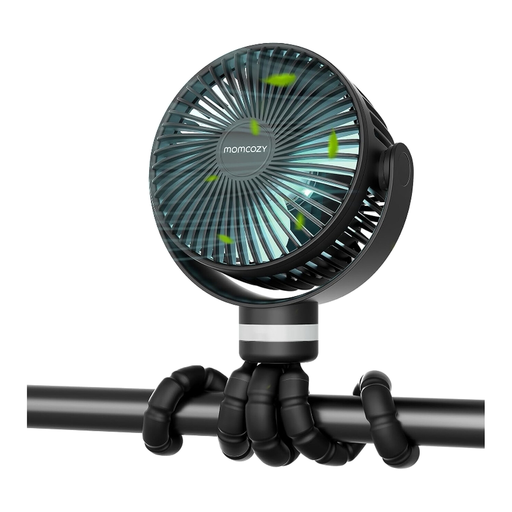
Why This Fits Their Persona: A detachable, rechargeable option for prams, strollers and cots when used by an adult who can monitor the appliance.
The product information lists a flexible tripod, 360-degree rotation and a fan gap under 5 mm; adult supervision remains essential.
8000mAh rechargeable battery, four airflow modes, detachable design, LED light and flexible mounting.
A USB rechargeable fan generally uses a small battery and can be recharged from a laptop, adapter or power bank. Its running cost depends on battery capacity, charging frequency and electricity prices. A mains-powered fan avoids battery charging but needs to remain near a socket.
There is no single standard runtime. Low speed normally lasts longer than high speed, while lights, displays and additional modes can use more energy. Compare the manufacturer’s stated runtime at each setting rather than relying only on the highest headline figure.
Yes, if it includes a stable stand or has a foldable base. Check the product dimensions and angle adjustment before buying. A handheld model with a stand can suit a desk, bedside table or dressing area, while a dedicated tower fan may provide wider airflow across a room.