
24/7 全天候客户支持

免费退货

当日/次日达

品质保障

开启新人专享福利: 全场免邮 | 低至 2 折 | 免费试用 30 天 JoyPlus 会员
下载 Joybuy
A sudden heatwave can turn a packed train carriage or a stuffy office into an uncomfortable ordeal. A good portable fan seems like a simple solution, yet many of us have been disappointed by a purchase that fails to deliver. Before you buy another one, it's worth knowing about the common pitfalls that lead to wasted money and frustration.
Many fans promise powerful cooling but operate with a disruptive whirring noise, making them unusable in a quiet office. Others boast impressive battery life, but this figure often applies only to the lowest, least effective setting. Perhaps the most common issue is poor build quality—a flimsy hinge or cheap plastic casing that cracks after just a few weeks in a handbag. Navigating these issues is key to finding a device that genuinely keeps you cool.
To avoid disappointment, focus on a few core specifications that determine a fan's real-world performance and longevity. These details are far more important than flashy marketing claims.
The power source is a critical factor. While some simple models still use disposable AA batteries, the most convenient and cost-effective options are the rechargeable fan types, typically powered via a USB cable.
When looking at a USB fan, check the battery capacity, measured in milliampere-hours (mAh). A higher number, such as 5000mAh, generally indicates a longer potential runtime than a 2000mAh model. However, the motor's efficiency also plays a huge role. Always look for the manufacturer's stated operating time and be aware that the maximum runtime (e.g., "up to 20 hours") is always on the lowest speed. For a realistic idea of performance, check the runtime for medium or high settings if available. Also, look for models with a USB-C charging port, which is now the modern standard for faster and more convenient charging.
A fan's noise level, measured in decibels (dB), can be the difference between a useful tool and an annoying gadget. A fan that's too loud is impractical for shared spaces like offices, libraries or quiet train carriages.
If the manufacturer provides a decibel rating, use it as a guide. If not, look for terms like "brushless motor," which often indicates quieter and more efficient operation.
The design of a portable fan dictates how and where you can use it. Consider your primary need before choosing a style.
Always check the weight and dimensions. A truly portable device should be light enough to carry all day without being a burden.
To help you choose, we've matched some effective models to different user needs, focusing on how they address the common buying traps.
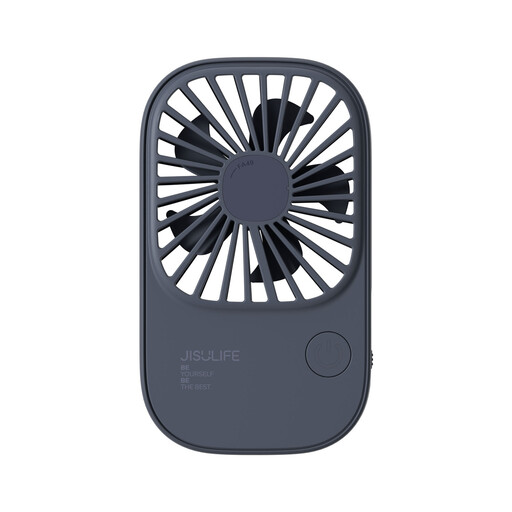
Why This Fits Their Persona: This fan is exceptionally slim and lightweight (104g), making it perfect for slipping into a work bag or pocket. The included lanyard is ideal for hands-free use while standing on a crowded train or bus.
It directly counters the "flimsy build" trap with a durable PC material construction and a safety lock to prevent accidental activation and damage in a bag.
Features a brushless motor for quieter operation and includes a rear stand, allowing it to double as a small desk fan at the office.
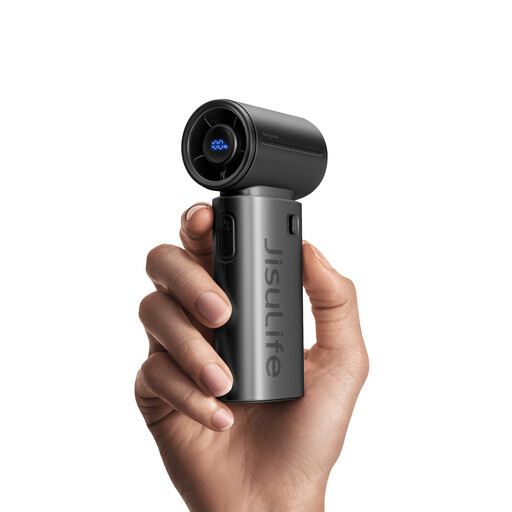
Why This Fits Their Persona: For those who need all-day cooling at festivals, outdoor events or on long trips. The large 5000mAh battery provides a very long runtime, ensuring it won't die halfway through the day.
It tackles the "exaggerated battery life" myth head-on with an LED digital display that shows the real-time battery level, so you know exactly how much charge is left.
Offers five speed settings for precise control over airflow and noise. The powerful motor delivers a strong breeze when needed, but can also run quietly on lower settings.
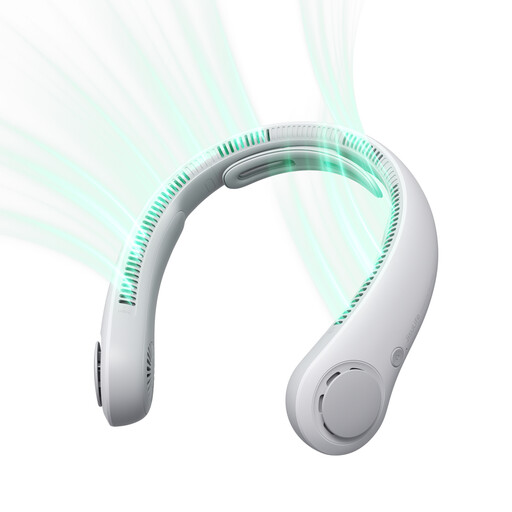
Why This Fits Their Persona: Ideal for anyone who needs to stay cool while multitasking—whether working at a computer, cooking, gardening or exercising. The hands-free design provides a constant, targeted breeze.
Its bladeless design eliminates the safety concern of hair or clothing getting caught, a common worry with traditional neck fans. The ergonomic shape also avoids the discomfort of poorly designed, bulky models.
Features a large 5000mAh battery for long-lasting use (up to 16.5 hours) and five speed settings for customised airflow, making it highly versatile for different activities and heat levels.
We have compiled a complete, real-time list of products that fully satisfy these strict selection criteria and UK safety regulations.
The running cost of a rechargeable USB fan is minimal. A typical 5000mAh (or 18.5Wh) fan costs very little to charge from the mains. Based on current UK electricity prices, a full charge would cost less than a penny. This makes them a highly energy-efficient solution for personal cooling compared to larger, mains-powered fans or air conditioning units.
Bladeless fans are not truly bladeless; they use a motor with blades hidden in the base, which pushes air through a narrow opening to create a smooth airflow. Their primary advantage is safety, as there are no exposed spinning blades, making them a good choice for use around children or pets. In terms of noise, their performance varies. Some high-end models are very quiet, but many can produce a noticeable high-pitched sound. It's always best to check the decibel (dB) rating if available.
First, ensure the fan is switched off and unplugged from any power source. For the exterior casing, a soft, dry cloth is usually sufficient. To clean the grilles and blades, a cotton bud or a small, soft brush can be used to remove dust. For deeper cleaning, a can of compressed air can effectively blow out dust from hard-to-reach areas. Avoid using water or liquid cleaners, as they can damage the internal electronics.