
24/7 全天候客户支持

免费退货

当日/次日达

品质保障

开启新人专享福利: 全场免邮 | 低至 2 折 | 免费试用 30 天 JoyPlus 会员
下载 Joybuy
As another spell of warm weather arrives in the UK, the hunt for a reliable personal cooling solution begins. Whether you're navigating a stuffy commute on the Tube, trying to focus in a warm office or simply relaxing at home, a portable fan can make all the difference. However, the market is flooded with options, and it's easy to end up with a device that fails to deliver.
As a Joybuy Product Recommendation Officer, my role is to help you sidestep the common purchasing mistakes. Many buyers are caught out by a few recurring issues. Before you spend your money, be aware of these three common pitfalls:
To avoid these traps, focus on a few key parameters that indicate a well-made and practical personal fan.
Don't be swayed by runtime hours alone. Look for the battery capacity, measured in milliampere-hours (mAh). A higher number generally means more power storage. For all-day use, a rechargeable fan with a battery of 4000mAh to 5000mAh is a solid benchmark. Also, check for modern charging standards. A USB fan that uses a USB-C port will typically charge faster and is more convenient, as it uses the same cable as most modern phones and devices.
A fan's noise level is measured in decibels (dB). For context, a quiet library is around 30-40 dB. A quiet fan suitable for an office or sleeping should operate at or below this level on its lower settings. Models with brushless motors or bladeless fan designs often produce a smoother, less intrusive sound profile compared to cheaper, traditional motors.
The right design depends entirely on how you plan to use it.
Based on these practical criteria, here are a few portable fans suited to different needs and lifestyles.
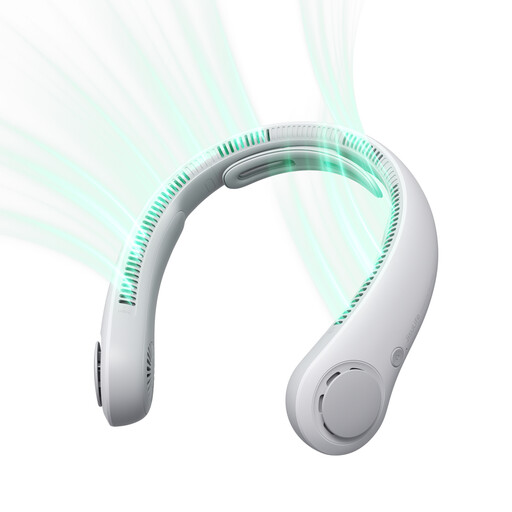
Why This Fits Their Persona: Ideal for navigating the UK's public transport system, this fan provides hands-free cooling, which is essential when holding onto rails or carrying bags on a crowded train or bus.
Its 5000mAh battery provides a realistic runtime of 2.5 to 16.5 hours, giving you enough power for a full day's commute on a practical speed setting. The bladeless design is also quieter and safer in crowded spaces.
The ergonomic, lightweight design rests comfortably on the neck without strain. Its multiple air outlets provide a wide, consistent cooling area for the face and neck.
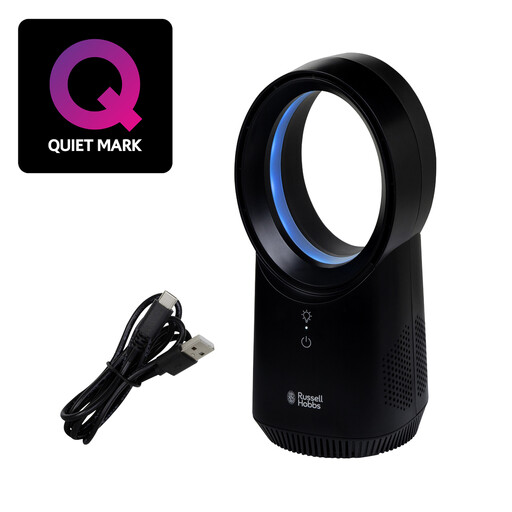
Why This Fits Their Persona: Perfect for a shared office or quiet study space. Its bladeless technology and compact, wireless design provide personal cooling without cluttering the desk or disturbing colleagues.
This fan directly addresses the noise pitfall by using a bladeless design that produces a smooth, consistent airflow rather than a disruptive buffeting sound. Its sturdy, compact base avoids the flimsy construction issue.
The wireless, USB-rechargeable design offers placement flexibility on any desk. The bladeless construction is also safer and much easier to wipe clean than traditional fans.
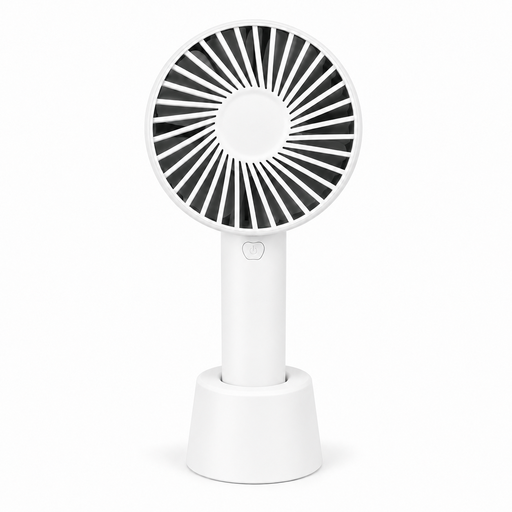
Why This Fits Their Persona: An affordable and practical choice for use in lectures, the library or student accommodation. It's lightweight enough to carry in a backpack and the included stand makes it useful for study sessions.
By focusing on core functions, it avoids the pitfalls of over-engineered, fragile gadgets. Its simple construction is robust, and the included stand provides a stable base, preventing it from being easily knocked over.
It offers excellent versatility for its price, functioning as both a handheld and desktop fan. The USB-rechargeable battery adds convenience, eliminating the need to buy disposable batteries.
We have compiled a complete, real-time list of products that fully satisfy these strict selection criteria and UK safety regulations.
This depends heavily on the battery's mAh capacity and the speed setting you use. A fan with a 5000mAh battery might last over 15 hours on its lowest setting, but only 3-4 hours on its highest, most powerful setting. Always check the manufacturer's stated runtime for different speeds to get a realistic idea of its performance for your needs.
Generally, yes. The bladeless fan design encloses the moving parts, which significantly reduces the risk of catching fingers or hair, making them a safer choice, especially around children. They also tend to produce a smoother, less turbulent airflow, which is often perceived as quieter and less disruptive than the buffeting sound of traditional fan blades.
For most commuters, especially on busy public transport, a neck fan is often the most practical choice. It keeps your hands free for holding bags, tickets or onto handrails. Its position provides a direct and constant stream of cool air to your face and neck, which can be particularly refreshing in a crowded, stuffy environment.