
24/7 Customer Support

Free returns

Same-day & Next-day Delivery

Quality Guaranteed

Unlock Your Welcome Offers: FREE Delivery | Up to 80% OFF | Free 30-day JoyPlus trial
Download the APP
A portable fan can make a commute, home office or warm bedroom more comfortable without taking up much room. However, product listings often focus on speed settings and attractive colours while leaving out details that affect everyday usability.
The same applies to compact fan heaters. A small appliance may look convenient, but it must be suitable for the room, positioned safely and used with realistic expectations about electricity consumption.
This guide explains the practical specifications to check before buying portable fans, handheld fans and compact heating appliances for UK homes.
A handheld fan or personal cooling fan moves air across your skin. It does not lower the temperature of an entire room in the same way as an air-conditioning system. A portable desk fan can improve personal comfort at a workstation, while a larger air circulation fan may help distribute air around a room.
Look for a fan that matches the intended area. A mini fan with stand is suitable for a desk, bedside table or close personal use. It is unlikely to provide even airflow across a large living room.
A listing may advertise a three-speed fan, but speed options are only useful if the fan remains stable and easy to operate. For a handheld model, check whether it has a wrist strap or comfortable grip. For desk use, confirm that a table stand is included and that the fan can be positioned securely.
For larger models, check the base, height adjustment and oscillation. A tall fan that is difficult to store may be less practical in a small flat than a detachable model.
USB rechargeable fans are convenient, but the charging connection matters. A USB Type-C port can be easier to connect with current cables and may work with a laptop, power bank or suitable adapter. Also check whether the product includes a battery and charging cable, as these are not always supplied.
For a fan heater, wattage provides a clearer indication of potential electricity use. A 1.5kW fan heater operating at full power uses up to 1.5 kilowatt-hours of electricity per hour. Your actual cost depends on the selected heat setting, thermostat cycling and your electricity tariff.
Consider where the appliance will be used and stored:
For cooling, compare the number of speed settings, charging method and control layout. A three-speed fan gives low, medium and higher airflow choices, although manufacturers may use different names for each mode.
Check whether the product uses USB charging, USB Type-C or a mains connection. A rechargeable model is convenient during travel, but it still needs to be charged before use. If you want to run a fan continuously at a desk, a mains-powered or charge-while-in-use design may be more suitable.
For heating, review the wattage, heat settings, thermostat and timer. A fan heater with remote control can be convenient beside a bed or desk, but remote operation should not replace safe placement or supervision.
Use electrical appliances according to the supplied instructions. Keep cooling fans away from water and high-humidity areas, and do not insert objects through protective grilles. Removable grilles or blades can make cleaning easier, helping to prevent dust build-up.
For a ceramic fan heater, look for stated tip-over and overheat shut-off features. Place it on a stable, flat, heat-resistant surface with clear space around it. Keep it away from curtains, bedding, paper and other flammable materials. Do not cover the heater or block its air intake and outlet.
UK buyers should also check the plug, voltage information, warranty details and seller documentation. A product described as suitable for UK use should still be inspected for visible damage before operation.
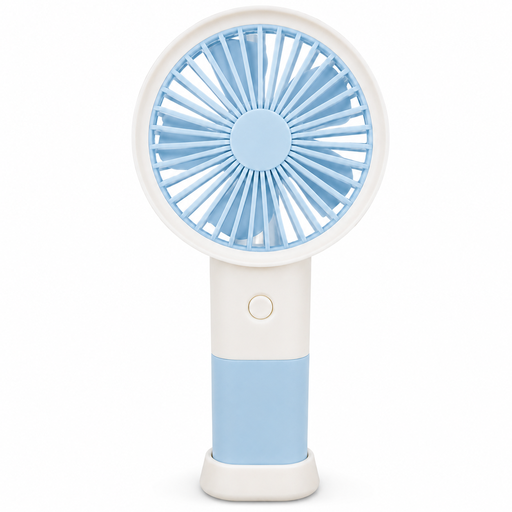
Why This Fits Their Persona: A practical choice for students, commuters and first-time buyers who need one compact fan for a bag, desk or bedside table.
The table stand provides hands-free positioning, while three speed settings offer more control than a single-speed personal fan.
USB Type-C charging; handheld and table-standing formats; three listed speed settings.
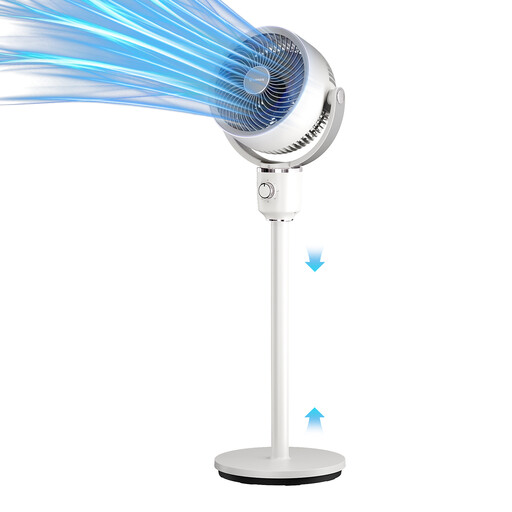
Why This Fits Their Persona: Suited to remote workers and households wanting adjustable airflow for a home office, bedroom or shared living space.
Its adjustable height and detachable design address the common problem of buying a fan that only works in one location.
Height adjusts from 0.45m to 1.08m; three modes, manual tilt and automatic oscillation are listed.
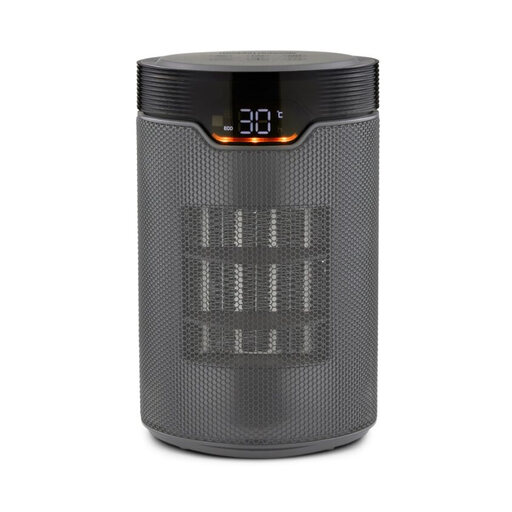
Why This Fits Their Persona: Designed for adults needing compact supplementary heat in a bedroom, office or small living area during colder conditions.
The digital thermostat, two heat settings and stated safety shut-offs provide more control than a basic single-setting heater.
1.5kW ceramic heating element; oscillation; remote control; tip-over and overheat shut-off are specified.
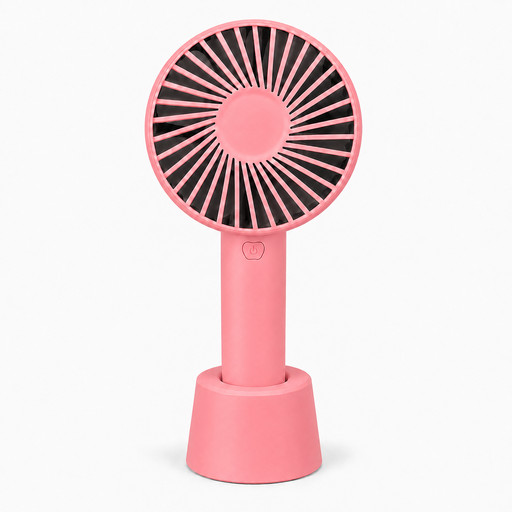
Why This Fits Their Persona: A lightweight option for travel, commuting and outdoor use where a secure grip and easy charging are useful.
The included stand and wrist strap help it work in both hands-free and mobile situations rather than serving only one purpose.
USB rechargeable design; lightweight format; desktop stand and wrist strap included.
We have compiled a complete, real-time list of products that fully satisfy these strict selection criteria and UK safety regulations.
Rechargeable and USB fans generally use considerably less power than a fan heater, but the exact cost depends on battery capacity, charging frequency and electricity tariff. A 1.5kW fan heater can use up to 1.5kWh per hour at full output, so use the lower setting or thermostat where appropriate and check your tariff for an accurate estimate.
Yes, if the model includes a stable table stand and is positioned away from the edge. Keep the charging cable tidy and avoid placing the fan where it could be knocked into bedding or water. A handheld fan is intended for personal airflow rather than heating or whole-room circulation.
Lifespan depends on battery care, charging habits, dust levels and build quality. Keep grilles clean, avoid dropping handheld models and store rechargeable fans in a dry place. For any appliance, stop using it if the cable, plug, casing or controls become damaged.