
24/7 全天候客户支持

免费退货

当日/次日达

品质保障

开启新人专享福利: 全场免邮 | 低至 2 折 | 免费试用 30 天 JoyPlus 会员
下载 Joybuy
Portable fans can make commuting, working, travelling and sleeping more comfortable during warm weather. However, the smallest-looking model is not always the most practical choice. Battery capacity, airflow direction, charging convenience and noise levels can affect whether a fan remains useful after the first few weeks.
This guide explains the main buying pitfalls and compares suitable options for different UK lifestyles, from a portable neck fan for festivals and cycling to a compact tower fan for a desk or bedroom.
A battery-operated fan may advertise a long operating time, but this usually applies to the lowest speed. Higher airflow settings use more power and can reduce runtime considerably.
Before buying a rechargeable fan, check whether the specification gives a range, such as “2.5–16.5 hours”, rather than relying on one headline figure. Consider how many hours you need between charges and whether the fan can operate while connected to power.
A personal cooling fan works most effectively when air reaches the face, neck or upper body. A desk fan may suit a fixed position, while a neck fan provides airflow as you move. A tower fan can circulate air across a room, but it may not be convenient for carrying outdoors.
Think about your typical use before choosing between a hands-free fan, a desk model or an oscillating floor fan.
“Quiet fan” is a useful description, but it does not always provide a decibel figure or explain the conditions under which noise was measured. Motor type, speed setting and surface vibration can all affect perceived sound.
For bedrooms, offices and shared spaces, look for adjustable speed modes and low-noise operation. If a product does not list a specific noise level, treat “quiet” as a product description rather than a guaranteed measurement.
For cordless use, check the battery capacity in mAh and the stated operating range. A 5,000mAh battery can provide useful portability, but actual runtime depends on airflow speed, battery condition and whether other features are operating.
A USB-C fan is convenient because the same type of cable may also charge phones, tablets and power banks. Check the input requirement before charging. The JISULIFE Neck Fan Life 4, for example, specifies a 5V / 2A input, a 5,000mAh lithium-ion battery and a charging time of approximately three to four hours.
Lithium batteries should not be punctured, squeezed, modified or exposed to excessive heat. Stop using a fan if it becomes unusually hot, swells or develops an abnormal smell.
A wearable bladeless neck fan needs to be light enough for the intended period of use. The JISULIFE model weighs approximately 282g, while its neck-brace design is shaped to follow the neck’s curve.
For a desk or bedside table, footprint and stability matter more than body weight. A portable tower fan should stand securely on a flat surface and leave enough clearance around its air inlet and outlet.
Multiple speed settings allow more practical adjustment than a single high-power mode. A neck fan with five speeds can be adapted for commuting, indoor work or outdoor activity. A tower fan with 12 speeds offers finer control for a room or bedroom.
An oscillating tower fan moves airflow across a wider area, which can be more suitable for shared rooms. For personal cooling, however, a fixed directional fan may provide more direct airflow with less movement.
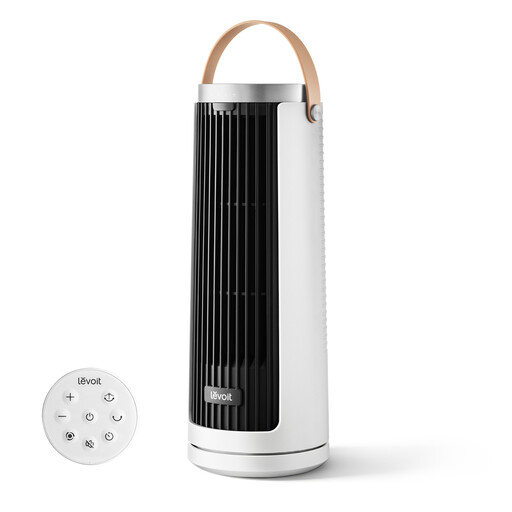
Why This Fits Their Persona: Its compact tower format suits first-time buyers who need one fan for a desk, bedside table, study area or occasional travel.
The product listing specifies multiple airflow modes, low-noise operation and cordless use, rather than relying on a single fixed speed.
USB-C recharging, portable tower design and suitability for desks, bedrooms, offices and travel.
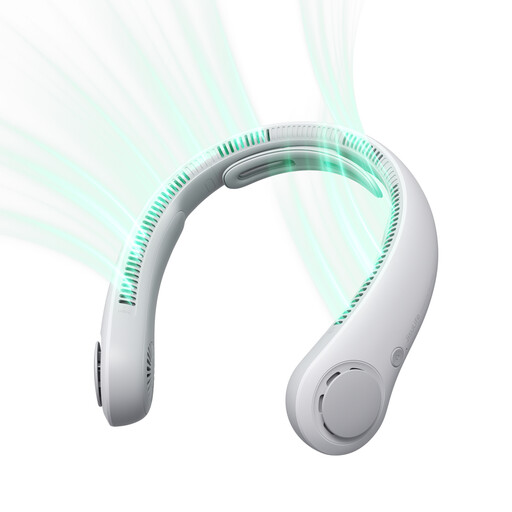
Why This Fits Their Persona: This is suited to commuters, travellers, festival visitors and gym users who want wearable cooling without holding a device.
The specified runtime is presented as 2.5–16.5 hours depending on speed, helping buyers set realistic expectations. It also uses a bladeless design rather than exposed rotating blades.
Five speed settings, USB-C charging, approximately 282g weight and hands-free airflow around the neck and face.
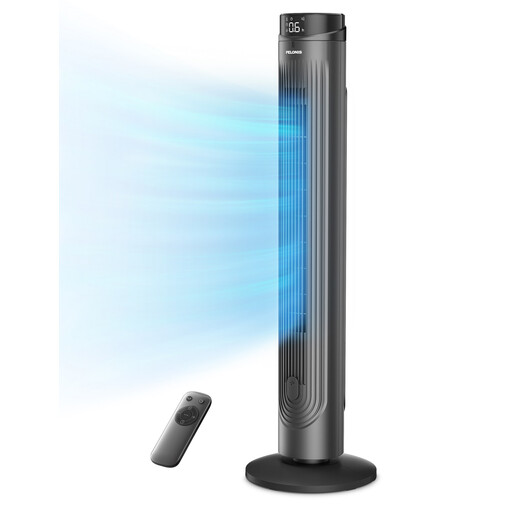
Why This Fits Their Persona: Its taller floor-standing design is more suitable for bedroom or living-room airflow than carrying to a festival, workplace or cycling route.
The listing identifies a DC motor, 12 speed settings, an LED display, remote control, 24-hour timer and oscillation, giving more control than a basic single-speed fan.
Room-oriented tower format, adjustable airflow, timer function and oscillating movement for broader coverage.
Before purchase, check the product instructions, included charging cable, warranty information and UK seller details. Look for appropriate UK product information, including manufacturer or responsible-person details where applicable. Do not use a fan in wet conditions unless the product is specifically rated for them.
We have compiled a complete, real-time list of products that fully satisfy these strict selection criteria and UK safety regulations.
A small USB or rechargeable fan generally uses less electricity than a larger mains-powered appliance, but the exact cost depends on wattage and your electricity tariff. Use this calculation:
Power in watts ÷ 1,000 × hours used × electricity price per kWh = running cost.
For a battery fan, include the electricity used during recharging. The figure will vary according to battery capacity, charging losses and how often the fan is recharged.
A hands-free fan can be practical for walking, commuting or stationary outdoor work. However, follow the manufacturer’s warnings. The JISULIFE product information advises against using the fan while driving or operating heavy machinery, and it should not be immersed in water. Cyclists should ensure the fan does not obstruct vision, hearing, clothing or helmet use.
There is no universal lifespan. Battery capacity gradually reduces with charging cycles, heat exposure and storage conditions. Keep the fan dry, avoid extreme temperatures, use a compatible charger and store it with some charge rather than completely empty. Clean the air inlet and outlet according to the instructions, disconnecting the unit from power first.