
24/7 全天候客户支持

免费退货

当日/次日达

品质保障

开启新人专享福利: 全场免邮 | 低至 2 折 | 免费试用 30 天 JoyPlus 会员
下载 Joybuy
Portable fans can make commuting, office work, travel and outdoor events more comfortable, but choosing one is not simply about finding the highest speed number. A small fan may have impressive packaging claims yet be awkward to hold, difficult to clean or inconvenient to recharge.
This guide explains the practical details worth checking before buying portable fans, including handheld fans, neck fans, desk fans and a portable pram fan.
A high-speed portable fan may quote wind speed, motor revolutions per minute or a “turbo” mode. These figures describe peak operation, not necessarily the experience at normal settings. High-speed use can also increase noise and reduce battery life.
Look for multiple speed settings, a clearly stated battery capacity and, where available, operating-time information at different speeds. A fan offering gentle, medium and stronger airflow is usually easier to adapt to a quiet office, a crowded train or an outdoor event.
A rechargeable portable fan with a 5,000mAh battery may run for very different lengths of time depending on its speed, motor and controls. “Up to” runtime figures normally refer to a lower setting, so check the range rather than relying on one headline number.
USB charging is convenient, but confirm the connector type. A USB rechargeable fan with USB-C charging can be easier to use with modern laptops, power banks and phone chargers, although the supplied cable and charging instructions should always be followed.
A handheld fan is useful when you can keep one hand free, but less suitable for typing, applying make-up or pushing a pram. A neck fan provides hands-free cooling, while a handheld fan with stand can become a small desk fan. For children and babies, ordinary personal fans should not be treated as toys or left within reach.
Before purchasing, consider where the fan will sit, how it will be carried and whether its weight, grille design or lanyard creates a practical safety concern.
For occasional journeys, a compact battery-operated fan with a shorter charging cycle may be sufficient. For long shifts, festivals or travel days, compare:
Lithium-ion batteries should not be punctured, dismantled, exposed to fire or used if swollen, damaged or unusually hot. Keep charging away from water and follow the manufacturer’s instructions.
Three speeds are adequate for many everyday situations, while five speeds offer more control for commuting, exercise or outdoor use. A high-speed portable fan may provide more concentrated airflow, but check the quoted noise level if you plan to use it at a desk, in a bedroom or during travel.
A bladeless fan can be easier to wipe clean and may reduce access to rotating blades, but “bladeless” does not remove the need for safe use. Keep all electrical fans away from moisture and do not insert objects into air inlets or outlets.
A mini fan should fit your bag without adding unnecessary weight. Check dimensions and weight, especially for a fan worn around the neck. A desk stand needs a stable, flat surface, while a lanyard or wrist strap should be used sensibly and kept away from young children.
For a portable pram fan, look for secure attachment, adjustable direction and an enclosed grille. Adult supervision remains essential. Check the pram or cot manufacturer’s guidance before attaching accessories and inspect the fan, cable and mount regularly for damage.
When buying electrical goods in the UK, check the product information, supplied safety instructions, responsible-person details where applicable and the relevant conformity marking shown on the product or packaging. A marking alone is not a substitute for sensible battery, charging and child-safety practices.
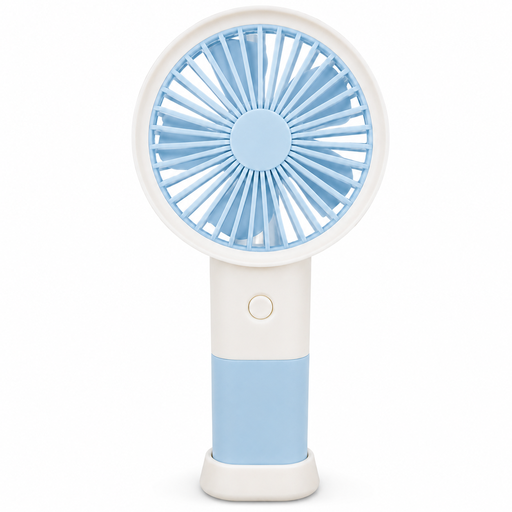
Why This Fits Their Persona: A practical option for shoppers wanting one compact fan for commuting, home and office use without carrying separate accessories.
Three speed settings provide more than a single peak mode, while the table stand avoids relying on handheld use all day.
USB Type-C charging; converts from a handheld fan to a desk fan using the included stand.
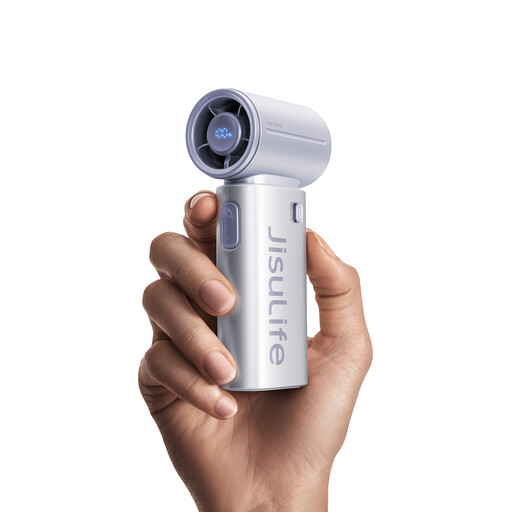
Why This Fits Their Persona: Suitable for shoppers who want a compact travel fan with display-based battery and speed information.
The LED display shows speed and battery information, making it easier to avoid unexpectedly running out of power.
5 speed levels; stated 5,000mAh battery and 3–22-hour operating range, depending on speed.
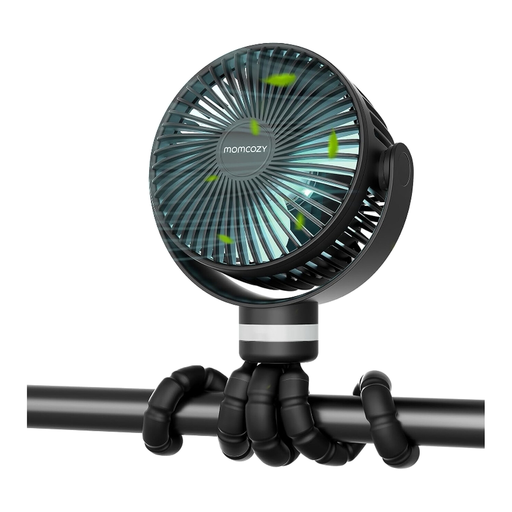
Why This Fits Their Persona: Designed for adults seeking directional airflow during pram, pushchair or cot use under continuous supervision.
The stated sub-5mm grille gap, flexible tripod and 360-degree adjustment address attachment and positioning concerns, but supervision is still required.
8,000mAh rechargeable battery; three speeds plus natural wind mode and LED light.
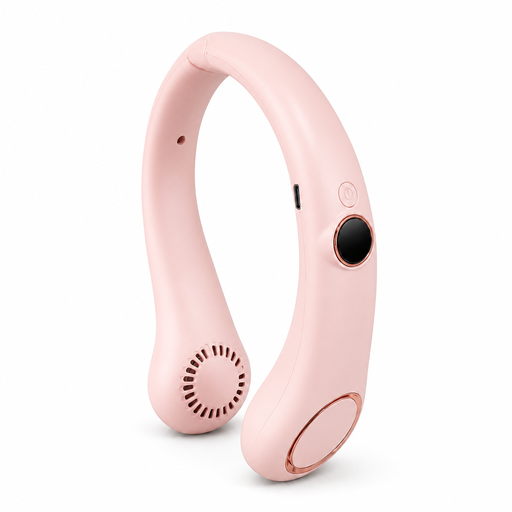
Why This Fits Their Persona: A hands-free choice for commuting, office work, walking or outdoor activities where holding a fan is inconvenient.
The wearable format avoids hand fatigue, while the LED display makes the selected speed and operating status visible.
Hands-free neck-worn design; three manual wind speeds with an integrated LED display.
We have compiled a complete, real-time list of products that fully satisfy these strict selection criteria and UK safety regulations.
Most mini and personal fans use relatively little electricity compared with larger room fans, but running cost depends on wattage, speed and charging frequency. For a rechargeable model, check its rated power where provided. A simple calculation is: wattage ÷ 1,000 × hours used × your electricity tariff. Charging from a power bank still uses energy, even when the cost is not shown directly.
Battery lifespan varies with charging cycles, storage conditions and heat exposure. Avoid leaving a lithium battery in direct sunlight or a hot car and use the recommended cable and power source. If the fan becomes unusually hot, develops an odour or shows swelling, stop using it and follow the seller’s disposal or safety guidance.
Only use a model specifically designed for prams or similar equipment, follow its instructions and supervise continuously. Keep cords, lanyards and loose parts away from children, ensure the attachment is secure and never allow a baby to handle the fan. A portable pram fan should provide gentle, indirect airflow rather than being positioned close to the child’s face.