
24/7 全天候客户支持

免费退货

当日/次日达

品质保障

开启新人专享福利: 全场免邮 | 低至 2 折 | 免费试用 30 天 JoyPlus 会员
下载 Joybuy
Portable fans can make a noticeable difference in a warm bedroom, stuffy office, crowded commute or small student room. However, product listings often emphasise speed, power or “quiet” operation without explaining how the appliance will perform in everyday UK conditions.
Before buying, consider where the unit will sit, how it will be powered, how much noise is acceptable and whether you need personal airflow or wider room circulation. The following guide highlights common buying traps and practical specifications to check.
A handheld fan or small portable desk fan is designed to move air towards one person. It may feel refreshing at close range, but it will not cool an entire bedroom in the same way as a larger floor or tower fan.
For wider circulation, look for an oscillating design, a taller airflow path or a model with multiple directional settings. A mini tower fan is often more suitable for a desk, bedside table or compact room than a handheld model, while a full-size tower fan can distribute air across a larger area.
A listing may advertise three speeds or 12 speeds, but this does not necessarily indicate stronger airflow. Speed options are mainly useful when they provide a practical range, from gentle airflow for sleep to a stronger setting for warm afternoons.
Also check the control method. Physical buttons are straightforward for commuting or travel, while a remote control and timer can be useful beside a bed or sofa. Do not assume that every quiet fan has the same noise performance; “low noise” descriptions can vary, so consider the intended setting and whether the fan has a lower-speed mode.
A USB rechargeable fan can be convenient with a laptop, power bank or adapter, but the battery still needs regular charging. Confirm whether the appliance uses USB Type-C, the cable supplied and whether it can operate while connected to power.
A cordless fan is useful outdoors or in rooms with limited socket access. For a desk or bedside table, a mains-powered unit may be more suitable if you want continuous operation without monitoring battery levels.
Measure the available surface before ordering. A compact fan should sit securely on a desk, shelf or bedside table without blocking nearby items. A supplied stand can make a handheld model more versatile, but check whether the stand provides a stable base and whether the airflow angle is adjustable.
For a standing fan, review the height, base footprint and oscillation range. You can browse the wider standing fan range if you need broader room circulation rather than close-range personal cooling.
A Type-C rechargeable fan can fit easily into an existing charging routine, particularly for commuters and travellers. Nevertheless, charging accessories should be compatible with the product specification, and damaged cables or housings should not be used.
For mains appliances, check the stated voltage, plug type and intended market. UK users should look for a suitable UK plug or an appropriate, safety-compliant solution rather than relying on an unsuitable travel adaptor for regular use.
A quiet fan is particularly relevant in bedrooms, home offices and study spaces. Look for a lower-speed setting and simple controls rather than focusing only on the maximum speed count. Timers can reduce unnecessary overnight operation, while remote controls allow adjustments without reaching across a desk or leaving bed.
If you are considering a heating appliance, check the wattage and safety functions separately. A compact electric heater rated at 1.5kW can draw considerably more electricity than a small fan, so running cost depends on the power rating, usage time and your electricity tariff.
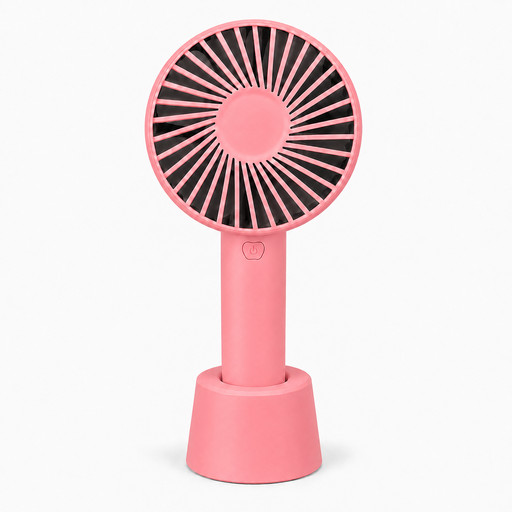
Why This Fits Their Persona: A straightforward option for students, commuters and first-time buyers who need personal cooling without using much space.
The included stand provides hands-free use, while the USB rechargeable design avoids dependence on a nearby mains socket.
Lightweight format, USB charging, desktop stand and wrist strap.
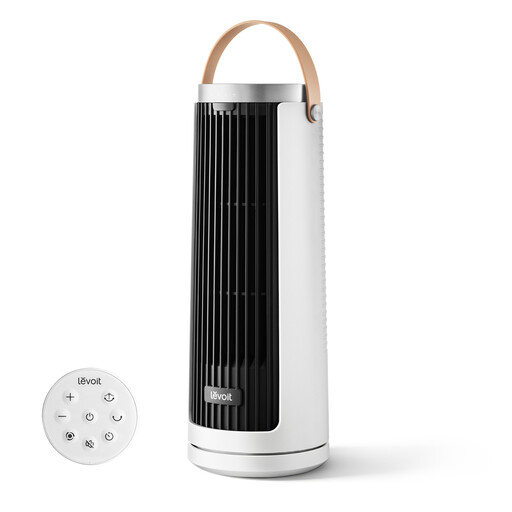
Why This Fits Their Persona: Suitable for buyers wanting a tidy, rechargeable tower design for a desk, bedside table, office or travel bag.
Its stated Type-C charging and cordless operation address the inconvenience of fixed cables and limited socket placement.
Portable tower shape, rechargeable battery, Type-C charging and multiple airflow modes.
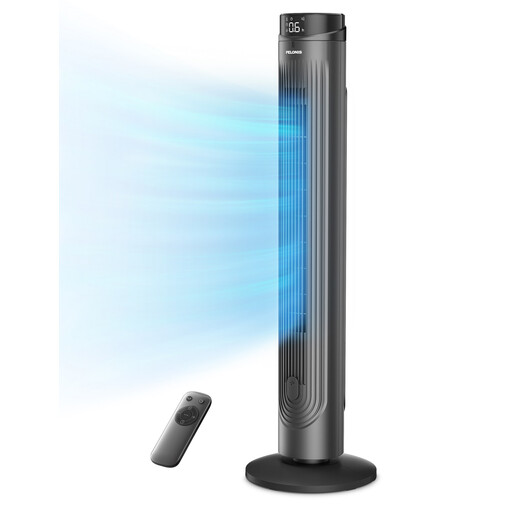
Why This Fits Their Persona: A floor-standing option for bedrooms and living spaces where broader airflow, remote operation and scheduled use matter more than pocket portability.
The product specification lists 12 speeds, oscillation, a remote control and a 24-hour timer, offering more control than a basic handheld fan.
42-inch tower format, DC motor, oscillation, LED display, remote control and timer.
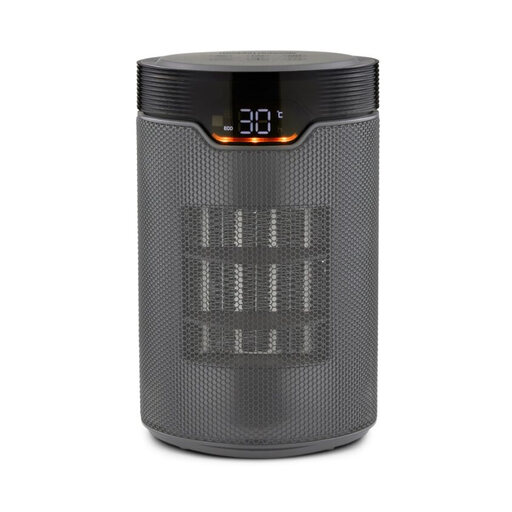
Why This Fits Their Persona: Designed for indoor bedrooms, offices and compact living areas where compact heating and remote adjustment are useful.
The digital thermostat, two heat settings, oscillation and tip-over and overheat shut-off provide clearly stated controls and safety functions.
1.5kW ceramic heating element, 28 × 18 × 18cm dimensions, remote control and oscillation.
Place fans on a stable, level surface and keep air outlets clear. Keep electrical appliances away from water, moisture and damaged cables. Disconnect a rechargeable model before cleaning, and follow the manufacturer’s instructions for charging and storage.
For a heater, maintain the specified clearance around the appliance and keep it away from bedding, curtains, paper and other flammable materials. Do not cover the unit or leave it operating unattended for extended periods. A 1,500W heater uses 1.5kWh for each hour at full power. Multiply this figure by your electricity tariff to estimate the hourly cost; lower settings may use less electricity, depending on the appliance design.
We have compiled a complete, real-time list of products that fully satisfy these strict selection criteria and UK safety regulations.
Small rechargeable fans generally use less electricity than mains heaters, but the exact cost depends on battery capacity, charging frequency and your electricity tariff. A mains fan’s running cost can be estimated from its wattage: divide watts by 1,000, then multiply by hours used and your unit price.
Yes, if it includes a stable table stand or a suitable base. Check the product details before buying, as some handheld fans are designed only for carrying. A stand also helps keep the airflow directed towards your face or upper body while working.
Lifespan depends on charging habits, dust exposure, storage and construction. Keep vents clear, avoid moisture, use compatible charging accessories and store the fan in a cool, dry place. For mains models, inspect the cable and plug regularly and stop using the appliance if it becomes damaged.