
24/7 全天候客户支持

免费退货

当日/次日达

品质保障

开启新人专享福利: 全场免邮 | 低至 2 折 | 免费试用 30 天 JoyPlus 会员
下载 Joybuy
Portable fans can make commuting, working, travelling and outdoor events more comfortable, but compact cooling products are not interchangeable. A pocket-sized mini personal fan may suit a train journey, while a car cooling fan needs a secure mount and a compatible power source. Choosing based only on a high speed count or battery capacity can lead to a product that is inconvenient, noisy or unsuitable for the way you intend to use it.
This guide explains the key specifications to check, common purchasing traps and practical options for different UK lifestyles.
A product advertised as a 3-speed fan or five-speed model offers adjustment, but the number of settings does not by itself indicate airflow strength. A small fan can have several modes yet move less air than a larger unit with fewer settings.
Look for useful information such as:
For example, a compact fan with a brushless motor and a stated maximum air speed of 9.0 m/s gives more practical information than a listing that only says “powerful”.
A battery-operated fan using AA batteries can be convenient for immediate use, but replacement batteries add an ongoing cost. A USB rechargeable fan is generally easier to recharge from a laptop, power bank, car adaptor or plug-in USB charger, provided you have access to a suitable cable and power source.
Check whether the product includes:
Runtime usually decreases when the fan is used at higher speeds. Treat claims such as “all-day cooling” as dependent on the selected mode and surrounding conditions, rather than as a guaranteed result.
A handheld fan is useful when you can hold it, but less practical while pushing a pram, typing at work or carrying shopping. Similarly, a neck fan provides hands-free operation, but its weight, fit and airflow direction matter during extended use.
Before buying, decide whether you need:
Battery capacity is commonly shown in mAh. A higher figure can indicate more stored energy, but runtime also depends on motor power, fan speed and features such as an LED display or light.
For occasional short trips, a compact 2,000mAh fan may be sufficient. For camping, long journeys or outdoor events, a model with a 5,000mAh or 8,000mAh battery may reduce the need for frequent charging. Always compare the stated operating range at low and high settings.
Built-in lithium batteries should be handled carefully. Do not use a fan with a swollen, damaged or unusually hot battery, and follow the supplied charging instructions.
A desktop fan should have a stable base that will not easily tip on a desk or bedside table. A car cooling fan may use a suction cup, air-vent clip or cigarette-lighter connection. The mounting method should suit the surface and must not obstruct the driver’s view or controls.
Useful adjustment features include:
Clean the mounting surface before attaching a suction base, and check that any attachment remains secure before driving.
Blade guards, soft foam blades and bladeless outlets can reduce contact risks, but no portable fan should be treated as a toy. Keep fingers and objects away from air inlets and outlets, and supervise children around electrical products.
For a pram fan, use only under adult supervision and follow the product’s instructions for attachment, distance and charging. A product’s conformity information, manufacturer or importer details and supplied safety instructions should be available for UK shoppers. Avoid listings that provide no meaningful operating or safety information.
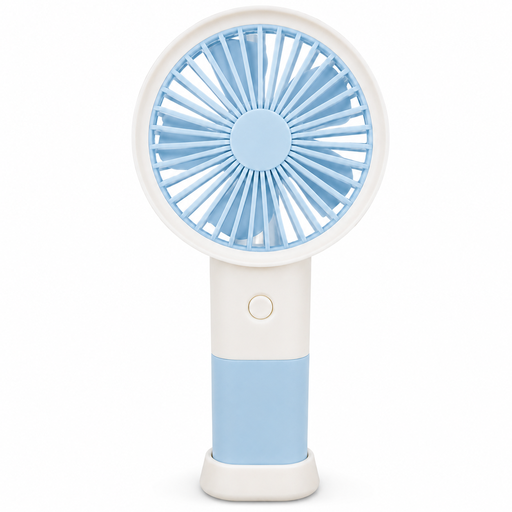
Why This Fits Their Persona: A practical everyday option for commuters, office workers and shoppers wanting one compact fan for hand-held and desk use.
The listing identifies three speed settings and Type-C charging, rather than relying only on broad performance wording.
Three adjustable speeds, a table stand and USB Type-C charging support flexible daily use.
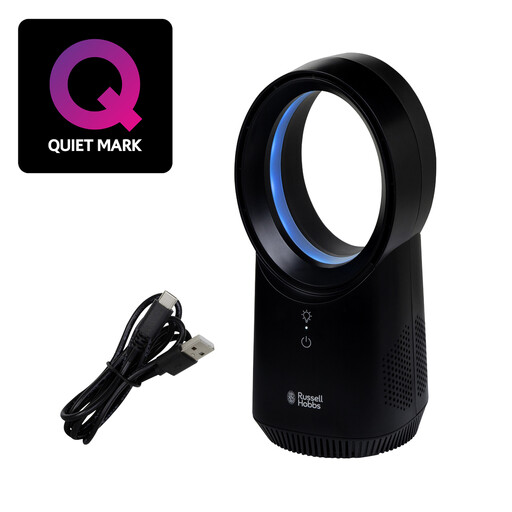
Why This Fits Their Persona: Suited to home offices, bedrooms and studies where a tidy cordless design and straightforward cleaning are priorities.
Its cordless rechargeable format avoids dependence on a permanently connected cable, while the bladeless outlet has no exposed fan blades.
USB rechargeable operation, multiple speed levels, compact sizing and a 2-year manufacturer’s guarantee are specified.
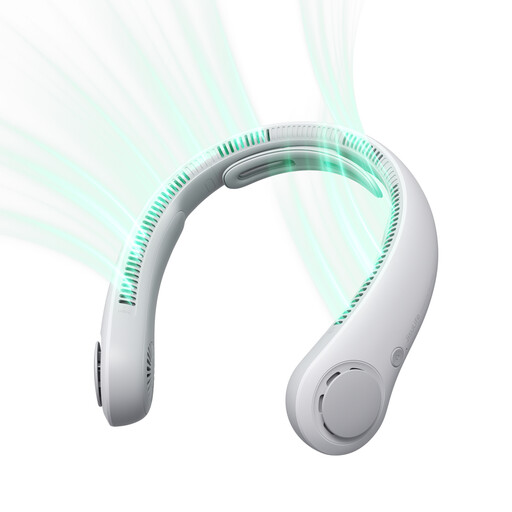
Why This Fits Their Persona: A hands-free choice for walking, outdoor events, travel and activities where holding a fan is inconvenient.
The listing states five speed settings, USB Type-C charging and a specified 2.5–16.5-hour operating range depending on use.
Bladeless construction, an ergonomic neck design, a 5,000mAh battery and a weight of approximately 282g are listed.
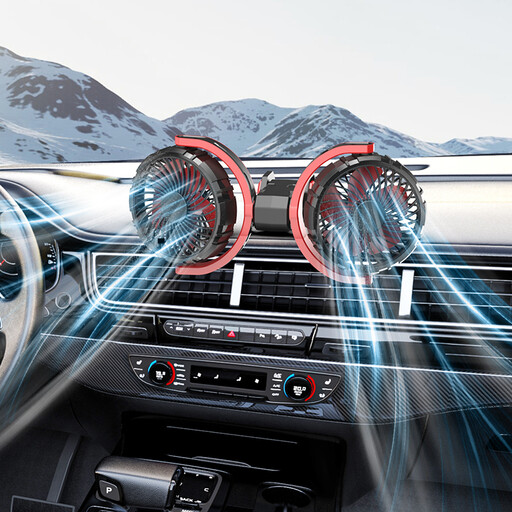
Why This Fits Their Persona: Designed for drivers, passengers, road trips and vehicles where wider airflow and in-car charging are useful.
The dual-head format is intended to cover more than one seating position, while its foldable structure helps with storage when not in use.
It supports 12V/24V vehicle input, 360° multi-angle adjustment, three speeds and two integrated USB ports.
We have compiled a complete, real-time list of products that fully satisfy these strict selection criteria and UK safety regulations.
A rechargeable model can reduce the need to buy disposable AA batteries, particularly when used regularly. Its running cost depends on battery capacity, charging frequency and electricity rates. USB charging from a laptop, power bank or existing adaptor can also make daily use convenient.
Yes, but choose a model with a suitable power connection and secure mounting method. USB car fans can connect to a compatible car charger or power bank, while some vehicle fans use a 12V/24V cigarette-lighter input. Position the fan so it does not obstruct visibility or interfere with driving controls.