
24/7 Customer Support

Free returns

Same-day & Next-day Delivery

Quality Guaranteed

Unlock Your Welcome Offers: FREE Delivery | Up to 80% OFF | Free 30-day JoyPlus trial
Download the APP
A fan may look like a simple purchase, but the wrong design can quickly become inconvenient. A handheld fan that needs frequent battery changes, a desk fan that takes up too much space, or a PC case fan with incompatible lighting connectors can all lead to wasted money.
Before comparing portable fans, watch for three common marketing traps:
Air speed is usually shown in metres per second (m/s), while PC case fans are commonly rated in CFM or cubic metres per hour. These measurements are not directly interchangeable, so compare products within the same category.
For personal cooling, a handheld fan with several speed settings gives more control for commuting, travel and outdoor use. A higher top speed can create a stronger breeze at close range, but it may also consume more battery power.
A portable desk fan is more suitable for a bedside table, home office or study area. Look for a stable base and an airflow angle that can be adjusted without moving the whole unit. For a gaming PC, a PC case fan needs a balance of airflow and static pressure. Static pressure matters when air must pass through a radiator, dust filter or restricted case panel.
A rechargeable fan is convenient for train journeys, festivals, holidays and rooms where a cable would be awkward. Battery capacity is measured in mAh, but capacity alone does not guarantee a specific runtime. Speed level, motor efficiency and additional functions all affect usage time.
A USB-C fan is practical because many UK households already have compatible chargers and power banks. Check the input rating and charging time, particularly if you need to recharge between journeys. A battery-operated fan using AA batteries can be useful as a simple backup, although replacement batteries create an ongoing cost.
For a fair comparison, consider:
Noise is important in bedrooms, shared offices and gaming spaces. A product described as “low noise” should still be assessed alongside its operating modes and published decibel figure where available.
A bladeless fan can be easier to wipe clean and may reduce access to rotating blades, but it still has air intakes and should be kept away from water. For children or busy travel situations, soft blades, a safety lock or a protective grille can be useful design features.
Check that a portable fan has a stable surface when used as a desk fan. Keep all fans away from moisture, direct heat and loose cables. Disconnect a fan before cleaning, and do not insert fingers or objects into the air outlet.
The right choice depends more on where and how you will use the product than on the longest feature list. The following options cover everyday personal cooling, cordless desk use, room cooling and PC airflow.
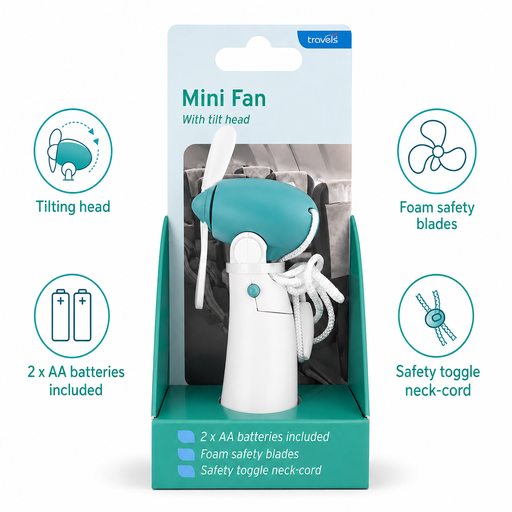
Why This Fits Their Persona: A straightforward choice for commuters, festival visitors and shoppers who want personal cooling without charging cables.
It uses two included AA batteries, so there is no uncertain rechargeable runtime or lengthy initial setup.
Tilting head, soft foam safety blades and a neck cord support flexible hands-free carrying.
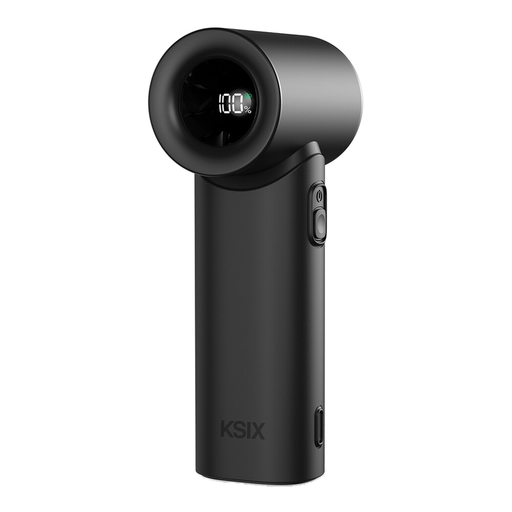
Why This Fits Their Persona: Suitable for shoppers who want compact construction, USB-C charging and stronger close-range airflow for office, travel or outdoor use.
Its specification lists five speeds, a 3,000mAh battery and an approximately three-hour USB-C charging time rather than relying only on vague battery language.
The 128g body supports portability, while the stated maximum air speed is 9.0m/s and the unit can also stand on a desk.
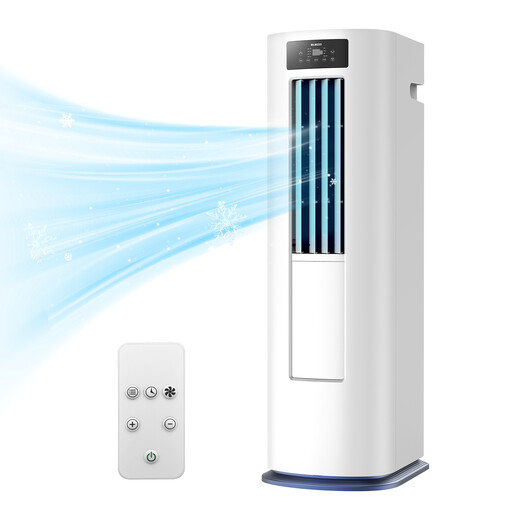
Why This Fits Their Persona: A room-focused option for UK homes where personal airflow is not enough and cooling, ventilation or dehumidifying is required.
It is not presented as a handheld or mini fan: the product is a mains-style mobile air conditioner with a window mount kit, so installation requirements are clearer.
It combines cooling, dehumidifying and fan modes, with a remote control and 24-hour timer for room use.
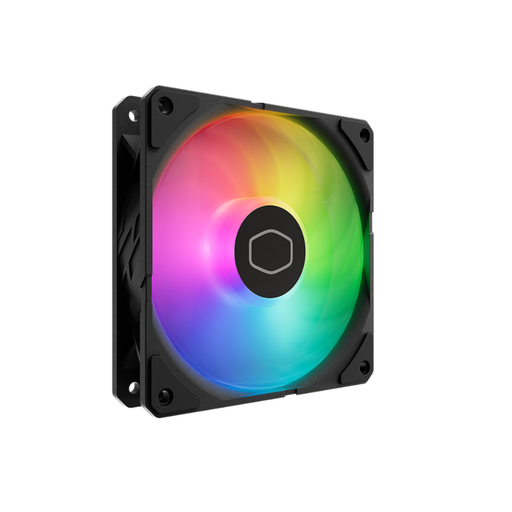
Why This Fits Their Persona: Designed for desktop computer builders upgrading case airflow, radiator cooling or ARGB lighting rather than personal room cooling.
The connections are specified clearly: 4-pin PWM for fan control and 3-pin 5V ARGB for lighting. Check your motherboard before installation.
The 120mm fan offers PWM speed control from 690–2,500 RPM, with stated airflow of 70.7 CFM and a maximum noise level of 32.8 dB.
We have compiled a complete, real-time list of products that fully satisfy these strict selection criteria and UK safety regulations.
Usually, a small rechargeable fan uses considerably less electricity than a mobile air conditioner because it moves existing air rather than actively lowering room temperature. Actual cost depends on wattage, usage time and your electricity tariff. A simple calculation is:
Power in kilowatts × hours used × electricity price per kWh = running cost.
A mobile air conditioner may be more suitable for cooling an entire room, but it generally requires more floor space, ventilation through a window and greater energy use.
There is no universal figure. Runtime varies with battery capacity, motor design and speed setting. Low-speed operation can last much longer than maximum airflow. Look for a stated range rather than a single headline number, and choose USB-C charging if you regularly use a power bank or shared charger.
Check the manufacturer’s instructions, noise information and battery guidance first. Place the fan on a stable, unobstructed surface, keep it away from bedding and moisture, and avoid using damaged cables or units. A low-noise portable desk fan may be more practical for bedside use than a high-speed handheld fan.