
24/7 Customer Support

Free returns

Same-day & Next-day Delivery

Quality Guaranteed

Unlock Your Welcome Offers: FREE Delivery | Up to 80% OFF | Free 30-day JoyPlus trial
Download the APP
A compact fan can make a hot commute, crowded train, warm office or outdoor event considerably more comfortable. However, choosing between a handheld fan, neck fan, rechargeable fan or portable desk fan is not simply a matter of picking the model with the highest wind-speed figure.
Marketing language can hide practical limitations. A fan may be powerful but too noisy for an office, lightweight but unable to last through a full day, or described as cordless while requiring a separate charger that is inconvenient to carry. This guide explains the main buying pitfalls and the specifications that matter for everyday use in the UK.
A high RPM or air-speed figure can look impressive, but maximum output is usually associated with the highest setting. It may also increase noise and reduce battery life. For commuting, desk work or travel, adjustable speeds are often more useful than a single powerful setting.
Check whether the product offers at least three speed levels, and consider whether the controls are easy to operate while walking or wearing the fan around your neck.
Rechargeable and battery-operated fan descriptions commonly quote the longest possible runtime, normally on the lowest speed. Higher settings can use considerably more power.
Look for a clear battery capacity, charging connection and realistic operating-time range. A USB fan with USB-C charging is convenient when you already carry a laptop, power bank or compatible adaptor. Models using AA batteries may be useful for travel when you need quick replacement rather than waiting for a recharge.
A fan that feels comfortable for five minutes may become awkward during a long journey. Neck fans should sit securely without pressing uncomfortably against the neck. Handheld models should have a practical grip, while a fan with stand should remain stable on a desk or bedside table.
Also check the dimensions and weight. A larger battery may extend runtime but add bulk, which matters if the fan needs to fit into a handbag, work bag or cabin luggage.
For frequent use, a rechargeable fan avoids repeatedly buying disposable batteries. USB-C is particularly practical because the same cable may work with other devices. Check:
For a battery-operated fan, confirm the battery type and whether batteries are included. Lithium-ion models should be charged with a suitable cable and power source, kept away from excessive heat and not disassembled.
Three speeds are sufficient for straightforward personal cooling, while five or more settings offer finer adjustment. A tilting head can be more useful than additional speed levels if you want to direct air towards your face without holding the fan at a particular angle.
A neck fan distributes airflow around the face and neck, whereas a handheld or mini fan produces a more focused stream. Neither format cools an entire room, so choose according to whether you need personal airflow or broader circulation.
Bladeless fans can be simpler to wipe around the air outlet, while enclosed or soft-blade designs may be preferable where fingers or loose hair could reach moving parts. No portable fan should be used near water unless the manufacturer specifically states that it is suitable.
Before purchasing an electrical model in the UK, check that the listing includes appropriate manufacturer or importer information, charging guidance and safety instructions. Look for the relevant CE or UKCA marking where applicable, and use only the recommended charging equipment. Keep grilles clear, unplug before cleaning and follow the supplied manual.
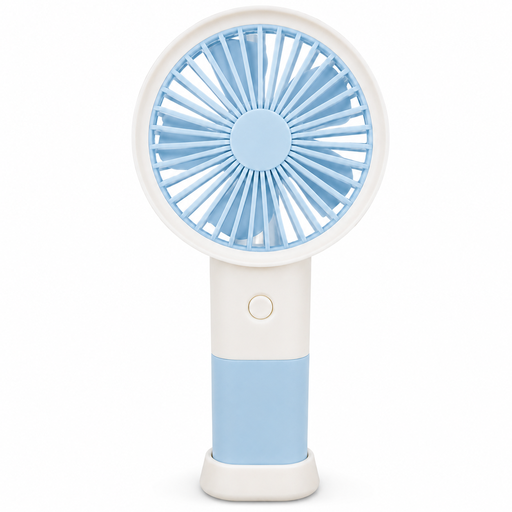
Why This Fits Their Persona: A practical first mini fan for commuting, studying or use beside a laptop, with handheld and desk modes in one compact design.
It specifies three adjustable speeds and a Type-C charging port rather than relying on a single maximum-power claim.
Three speeds, Type-C charging and an integrated table stand for hands-free desk use.
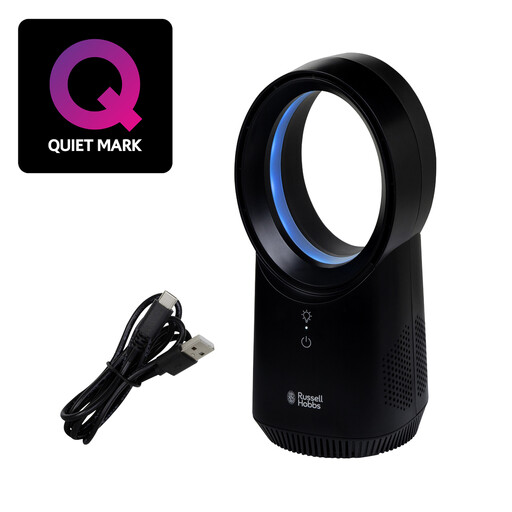
Why This Fits Their Persona: Suitable for a home office, bedroom, kitchen or travel setup where a tidy, cordless desk fan and straightforward cleaning are priorities.
Its wireless rechargeable format avoids a permanently trailing cable, while the enclosed airflow design removes exposed fan blades.
Bladeless construction, USB rechargeable battery, multiple speed levels and a stated 2-year manufacturer’s guarantee.
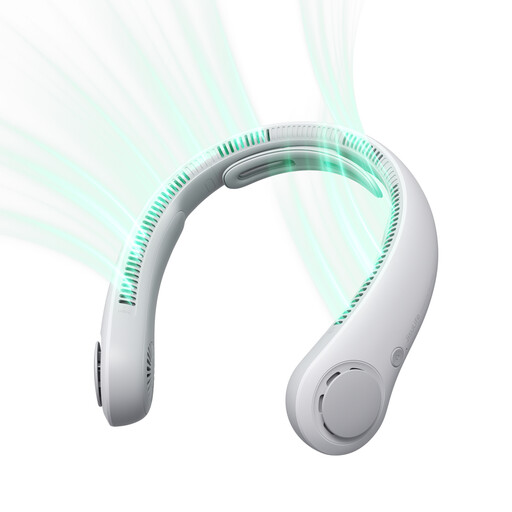
Why This Fits Their Persona: A hands-free option for outdoor events, walking, gym sessions, travel or work where holding a fan is inconvenient.
The listing gives a runtime range of 2.5–16.5 hours, making the difference between speed settings clear instead of presenting one unqualified figure.
Five speeds, a 5000mAh battery, USB-C charging and a bladeless neckbrace design.
A rechargeable fan can reduce the need to buy replacement AA batteries, particularly if used regularly. Its running cost depends on battery capacity, electricity tariffs and charging frequency, but USB charging from an existing laptop or power bank can be convenient. Disposable-battery models remain useful when you need immediate operation away from a power source.
There is no single standard runtime. Lower speeds generally last longer than maximum airflow, and battery age can affect performance over time. Compare the manufacturer’s stated range rather than relying only on phrases such as “long-lasting”. For frequent outdoor use, a model with a battery indicator or LED display can help you avoid unexpected loss of power.
A neck fan is designed to keep your hands free, making it suitable for light walking, commuting and some outdoor activities. Check its weight, fit and ventilation around the neck before extended use. Keep it dry, avoid heavy rain and follow the product’s safety instructions, particularly when using it during vigorous exercise.