
24/7 Customer Support

Free returns

Same-day & Next-day Delivery

Quality Guaranteed

Unlock Your Welcome Offers: FREE Delivery | Up to 80% OFF | Free 30-day JoyPlus trial
Download the APP
Portable fans can make commuting, working, driving and outdoor events more comfortable, but the wrong model may become inconvenient after only a few uses. A small fan with impressive speed claims may have a short battery life, while a larger model may be too noisy for a bedroom or office.
This guide from the Joybuy Product Recommendation Officer focuses on practical details rather than marketing language, helping UK shoppers compare portable fans by power source, airflow, noise, portability and intended use.
A stated maximum wind speed usually applies to the highest setting, which can consume more battery and create more noise. For commuting, desk work or bedside use, adjustable speeds are often more useful than a single powerful mode.
Check whether the fan offers several settings, and consider whether the lowest mode provides a comfortable breeze. A handheld fan with five speeds may be more adaptable than one that only advertises a high RPM figure.
A rechargeable fan’s advertised runtime generally varies according to speed, airflow mode and whether it is used while charging. A fan rated for many hours on its lowest setting may last considerably less at full power.
Look for three details:
If you mainly use a fan away from sockets, a battery-operated fan with replaceable batteries can be convenient. For regular home, office or travel use, a rechargeable fan may reduce the need to keep spare batteries.
A portable fan needs a stable position, clear air intake and suitable surroundings. A desk fan that easily tips over is impractical, while a neck fan may be unsuitable when cycling, driving or operating machinery.
Before buying, check the instructions for:
For mains-powered products, check the packaging and listing for appropriate UK electrical information, including the relevant conformity marking and responsible-person details where applicable. Do not use a damaged cable or swollen battery.
A personal cooling fan should direct air where you need it. A tilting head helps aim airflow at your face or hands, while an oscillating fan spreads air across a wider area. A tower fan may suit a bedroom or living room better than a pocket model, but it is less convenient for travel.
For a desk or bedside table, consider:
A room circulation model may offer greater reach and automatic oscillation, but it should not be confused with a small personal fan.
USB-powered fans can connect to a laptop, power bank, car charger or wall adapter. This flexibility makes them useful for offices, camping and travel. A USB car fan is particularly suitable when the vehicle has a compatible USB port, although the cable may restrict placement.
Battery capacity is only one part of the decision. Also consider charging time, the included cable and whether the fan can be used during charging. For occasional festivals or holidays, an AA-powered handheld fan can provide immediate use without waiting for a recharge.
Noise levels can vary by speed and motor design. A “quiet fan” description should be checked against any stated decibel information, but remember that sound may increase at higher settings.
A bladeless fan can simplify cleaning and remove exposed rotating blades, although the air outlet and intake still need to remain unobstructed. For children, do not rely on the word “bladeless” alone: follow age guidance, supervise use and keep cables and batteries out of reach.
Weight matters for wearable and handheld designs. A neck fan weighing around 282g may be manageable for some users, while others may prefer a lighter pocket fan for short periods.
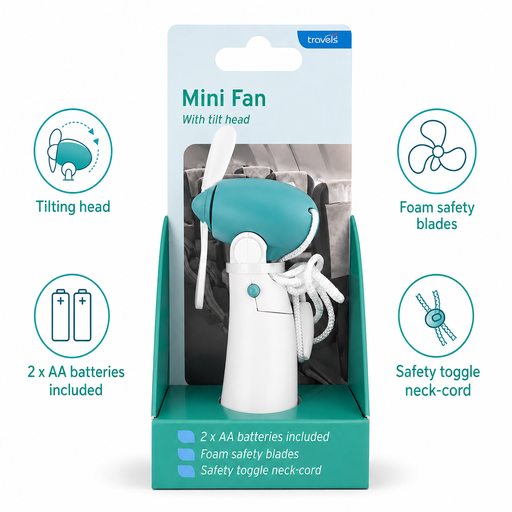
Why This Fits Their Persona: A straightforward choice for festivals, commuting, holidays and occasional outdoor use without needing a USB charger or power bank.
Its power source is clearly stated as two included AA batteries, avoiding uncertainty about charging availability.
Tilting head, soft foam safety blades, neck cord and compact handheld design.
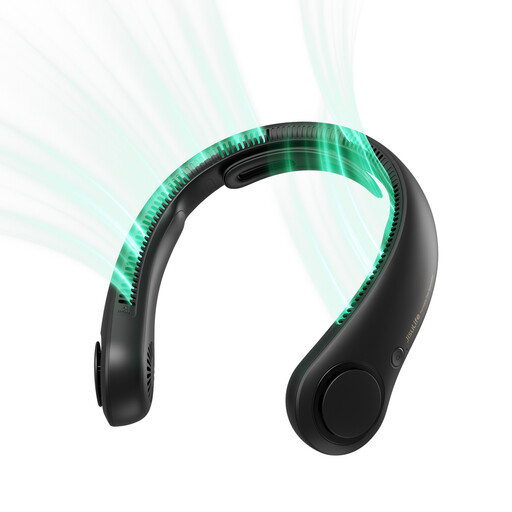
Why This Fits Their Persona: A hands-free option for office work, walking, travel and outdoor events where holding a fan is inconvenient.
The listing specifies five speeds, USB-C charging and a stated 2.5–16.5-hour operating range depending on use.
Bladeless neckbrace design, 5,000mAh battery, USB-C charging and approximately 282g weight.
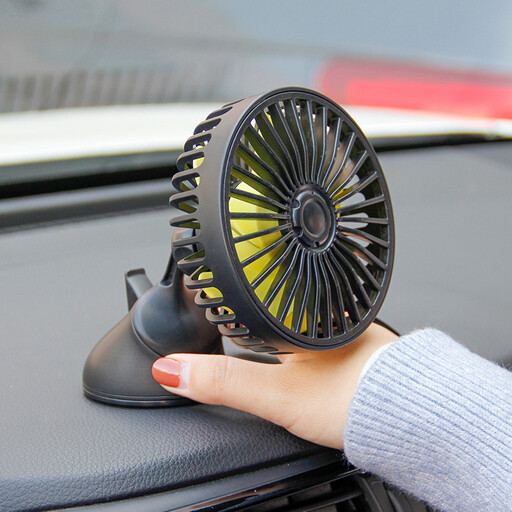
Why This Fits Their Persona: Designed for drivers, passengers, camping trips and long journeys where directed airflow and secure placement matter.
Its USB power requirement, three speed settings and suction-cup mounting are specified, so placement and power needs are clear before purchase.
360° rotation, five blades, USB compatibility and dashboard or windscreen mounting.
We have compiled a complete, real-time list of products that fully satisfy these strict selection criteria and UK safety regulations.
The running cost depends on the fan’s power draw, speed and usage time. A rechargeable fan uses electricity while charging, but its low-voltage design and cordless operation can be convenient for personal cooling. A mains-powered desk or tower fan may be more suitable for extended room use. Compare wattage where provided rather than assuming that every USB fan has the same consumption.
There is no single figure for every model. Battery life changes with speed, airflow mode, battery age and temperature. Treat the stated runtime as a range or operating estimate, and check whether it refers to the lowest setting. Keeping the battery charged according to the manual and avoiding excessive heat can support normal battery performance.
A USB car fan can be used when connected to a suitable USB port, car charger or power bank. Secure the fan so it cannot obstruct visibility, controls or airbags. Drivers should set the angle and speed before moving, and never adjust a handheld or wearable fan while driving.