
24/7 Customer Support

Free returns

Same-day & Next-day Delivery

Quality Guaranteed

Unlock Your Welcome Offers: FREE Delivery | Up to 80% OFF | Free 30-day JoyPlus trial
Download the APP
Choosing portable football goals and basketball hoops for a garden, driveway or local park can look straightforward. However, product photos often hide the details that affect everyday use. A goal may appear large online but be too small for proper practice, while a basketball hoop may be described as portable without explaining how its base is stabilised.
The most common buying traps are:
For a young child, a pop-up football goal measuring around 90cm to 120cm wide may be easier to use and store. A larger football goal gives players more space for passing and shooting but requires a clear garden area.
Compare the product’s assembled dimensions, not just the packaging size. For example:
A football goal with target sheet can add structured practice without requiring additional training equipment. Target zones encourage players to aim at specific parts of the goal rather than simply kicking towards the centre.
Look for a frame that matches the intended frequency of use. Flexible frames are convenient for a folding football goal or pop-up design, while steel or alloy-steel structures may suit larger outdoor equipment.
Anchoring is not an optional extra. A portable goal is not permanently fixed, so it should be secured with all supplied ground pegs before play. Position it on suitable ground, check the net and frame before each session, and do not allow children to climb or hang from it.
For children’s equipment, product information may include CE and UKCA compliance. This can provide useful safety information, but it does not remove the need for correct assembly, anchoring and adult supervision.
For a basketball hoop with stand, compare:
An adjustable system can be more useful for families with children of different ages, but it also needs more assembly and maintenance than a small fixed training hoop.
The right choice depends on available space, player age, storage arrangements and whether the equipment is for casual play or regular practice. The following options highlight distinct use cases rather than making one general claim for every household.
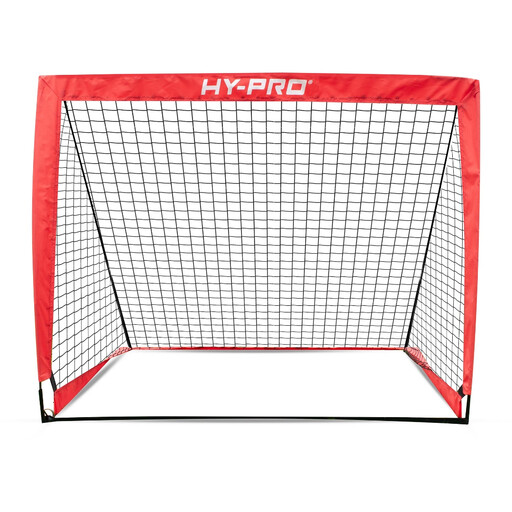
Why This Fits Their Persona: Its 4ft x 3ft format suits younger players, first-time buyers and families needing a compact goal for a garden, park trip or indoor space.
The dimensions are stated clearly, while its folding frame and included metal pegs address storage and anchoring concerns.
No assembly is required; it unfolds quickly and folds flat for transport and storage.
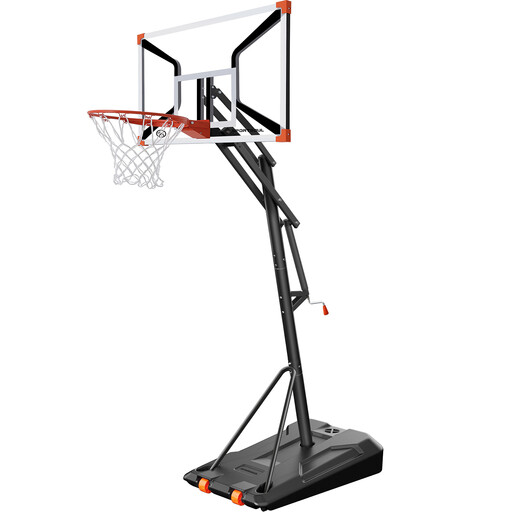
Why This Fits Their Persona: Families wanting a larger adjustable basketball system for regular driveway practice can select from a 2.3m to 3.05m rim height range.
The product specifies its backboard material, adjustment range and 40-gallon base capacity, rather than relying only on broad portability wording.
It has a 54-inch polycarbonate backboard, tool-free height adjustment and a base designed for sand or water filling.
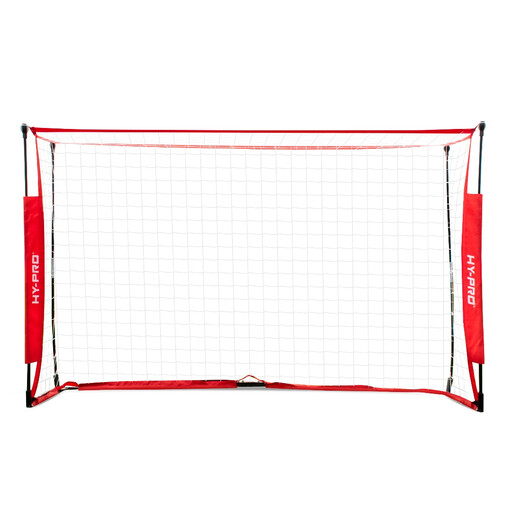
Why This Fits Their Persona: The larger 5ft x 8ft format suits households with enough garden space for stronger shooting practice, training sessions and casual matches.
It includes ground pegs and a carry bag, while the instructions specifically require full anchoring before use.
The alloy-steel frame, collapsible design and included carry bag support repeated outdoor setup and storage.
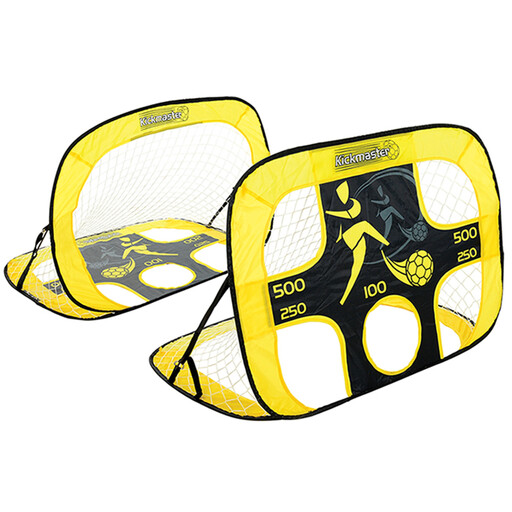
Why This Fits Their Persona: Children aged five and above can use the target sheet for focused shooting practice at home, in the garden or at a park.
The 120 x 80 x 80cm assembled dimensions are stated, and the set includes anchor pegs rather than leaving stability to the buyer.
It offers quick setup, a target-shot feature, carry bag and stated CE UKCA compliance.
We have compiled a complete, real-time list of products that fully satisfy these strict selection criteria and UK safety regulations.
Use every ground peg supplied and place the goal on suitable, reasonably level ground. Check that the frame and net are correctly fitted before play. Portable goals should not be climbed on, hung from or left unsecured, particularly when children are playing.
They do not normally have an ongoing power cost because they are manually adjusted and do not require electricity. The main practical costs are assembly, suitable sand or water for the base, occasional cleaning and possible protective storage. Follow the manufacturer’s instructions for filling and do not move a filled system.
There is no single lifespan for every goal or hoop. Frequency of use, weather exposure, ball impact, storage and maintenance all make a difference. Wipe surfaces clean, inspect nets, frames, pegs and fixings regularly, and store folding goals dry. For basketball systems, a cover can reduce exposure to rain and frost, but it does not replace routine safety checks.