
24/7 Customer Support

Free returns

Same-day & Next-day Delivery

Quality Guaranteed

Unlock Your Welcome Offers: FREE Delivery | Up to 80% OFF | Free 30-day JoyPlus trial
Download the APP
A portable fridge can transform your road trips, camping holidays and even your daily commute. But navigating the market can be tricky. Many shoppers end up with a device that either drains their car battery or fails to keep their food properly chilled. Before you invest, it’s crucial to understand the common traps that lead to buyer's remorse.
As a Joybuy Product Recommendation Officer, my role is to help you sidestep these issues. Here are the key pitfalls to watch for:
mini fridge for car when they are actually an electric cool box. These units can only cool to a certain temperature below the surrounding air. On a hot summer day in a car, this might mean your drinks are barely lukewarm. A true portable fridge uses a compressor, just like your home refrigerator, allowing it to reach and maintain specific temperatures, even freezing, regardless of the weather.12v fridge without adequate battery protection. A model that continuously draws power can easily leave you with a flat battery, stranded in a remote campsite or a car park. This single feature is non-negotiable for any device intended for vehicle use.To ensure you get a reliable and efficient unit, focus on these three core parameters. They are the difference between a useful appliance and a frustratingly heavy box.
This is the most important distinction to understand. Your choice will depend entirely on your needs.
car fridge freezer with a compressor can achieve and hold temperatures as low as -20°C. This makes them ideal for a camping fridge or campervan fridge where you need to store frozen food, meat and dairy safely for extended periods. They are more of an investment but offer powerful, reliable performance in any climate.12v cooler warmer, these devices work by transferring heat from one side of a semiconductor to the other. They typically cool to around 18-22°C below the ambient temperature. They cannot freeze items. This technology is perfectly suitable for a skincare fridge to keep cosmetics cool, or for keeping drinks and sandwiches chilled on a day trip. They are generally lighter, more affordable and can often switch to a warming function.A versatile portable fridge should offer multiple power options.
car fridge, this is essential. A good unit will offer a 3-stage battery protection system (often labelled Low, Medium and High). This feature automatically shuts the fridge off if it detects your vehicle's battery voltage has dropped to a critical level, ensuring you always have enough power to start your engine.Consider what you need to store and where the unit will live.
skincare fridge is great for cosmetics or a few cans. A 9-18L unit is good for a solo traveller or lorry driver. For family camping or long trips in a caravan, a 35L+ portable freezer offers the space you need for a week's worth of food.Based on these practical criteria, we've matched several products to different user needs. These recommendations focus on models that deliver on their promises and help you avoid the common pitfalls.

Why This Fits Their Persona: This is for the user who needs reliable, high-capacity cooling for multi-day trips. The 35L capacity is ample for a family's food, and the true compressor allows for freezing down to -20°C, essential for storing meat and frozen goods safely in a campervan or during a long camping holiday.
It uses a powerful compressor, not thermoelectric cooling, for true refrigeration. It also features the crucial 3-stage battery protection to prevent draining your vehicle's battery.
Large 35L capacity with dual zones; includes wheels for easier transport; APP control for remote temperature management.
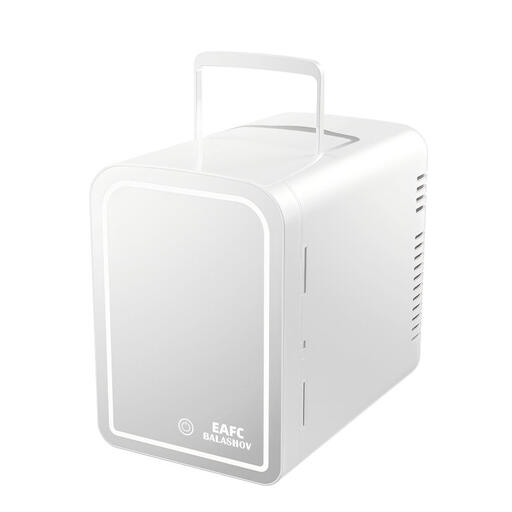
Why This Fits Their Persona: This is designed for personal care. The compact 6L size is perfect for a bedroom or vanity, and the thermoelectric cooling provides a stable, cool environment for serums and creams. The integrated LED mirror is a thoughtful touch that makes it a dedicated beauty appliance.
It is clearly positioned as a thermoelectric cooler, not a freezer, managing expectations. Its primary use is for gentle cooling in a stable indoor environment, avoiding the issue of poor performance in a hot car.
Features a built-in LED light mirror for convenience; sleek, compact design fits easily in personal spaces; quiet operation.

Why This Fits Their Persona: This model offers the power of a compressor in a highly compact 9L package. It's ideal for a lorry cab, a small car or a solo camper who needs reliable freezing and cooling without sacrificing space. It provides serious performance in a small, lightweight footprint.
It provides true compressor-based freezing down to -20°C, avoiding the weak performance of a thermoelectric cooler. It also includes the essential 3-level battery protection to safeguard the vehicle's power supply.
Extremely compact and lightweight (6.7kg) for a compressor model; shockproof design is built for use on the move.
We have compiled a complete, real-time list of products that fully satisfy these strict selection criteria and UK safety regulations.
The key difference is the cooling technology. A portable fridge uses a compressor, allowing it to function like a home refrigerator and reach freezing temperatures. An electric cool box uses a thermoelectric system that cools to a set temperature below the surrounding air, making it less powerful but suitable for keeping already cool items chilled.
You can, but with caution. If your vehicle's 12V socket is permanently powered (i.e., it works when the ignition is off), a compressor fridge can run continuously. However, it is vital to use the unit's battery protection feature. Set it to 'High' or 'Medium' to ensure the fridge shuts down before it drains your car battery completely. For stops longer than a day, it is advisable to use an AC power source if available.
Power consumption varies. A thermoelectric cooler generally uses a consistent but lower amount of power (around 40-60W). A compressor fridge uses more power when the motor is actively cooling (around 45-60W) but cycles on and off to maintain temperature, which can make it more efficient over time, especially in hot weather. Good insulation is key to reducing overall power consumption.