
24/7 Customer Support

Free returns

Same-day & Next-day Delivery

Quality Guaranteed

Unlock Your Welcome Offers: FREE Delivery | Up to 80% OFF | Free 30-day JoyPlus trial
Download the APP
A portable fridge can transform a weekend camping trip, a long-haul drive or even just a day out. But navigating the market can be tricky. From models that drain your car battery to "coolers" that barely chill a can of pop on a warm day, it is easy to make a purchase you will regret. As a Joybuy Product Recommendation Officer, my role is to help you sidestep these common issues and find a unit that genuinely suits your needs.
Before you add anything to your basket, let's look at the most frequent pitfalls and how to avoid them.
The "Cooler" That Can't Cope with a British Heatwave: The most common mistake is confusing a true portable fridge freezer with a basic electric cool box. Many affordable models use thermoelectric cooling, which can only reduce the internal temperature by about 15-20°C below the surrounding air temperature. On a 25°C day, it might only reach 5°C—not cold enough to keep meat safe or truly chill a drink. If you need consistent, cold temperatures, this is a critical distinction.
The Battery-Draining Surprise: You arrive at the campsite, plug your new car fridge into the 12V socket and wake up to a flat battery. Many cheaper units lack a crucial feature: multi-stage battery protection. Without it, the fridge will continue to draw power until your vehicle's battery is completely drained, leaving you stranded. This is a non-negotiable feature for anyone using a fridge in a vehicle overnight.
Poor Insulation That Wastes Power: Whether it's a powered model or a simple insulated cooler box, the quality of the insulation is paramount. A poorly sealed lid or thin walls mean the cooling system has to work constantly, leading to more noise, higher energy consumption and a rapid loss of temperature the moment it is unplugged.
To ensure you get a reliable product, focus on these key parameters. They are far more important than marketing buzzwords.
This is the single most important factor determining performance.
Your portable fridge is only useful if you can power it safely.
Capacity is measured in litres, but it is more helpful to think in practical terms. A 4-6 litre unit is a personal travel fridge for a few cans. A 20-25 litre model is suitable for a couple on a weekend trip, while a 35-litre or larger unit can cater for a family. Also, consider the physical dimensions, weight and features like carrying handles or wheels, which make a huge difference when moving a fully-loaded cooler.
Instead of a one-size-fits-all approach, we have matched some reliable options to specific user needs.

Why This Fits Their Persona: With a generous 35L capacity, this is ideal for family camping trips or festivals. The robust wheels make it easy to transport from the car to the pitch and its ability to function as a true freezer means you can safely store food for the entire weekend.
This is a genuine compressor fridge, so it provides reliable cooling down to -20°C, avoiding the pitfall of a weak thermoelectric cooler. It also includes the essential 3-stage battery protection to prevent draining your vehicle's battery.
Dual AC/DC power supplies for car and home use. The companion app allows for remote temperature control and the dual-zone design helps organise food and reduce odour transfer.
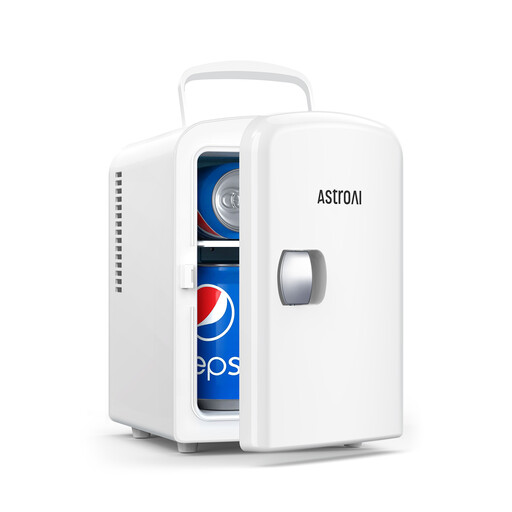
Why This Fits Their Persona: Perfect for a desk, bedroom or daily commute. Its 4-litre capacity is just right for a few drinks, snacks or for use as a dedicated skincare fridge to keep products cool and fresh, away from the main kitchen fridge.
This is an honest thermoelectric cooler, not pretending to be a freezer. It sets clear expectations: it cools relative to the room temperature, making it ideal for its intended use cases without over-promising on performance.
It includes both AC and DC power cords, so it can be moved seamlessly from home to car. The compact, lightweight design and removable shelf offer excellent versatility.
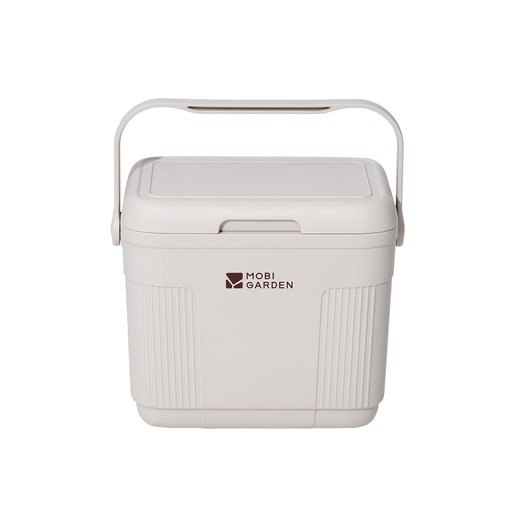
Why This Fits Their Persona: For those heading to the beach, a picnic or a fishing spot where power is not an option. This passive camping cool box relies on high-quality insulation and ice packs to keep food and drinks cold for the day.
By being a non-powered insulated cooler box, it completely sidesteps the pitfalls of battery drain and electronic failure. Its performance is based on verifiable physical properties: thick PU foam insulation and a tight silicone gasket seal.
The food-grade PP interior allows for direct, safe storage of fresh food. Its reinforced corners and robust handle are designed for the rigours of outdoor use, offering durability where it matters most.
We have compiled a complete, real-time list of products that fully satisfy these strict selection criteria and UK safety regulations.
1. How long can I run a portable fridge on my car battery? This depends on several factors: the fridge's power consumption (compressor models are more efficient once at temperature), the capacity and health of your car battery and the ambient temperature. A key feature to look for is a 3-stage battery protection system. When set to 'High', it will shut the fridge off with plenty of power left to start your engine. As a general rule, a healthy car battery can run an efficient compressor fridge overnight without issue, but using the protection feature is always recommended.
2. What is the real difference between a portable fridge and an electric cool box? The core difference is the cooling technology. A portable fridge (or fridge-freezer) typically uses a compressor, allowing it to function like a home fridge and reach freezing temperatures regardless of the outside heat. An electric cool box uses thermoelectric technology, which can only cool to a certain number of degrees below the ambient temperature and cannot freeze. For keeping food safely chilled for long periods, a compressor model is necessary.
3. Can I use a portable fridge for my skincare products? Yes, and it is a very popular use. For this purpose, a small thermoelectric skincare fridge (typically 4-6 litres) is an excellent choice. These compact units are quiet, fit neatly on a dressing table or in a bathroom and provide a consistent, cool environment that can help preserve the stability and extend the shelf life of certain skincare ingredients.